From Doorstep to Delivery: The Professional Rug Cleaning Process in Elizabeth, NJ
Ever wonder what truly happens when your rug leaves home for a professional clean? The best results come from a meticulous, repeatable process that respects fibers and dyes while tackling embedded soil and odors. In Elizabeth, New Jersey—where winters add grit and summers add humidity—following a disciplined workflow produces cleaner, softer, longer-lasting rugs. This transparent walkthrough demystifies each stage so you know what to expect and how to support great results. If you want confidence from the very first step, consider scheduling professional rug cleaning with a team that documents, tests, and communicates.
1) Intake and Identification
Every job begins with learning the rug’s story. Pros record origin, fiber content, construction (hand-knotted, tufted, machine-made), age, visible wear, stains, and previous repairs. Photos capture “before” conditions. A discussion clarifies goals: brighter colors, odor removal, fringe care, or blocking to fix ripples.
2) Testing: Dyes, Fibers, and Stability
Quick wet-blot tests on reds, blues, and blacks gauge bleeding risk. Fiber checks confirm wool, silk, cotton, viscose, or synthetics. Adhesive-backed tufted rugs get special attention; saturation is limited to protect the latex. The test results drive method selection—immersion, controlled low-moisture, or dry/solvent alternatives.
3) Dry Soil Removal
Up to 80% of soil is dry and abrasive. Professionals invert the rug and vacuum the back first to loosen grit, then the face. Mechanical dusting equipment vibrates particles from deep in the pile without harming the foundation. Edge and fringe bases receive crevice-tool attention.
4) Targeted Pre-Treatments
Not all soil is equal. Traffic lanes, spills, and pet spots receive tailored pre-sprays—enzyme for proteins, tannin removers for tea and coffee, and gentle solvents for oils—always balanced for the fiber type. Fringes get pre-cleaned cautiously to avoid wicking.
5) Primary Cleaning Method
Based on testing, the technician selects the safest path:
- Immersion bath: For sturdy, color-stable wool rugs needing full flushing. Gentle agitation loosens residues while pH remains fiber-safe.
- Low-moisture washing: For viscose, unstable dyes, and many tufted rugs. Carefully limits wet exposure while cleaning face fibers.
- Dry/solvent options: Used when moisture risks outweigh benefits, preserving structure and adhesives.
6) Rinsing and Water Removal
Complete rinsing prevents stiffness and re-soiling. Squeegees and rinse wands move soils out evenly. Centrifuge extraction or weighted towel extraction rapidly reduces moisture, guarding against browning, dye migration, and odor rebound.
7) Controlled Drying
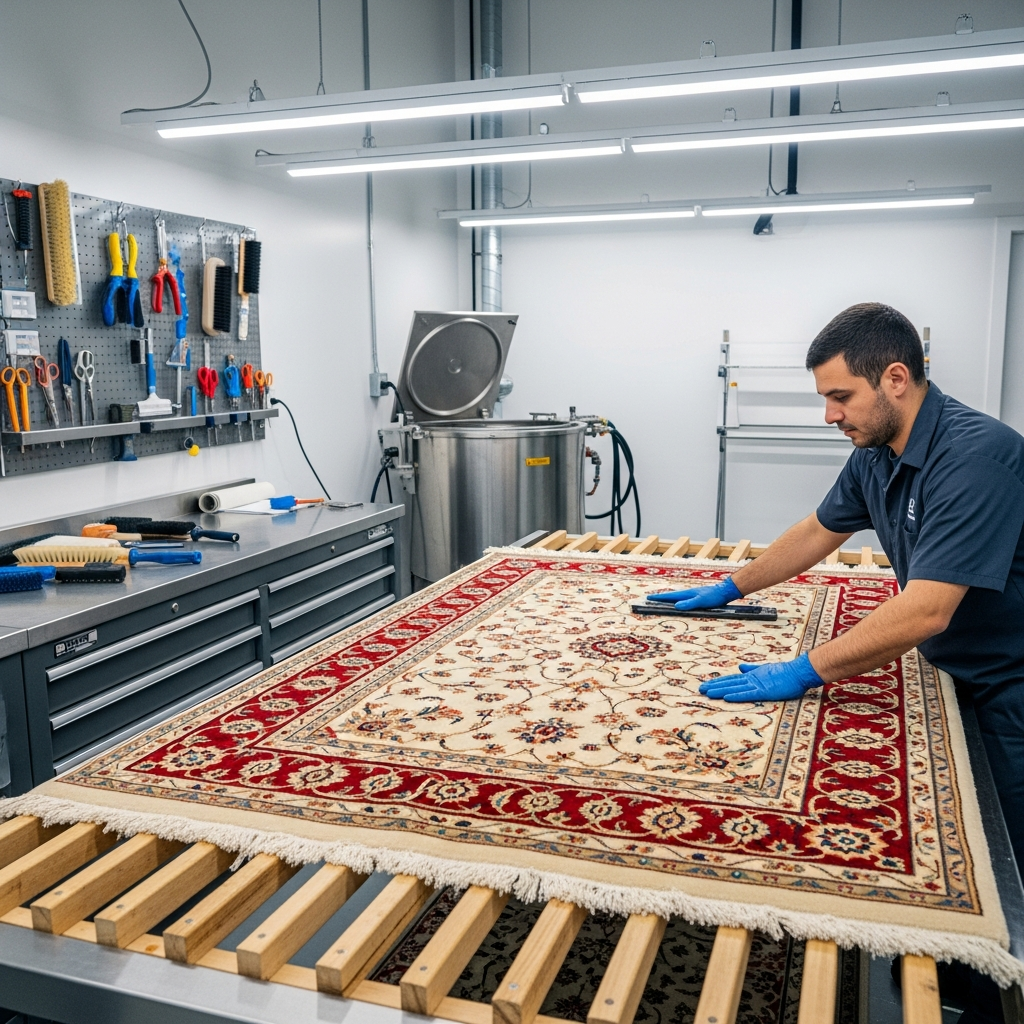
Drying is as important as washing. Rugs are elevated on racks with cross-ventilation. Air movers and dehumidifiers create a steady, low-humidity environment. Technicians monitor moisture content to ensure both face and foundation dry thoroughly. In humid Elizabeth summers, environmental control is critical.
8) Grooming, Fringe Care, and Blocking
Once dry to safe levels, technicians align pile direction for consistent sheen. Fringes are detangled and brightened cautiously. Blocking reshapes the rug, squaring edges and correcting minor ripples caused by age or prior storage. The result is a flat, well-presented textile.
9) Protective Options
After cleaning, optional fiber protectors help repel liquids and slow re-soiling, making future spot care easier. Quality rug pads are recommended to prevent slipping, reduce stress on fibers, and protect hardwood finishes common in Elizabeth homes.
10) Final Inspection and Documentation
Quality assurance checks color balance, odor neutrality, softness, and overall hand feel. Technicians review photos, verify that troublesome spots were addressed, and document any recommendations for repair, pad replacement, or rotation schedules.
11) Wrapping and Delivery
Clean rugs are wrapped in breathable materials to prevent trapped moisture. Delivery teams protect hallways, elevators, and floors during return and help position the rug on a fresh pad. Homeowners receive aftercare guidance for ventilation, furniture placement, and rotation.
How You Can Help the Process
A smooth project includes homeowner preparation:
- Before pickup: Clear the rug’s surface, note concerns, and photograph any existing damage.
- During cleaning: If requested, approve method choices for sensitive fibers or dyes.
- Before delivery: Ensure the placement area is clean, pads are ready, and furniture glides are on hand.
What Success Looks and Feels Like
Post-clean, a rug should feel soft, with revived color clarity and a uniform nap. Edges should be square and fringes tidy. There should be no sticky residues. Light, clean wool scent is normal right after washing but dissipates quickly as humidity equalizes.
Local Realities in Elizabeth, NJ
Road grit and winter de-icers load entry rugs with abrasive soil, while summer humidity can slow drying. Pros compensate with extra dusting and carefully controlled drying. Many Elizabeth homes feature hardwoods; a quality pad and mindful furniture placement protect floors and preserve the rug’s integrity.
FAQs
How long does the entire process take? Many projects complete in about a week, varying with soil level, odor work, drying conditions, and workshop scheduling.
Is immersion always better? Not if dyes are unstable or the construction is moisture sensitive. Testing determines the safest effective method.
Can you fix ripples and curls? Blocking after cleaning usually corrects minor distortions. Severe issues may require repair.
Will all stains disappear? Many will; some older or chemically altered stains can be reduced but not fully removed without risking fiber damage.
How should I care for the rug after delivery? Ventilate the room, vacuum gently with the nap, rotate quarterly, and use a quality pad. Attend to spills promptly.
Do I need to move heavy furniture off the rug? Yes. It prevents dents, allows uniform cleaning, and protects technicians and your floors.
Are protectors worth it? They add a safety margin against future spills and make blotting more effective. They do not replace prompt action.
What about pet odors? Foundation-level deodorization during washing addresses odors at their source; surface treatments alone usually fall short.
Experience a Cleaner, Healthier Home
From meticulous inspection to careful washing, thorough rinsing, and controlled drying, the professional process restores beauty and extends rug life. Transparent communication and documented steps give you peace of mind. When your textiles deserve expert care, schedule professional rug cleaning and enjoy refreshed comfort in your Elizabeth, NJ home.