Services

Area and oriental rug cleaning

Wool, silk-blend, oriental and synthetic rugs cleaned in your home with the method suited to the fiber. Every rug is color-tested first.

Fiber identified, dyes tested first 5.0 from 343 Google reviews 24 hours, by appointment

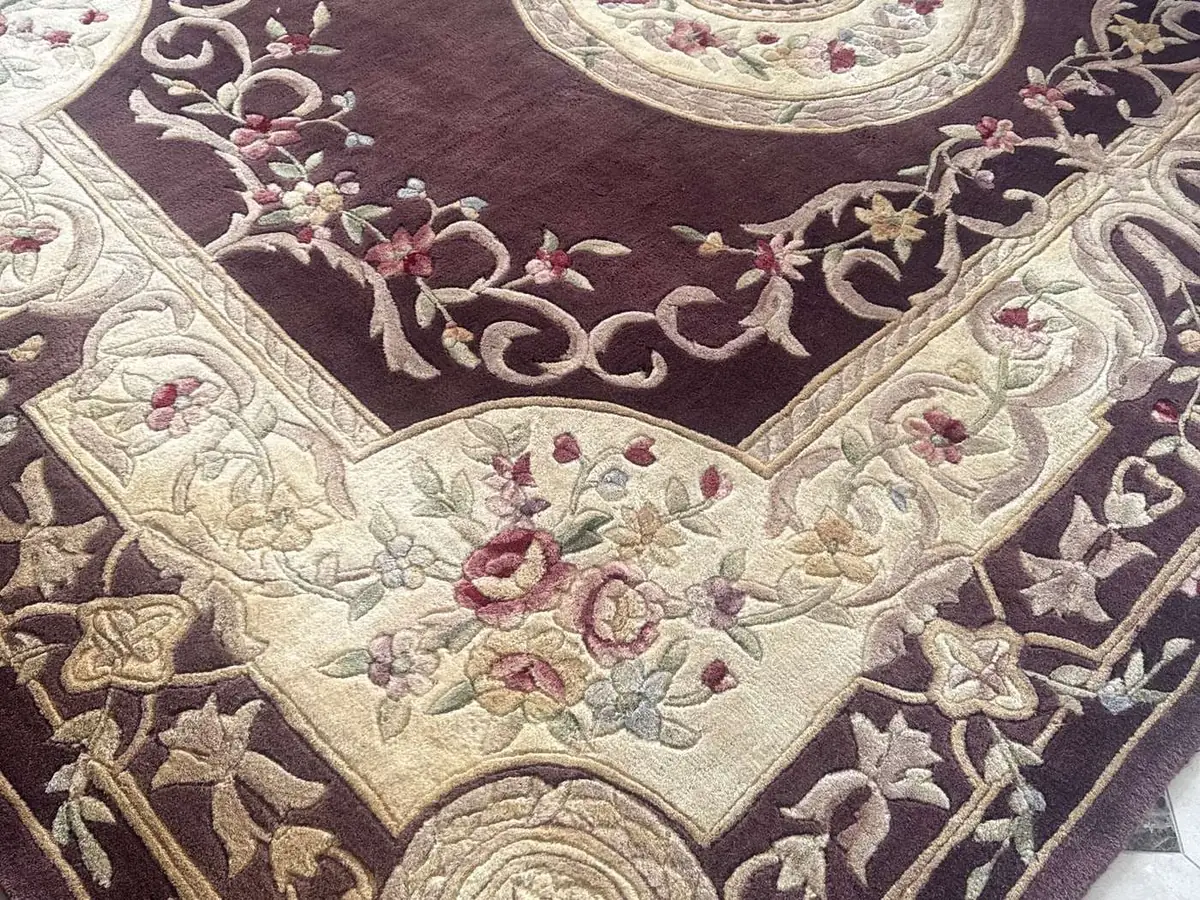
An ornate burgundy and cream wool rug on a tile floor after cleaning
From a job in North Jersey

Service 03 of 06

Scope

What this covers

Wool, viscose, cotton, silk blends and machine-made synthetics each require a different amount of water, a different pH and a different amount of agitation. Carpet settings on a hand-knotted wool rug are what make dyes bleed and fringes turn grey, so the first step is to identify the fiber and test the dyes in an unseen corner. We clean wool, synthetic, oriental and shag rugs in your home, along with the floor underneath, which is usually dirtier than the rug. Cleaning removes the film of dust that was dulling the color, which is why customers describe the pattern coming back.

  • Hand-knotted and hand-tufted wool rugs
  • Oriental and Persian-style rugs
  • Machine-made synthetic area rugs
  • Shag and high-pile rugs
  • Runners, hallway rugs and entry mats
  • The hardwood or tile floor underneath

Detail

Three problems in one rug

Most rugs that look faded are holding dust. The floor under a rug is rarely as clean as the rug itself.

Removing the dust brings the color back. No dye or treatment is applied.

A vacuum reaches this
A dust film that scatters light and mutes every color
Extraction reaches this
Grit that grinds against the fiber whenever anyone walks over it
Dye stability, tested before any moisture is applied
Below a surface clean
Grit worked through the pile, dulling the boards underfoot

Common questions

What people want to know before booking

Whether the colors will run

This is the main risk with rugs and the reason the fiber is identified before anything else. Hand-knotted and hand-tufted rugs, older orientals, and any rug with a deep red or indigo next to a cream ground are the ones that bleed. We test the dyes in a hidden corner first and adjust the method: less water, a different pH, more careful extraction.

The pattern that has gone flat and grey

Most rugs that look faded are holding a fine layer of dust across the top of the pile, and that dust scatters light and mutes every color. Removing it brings the pattern back. Color restoration is the phrase customers use in reviews, and what they are describing is dust removal rather than dye.

Viscose, the fiber that catches people out

Rugs sold as art silk, banana silk, bamboo silk or viscose lose strength when wet and can mark permanently from plain water, including water from a dog bowl or a spilled glass. If your rug is viscose we tell you, explain what can and cannot be done with it, and use the lowest-moisture approach available.

The floor underneath

The hardwood or tile under a rug that has been down for two years is rarely clean. Grit works through the pile and grinds against the floor whenever anyone walks over it. We clean under the rug during the visit, because putting a clean rug back onto a dirty floor undoes half of the work.

The method

The fiber is identified first

How a rug is cleaned follows from what it is made of, and the front of a rug does not tell you. The back does: hand-knotted rugs show the pattern in the knots, machine-made rugs show a uniform grid, and tufted rugs show a fabric backing glued on. Wool feels different from viscose between finger and thumb, and both feel different from polypropylene.

Water volume, pH, heat and agitation all change with the fiber. Wool is a protein and reacts badly to alkaline solutions. Viscose loses strength as soon as it is wet. Polypropylene tolerates most methods and holds oily soil stubbornly. Using one method on every rug is how rugs are ruined.

The dye test

A small amount of solution is applied to a white cloth and pressed against the pile in a hidden corner, under where the sofa sits or at the fringe end. If color transfers to the cloth, the dyes are not stable and the method changes: less moisture, faster extraction, and sometimes a different product.

Red and indigo next to cream is the classic risk. So is an older rug that has been cleaned badly before, because a previous bleed leaves the dye more mobile than it started.

Most faded rugs are dusty

A rug held vertically and struck produces a cloud of dust. That dust has worked down between the fibers rather than sitting on the surface, and it is why a rug that was vivid when it arrived now looks muted and slightly grey.

Light hitting a dusty pile scatters instead of reflecting off the dyed fiber, so every color reads a shade duller and the contrast in the pattern drops. Remove the dust and the pattern returns. The color was under the dust the whole time.

This is also why rugs are better cleaned on a schedule than when they begin to look dirty. By the time a rug looks dirty, the grit has been grinding at the base of the fibers for a long time.

Fringes, edges and the parts that wear first

Fringes are usually cotton even when the rug is wool, so they soil faster, hold that soil differently and turn grey while the rug still looks clean. They are cleaned separately and by hand.

Edges are where a vacuum never quite reaches, and a rug against a wall collects a dark line along that edge. Point these out when we arrive so nothing is missed.

Cleaning the floor under the rug

Every rug visit includes the floor under the rug. Grit that has worked through the pile sits on the hardwood and is ground into the finish underfoot, so the board under a hallway runner is often duller than the boards on either side. The floor is cleaned while the rug dries.
Before and after

Real results from North and Central New Jersey homes

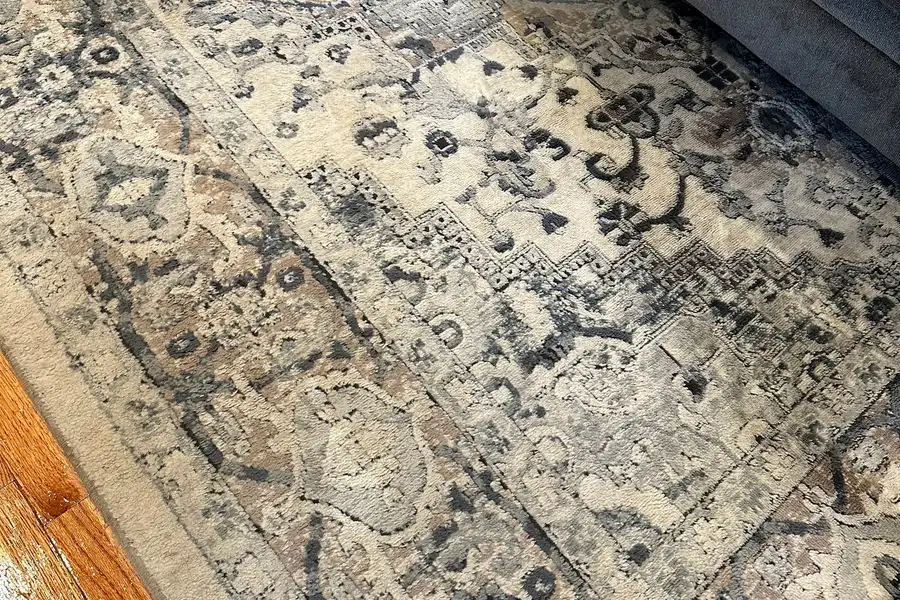
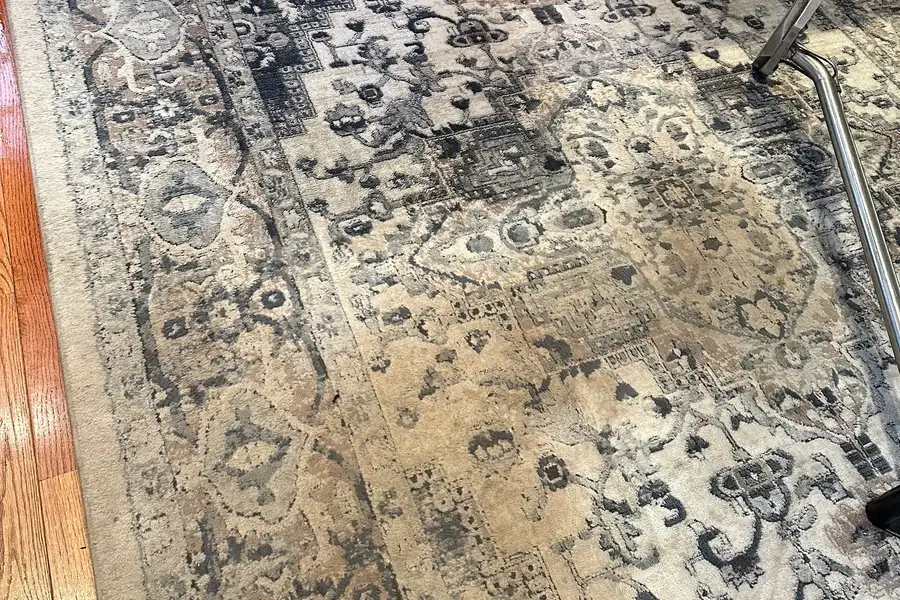
Each pair was photographed from the same position on the same visit. Move the handle to compare.

The same wool rug after cleaning, the pattern and color brought back A wool rug before cleaning, dulled and flattened by soil

Photo 02 · Wool rug

Move the handle on any photo to compare the same spot before and after.

Before you call

Frequently asked questions

Question 1: Do you clean all types of rug?

We clean wool, synthetic, oriental and shag rugs, with the method matched to the material. The fiber is identified and the dyes are tested before anything starts. Where a rug is viscose or another moisture-sensitive fiber, we say so before booking and adjust the approach.

Question 2: Will the colors fade after cleaning?

No. Gentle cleaning protects the colors while removing the dust and soil that were dulling them. Fading comes from sunlight and from harsh high-pH chemistry, which is what the fiber test exists to avoid.

Question 3: Can you clean an oriental rug in my house?

In most cases yes. The rug is cleaned in place, along with the floor underneath it. Where a rug is heavily contaminated, has bled in the past, or is made of a fiber that should not be wet-cleaned in a living room, we tell you before booking rather than after arriving.

Question 4: What about pet accidents on a wool rug?

Urine on wool is urgent. Wool is a protein fiber and urine is alkaline, so the longer it sits the more likely the dye is permanently changed. Call as soon as you find it. We can often remove both the stain and the odor, and where the dye has already changed, cleaning will not bring the color back.

Question 5: How long does a rug take to dry?

Most area rugs are dry within a day. High-pile and shag rugs take longer because there is more fiber holding moisture. We use air movers where the rug has to be walked on sooner.

Customer reviews

5.0 from 343 Google reviews, opens in a new tab
“Just had my carpets and couch cleaned by Jacob he was extremely nice and professional!! I’m so impressed by the results . I highly recommend and will be a returning customer. Thank You Jacob !!!”
Brittany Garofalo · · 5 stars on Google, a month ago

“I was extremely satisfied. The carpets look brand new, and-most importantly-everything was done right on time, exactly as we had agreed. They work very quickly and professionally.”

Tatyana German · · 5 months ago

“Because it was positioned so close to a light window, our leather couch had become lifeless, scuffed, and overall dried up. Amazing results were achieved on the material after a thorough cleaning and subsequent expert conditioning treatment. It looks really expensive, smells like rich leather, and is soft to the touch.”

Jordan Coleman · · 2 months ago

Read them all on Google, opens in a new tab

Estimate request

Tell us what needs cleaning

Tell us the rooms, the surfaces and the address, and attach a photograph of the affected area if you have one. You receive a written estimate the same day, with no obligation.

Same day written estimate Answered any hour at (908) 545-9387 5.0 from 343 Google reviews Non-toxic products, safe for children and pets

Written estimate

NO. 0343
A written estimate the same day, with no obligation.
Please enter your name.
Enter a 10 digit phone number.
Enter a valid email, or leave it empty.
Enter the street address.
Enter the town.
Enter the 5 digit ZIP.
What needs cleaning? (pick at least one)
Pick at least one surface.
Photographs of the area (optional, up to 5, 8 MB each)

A photograph of the area helps us give an accurate estimate.

    A quick check that you are a person, from Cloudflare. It sets no cookie for advertising and does not track you across sites.

    We reply the same day.

    CARPET CLEANING WIZARDS · N.J. ESTIMATE · SAME DAY RECEIVED NO. 0343

    Request received.

    Your written estimate comes back today, usually within a couple of hours. For anything urgent, call (908) 545-9387.

    Get my estimate