Understanding the professional rug cleaning process helps homeowners in Elizabeth, New Jersey make informed decisions about the care of their textiles. From assessment to final inspection, a professional workflow is designed to preserve color, fiber integrity, and overall structure while removing soil, stains, and odors. If you are considering professional services, a provider experienced in rug cleaning can walk you through the steps most suitable for your rugs and home environment.
Initial Assessment and Pre-Cleaning Inspection
The first phase of a professional clean begins with a careful assessment. Technicians examine the rug for fiber type, construction, dye stability, fringe condition, and any areas of damage or heavy soiling. This inspection identifies spots that need special attention and helps determine whether on-site cleaning or off-site, controlled-environment cleaning is best.
Professionals often perform a colorfastness test to ensure that cleaning agents will not cause dyes to bleed. They also document any pre-existing damage to set clear expectations and avoid disputes about changes post-cleaning. This level of transparency helps homeowners understand the risks and benefits of different cleaning methods.
Dry Soil Removal and Pre-Treatment
Removing dry soil before wet cleaning is essential because it prevents the soil from turning into a muddy residue during treatment. Technicians use industrial-grade vacuums and mechanical devices to dislodge embedded dust, sand, and debris. This step greatly improves the effectiveness of the subsequent wet-cleaning phase.
Pre-treatment involves applying agents that loosen oil-based soils, organic matter, and other residues. Professionals select products based on the rug’s material and the types of contaminants present. Pre-treatment may include enzyme solutions for pet stains or neutral pH detergents for general soil removal.
Agitation and Controlled Cleaning
After pre-treatment, gentle agitation helps lift soils from fibers without damaging the rug’s weave. Technicians use soft brushes or specialized machines that provide even agitation across the rug surface. For delicate rugs, hand cleaning may be required, using careful motion to avoid stretching or distorting the fibers.
During the cleaning phase, professionals use hot water extraction, low-moisture encapsulation, or specialized immersion techniques depending on the rug’s needs. Hot water extraction involves injecting a heated cleaning solution under pressure and immediately extracting it with powerful vacuum equipment. This method removes a high percentage of soil and water-soluble contaminants and is often followed by controlled drying.
Deep Cleaning Methods Explained
Several deep-cleaning methods are commonly used by professionals. Hot water extraction is one of the most effective for synthetic and many natural fiber rugs because it penetrates deeply and extracts contaminants efficiently. Low-moisture encapsulation works well for rapid turnaround and lower shrink risk—cleaning agents encapsulate soil and dry into a brittle residue that is vacuumed away.
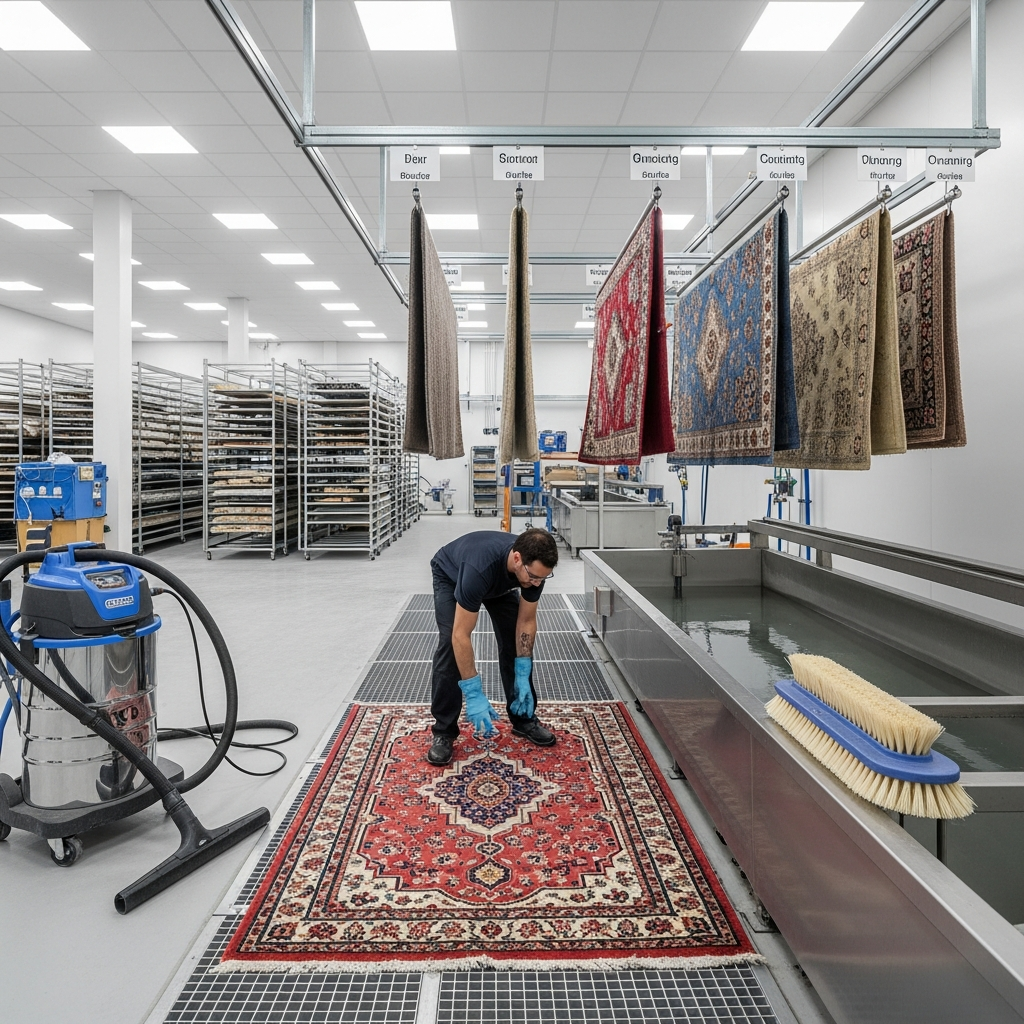
For antique or very delicate rugs, immersion cleaning may be performed off-site where rugs can be fully submerged and gently agitated in a bath with controlled temperature and equipment. This allows thorough cleaning with minimized mechanical stress. Each method is chosen based on the rug’s fiber content, age, dye stability, and condition.
Spot and Stain Removal Techniques
Stain removal is often a specialized part of the cleaning process. Professionals isolate problem areas and apply targeted treatments. For example, tannin stains like coffee or tea often respond to mild alkaline cleaners, while protein-based stains need cold water and enzyme-based agents. Oil-based stains can require solvent-based pre-treatment to break down residues.
Patience and technique are critical; technicians avoid over-treating a spot which can lead to halos or dye disruption. They also rinse treated areas thoroughly to remove any chemical residue that could attract more soil later. When conventional methods fail, professionals may use advanced chemistry or carefully controlled oxidizers, always testing prior to full application.
Rinse and Extraction
After agitation and stain treatment, thorough rinsing removes cleaning agents, soil, and loosened residues. High-powered extraction equipment forcibly removes water and dissolved contaminants, reducing drying time and discouraging mold or mildew. Proper extraction is what differentiates professional work from many consumer cleaning attempts; insufficient removal of moisture and residue often leads to rapid re-soiling.
Technicians monitor moisture levels and employ suction techniques to extract as much water as possible. For off-site cleaning, drying rooms may have specialized airflow and dehumidification systems to accelerate safe drying. On-site drying uses air movers and dehumidifiers when necessary to ensure the rug dries within a time frame that prevents secondary damage.
Fringe and Edge Cleaning
Fringe areas require their own procedures. Professionals clean fringe by hand with controlled solutions that do not spread onto the rug body, and they take care to align and protect the fringe fibers to avoid tangling. Edge cleaning often involves reinforcing the binding and evaluating for repair if needed. Technicians may recommend minor repairs before cleaning if edges are frayed to prevent further damage during the washing process.
Final Grooming, Inspection, and Delivery
Once the rug is cleaned and adequately dried, technicians groom the pile to restore appearance and texture. They trim any stray fibers, ensure fringes are neat, and re-fluff the pile to even out the nap. A final inspection confirms that stains, odors, and soils have been addressed and that there is no new damage from the cleaning process.
Before delivery or reinstallation, the cleaning team will typically provide care recommendations and document any remaining concerns. For off-site cleaned rugs, reinstallation includes checking alignment and ensuring proper placement of rug pads to enhance longevity.
Special Considerations for Heirloom and Antique Rugs
Antique and heirloom rugs demand a conservative approach. Because dyes and fibers are often fragile, technicians use lower temperatures, gentler agitation, and milder detergents. Off-site immersion cleaning in controlled facilities is frequently recommended for these pieces to minimize the risk of distress during transport and cleaning.
When handling vintage rugs, professionals balance cleaning effectiveness with preservation. They may highlight areas that need repair or stabilization before a full clean and advise against any aggressive chemical treatment that could compromise historical dyes or wool strength.
Health Benefits of Professional Cleaning
Professional cleaning reduces allergens, bacteria, and dust mites that settle in rug fibers. For households with allergy sufferers, this can be particularly beneficial. Deep extraction removes more particulates than vacuuming alone, lowering overall indoor allergen loads and contributing to improved indoor air quality.
Professionals also neutralize odors by eliminating the source rather than masking it. This is especially important in homes with pets, smokers, or accidental spills that have saturated fibers or backing materials.
FAQ
Q: How long does a professional cleaning take? A: Time varies by method and rug size. On-site cleanings can be completed in a few hours with adequate drying equipment, while off-site processes that include transport and controlled drying may take several days.
Q: Is professional cleaning safe for all rugs? A: Most rugs can be cleaned professionally when assessed and treated with appropriate methods. Delicate or antique rugs may require specialized handling, and a qualified technician will recommend the safest approach.
Q: Will cleaning remove all stains? A: While professional cleaning significantly improves most stains, some long-standing or chemically altered stains may not be fully removable. Technicians will provide realistic expectations during the assessment phase.
Q: How soon can I walk on my rug after cleaning? A: Light foot traffic is usually acceptable after the rug surface is dry to the touch, but full recovery of pile and weight-bearing function may take longer depending on thickness and drying conditions. Follow the technician’s guidance for the best results.
Choosing a Reputable Provider in Elizabeth
Select a company with documented experience, positive local reviews, and clear communication about methods and guarantees. Ask about staffing, training, equipment, and insurance. A reputable provider will offer a pre-cleaning inspection, transparent pricing, and post-cleaning care advice tailored to your rug’s material and your home’s conditions.
Ask about solutions for recurring problems like persistent odors or traffic lanes; experienced teams can recommend preventative measures such as rotational schedules, protective treatments, and appropriate rug pads for your flooring type.
Conclusion and Next Steps
Understanding the professional rug cleaning process empowers Elizabeth homeowners to make choices that preserve the beauty and health of their living spaces. When considering a provider, request a walk-through of the methods they use and a clear explanation of how they will protect fragile fibers and colors. If you want to arrange an assessment or schedule a comprehensive cleaning, reach out to specialists who focus on rug cleaning and can provide a service plan designed for your specific rugs and home environment. Professional care restores appearance, reduces allergens, and protects your investment in textiles that make your house feel like home.