Commercial Carpet Cleaning In Elizabeth, New Jersey For Offices: Presentable Floors, Productive Spaces
Office environments in Elizabeth, New Jersey are fast-paced. Employees, clients, and deliveries move through shared spaces every hour of the workday. Carpets in lobbies, corridors, and workstations absorb the visible signs of success: foot traffic, coffee runs, and day-to-day activity. Over time, fibers dull, traffic lanes appear, and odors can linger. Commercial carpet cleaning exists to reset that baseline so the professional image of your business shines from the ground up.
While residential and commercial carpet cleaning share fundamentals, offices present unique challenges: larger square footage, tighter schedules, fire and safety considerations, and the need to protect technology-dense environments. A commercial-savvy provider diagnoses traffic patterns, matches cleaning methods to usage, and coordinates timing to minimize disruption. If your organization is ready to elevate appearances without interrupting operations, review professional carpet cleaning services that understand the workflow of modern offices.
Elizabeth’s commercial scene includes historic buildings and newer complexes, each with distinctive layouts and carpet systems. Some spaces feature modular carpet tiles designed for replacement; others use broadloom installations spanning entire floors. The right strategy accounts for the type of installation, the backing, and the level of soiling to ensure consistent results across every zone.
Why Clean Office Carpets Matter
First impressions are formed in seconds. Clean carpets signal attention to detail and pride in your workplace. Beyond appearance, they contribute to comfort and productivity. Fine particles that settle into fibers can be redistributed into the breathing zone with foot traffic, which is why consistent maintenance can help keep indoor air feeling fresher. Employees notice the difference when carpets are clean and dry quickly, and visitors sense professionalism in a spotless lobby.
Carpet is also a long-term asset. Protecting fibers from premature wear extends the useful life of your flooring and reduces disruptions from replacement projects. A maintenance plan that prevents heavy soil accumulation is an investment in steadiness—fewer emergency cleans, fewer visual distractions, and a consistently polished look.
Maintenance Plans: The Core Of Commercial Success
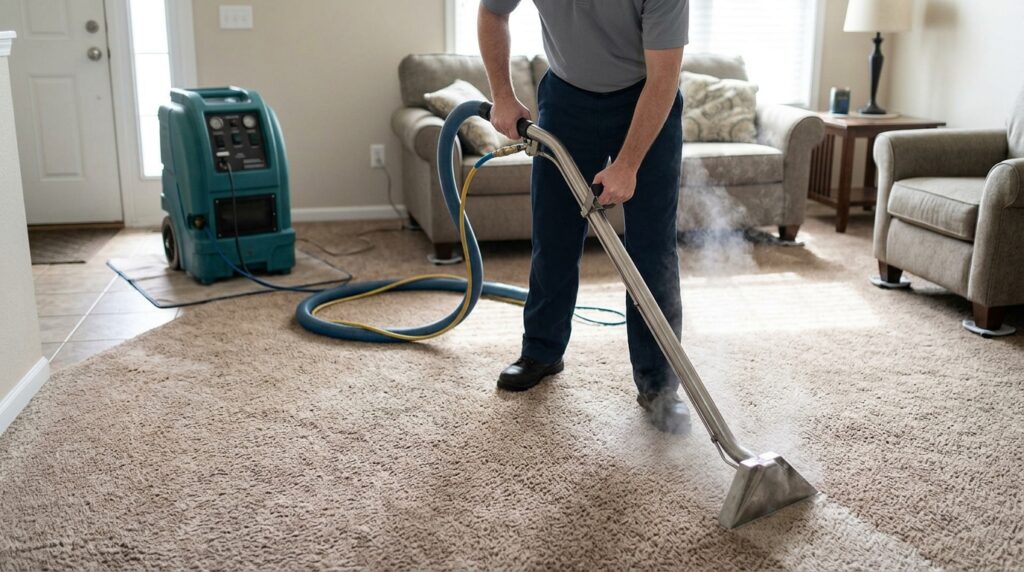
In office settings, the smartest approach is a maintenance plan that blends frequency and method. Daily vacuuming with high-filtration equipment captures dry soil. Interim cleaning, often with low-moisture encapsulation, keeps appearance levels high between deep cleans. Then, periodic hot water extraction flushes residues and resets the carpet. This layered approach balances cost, speed, and outcomes.
High-traffic lanes—lobbies, elevators, main corridors—may require more frequent attention than conference rooms or executive offices. Your provider should map the space and tailor the schedule accordingly. By targeting resources where they deliver the most visible impact, you maintain a crisp, uniform look with minimal downtime.
After-Hours And Safety-Conscious Operations
Workplaces run on timelines. Commercial carpet cleaning often occurs after hours or on weekends to avoid interrupting staff and clients. Efficient teams coordinate building access, elevator use, and security procedures in advance. They also manage hoses, cords, and signage to protect employees and visitors if any work must occur during business hours.
Safety extends beyond slip-and-fall prevention. Corner guards, protector pads under furniture, and careful routing protect finishes, baseboards, and sensitive IT areas. Responsible companies use clear communication—service notifications, door signage, and status updates—so your facilities team always knows what is happening and when areas reopen for use.
Method Selection For Office Environments
Interim encapsulation shines in offices because it dries quickly and resists resoiling when performed correctly. Encapsulation chemistry surrounds soils so they can be removed during routine vacuuming. This keeps carpets looking sharp day to day. When heavier soil loads build up, periodic hot water extraction provides a deeper rinse to remove residues and refresh texture and color.
In modular carpet tile installations, avoiding over-wetting is especially important to maintain tile integrity and prevent adhesive disruption. Experienced technicians tune moisture levels, choose appropriate agitation tools, and manage airflow so tiles dry quickly and evenly. In broadloom settings, they apply extraction passes that reach the fiber base without pushing contaminants deeper.
Spot And Spill Response Programs
Even in a well-maintained office, accidents happen: coffee, tea, toner dust, and salt from winter sidewalks. A spot response program trains designated staff to address fresh spills promptly with blotting, minimal moisture, and the correct spotter. Logging recurring issues helps your provider identify patterns and recommend preventive measures, such as additional walk-off matting or rearranged traffic flow.
By treating spots early and methodically, you limit visual distractions and reduce the need for extensive restorative work later. Over the course of a year, this discipline preserves a consistently polished appearance with less effort.
Communication, Documentation, And Quality Control
Commercial relationships thrive on predictability. Detailed proposals outline scope, methods, and timing. Service reports document areas cleaned, notable issues, and any recommendations for follow-up. This paper trail supports budgeting and helps facilities managers demonstrate due diligence in maintaining a healthy workspace.
Quality control includes post-clean inspections, feedback loops with on-site contacts, and periodic reviews of the maintenance plan. As staffing levels, foot traffic, or seasons change, your provider should recalibrate to maintain outcomes.
Noise, Odor, And Employee Comfort
Offices depend on quiet and comfort. Interim methods minimize machine noise during business hours; deeper cleaning is scheduled when spaces are empty. Modern formulations emphasize low odor and residue reduction, which helps carpets stay cleaner longer and keeps the office air feeling neutral and professional.
Drying guidance is straightforward: maintain airflow, restrict traffic on damp areas, and follow reopening timelines. When the carpet is truly ready, there are fewer early tracks or impressions, maintaining that freshly groomed look into the next workday.
Elizabeth, NJ Considerations
Local weather patterns influence office maintenance just as they do in homes. Winter salt and moisture require robust walk-off matting at entrances and prompt attention to traffic lanes. Summer humidity suggests timing deep cleans during cooler parts of the day and ensuring building HVAC supports efficient drying. Providers familiar with Elizabeth coordinate with building management to align cleaning windows with your mechanical systems for optimal results.
Historic properties may present delicate finishes and narrower corridors; modern spaces might feature expansive open offices with extensive workstation cabling. A seasoned team adapts protection strategies accordingly, safeguarding both architecture and operations.
Frequently Asked Questions
Q: How often should office carpets be professionally cleaned? A: A layered plan works best—daily vacuuming, interim encapsulation as appearance demands, and periodic hot water extraction. High-traffic corridors often need more frequent attention than private offices.
Q: Will cleaning disrupt our workday? A: Most commercial cleaning occurs after hours or on weekends. When daytime work is unavoidable, providers use signage, cord management, and quiet methods to minimize impact.
Q: Are low-odor options available? A: Yes. Modern formulations emphasize neutral scent profiles and residue reduction. Clear ventilation and drying guidance further support a comfortable return to work.
Q: Can you clean around cubicles and cabling safely? A: Experienced teams coordinate with facilities to route hoses and cords without disturbing workstations. Corner guards and protector pads help prevent surface damage during setup.
Q: How do you handle recurring coffee stains in break areas? A: Targeted pre-treatment, gentle agitation, and appropriate rinsing remove many beverage stains. A spot response program and improved matting help prevent rapid recurrence.
Q: What about modular carpet tiles? A: Moisture control is paramount. Technicians tune solution levels and extraction to protect adhesives and ensure even drying. Tiles with irreversible damage can be swapped out efficiently.
Q: Will frequent maintenance wear out the carpet faster? A: Proper methods extend carpet life by removing abrasive soils that grind down fibers. Residue reduction prevents rapid resoiling, helping carpets stay clean with fewer intensive interventions over time.
Q: Can you accommodate security and access protocols? A: Yes. Providers plan with building management, follow badge procedures, and maintain logs for accountability. Clear scheduling ensures staff know which areas are in service and when they reopen.
Q: How long until areas can reopen after deep cleaning? A: With managed airflow and controlled moisture, many areas are ready by the next business day. Your provider will advise exact timelines based on conditions.
Q: Do you move furniture? A: Light items may be shifted as agreed. Larger systems and heavy pieces are typically cleaned around or scheduled for coordinated moves with your facilities team.
Elevate Your Office With Confident Care
From a pristine lobby to clean, quiet corridors, professionally maintained carpets shape how clients and staff experience your space. Choose a partner who aligns cleaning windows with your schedule, communicates clearly, and delivers consistent results across every floor. For methods tailored to commercial realities and Elizabeth’s local conditions, connect with trusted carpet cleaning services and keep your office looking its professional best day after day.