
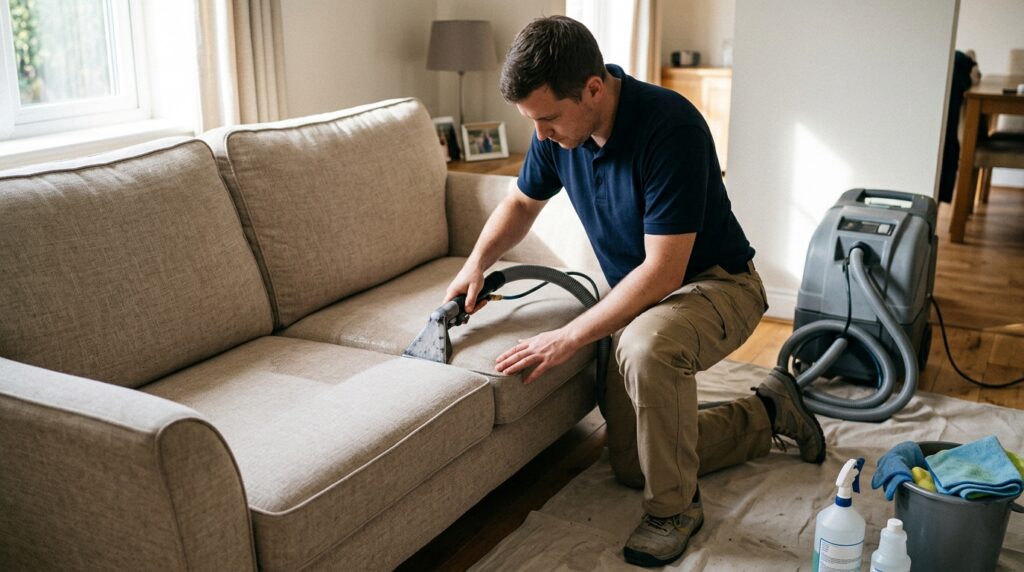
Between family dinners, pets hopping up for a cuddle, and New Jersey weather that tracks grit indoors, sofas in Elizabeth work overtime. When a mishap happens, quick, informed action can keep a small stain from becoming a permanent eyesore. This guide walks you through safe, fabric-aware strategies you can use the moment a spill hits—plus preventative habits that make routine touch-ups easier. If you prefer a professional touch for tricky fabrics or set-in stains, consider local sofa cleaning teams who can handle delicate fibers and advanced stain scenarios.
Before You Start: Read the Fabric Code
Your sofa’s tag likely includes a cleaning code that dictates what is safe:
- W: Water-based cleaning permissible.
- S: Use solvent-based cleaners; avoid excess moisture.
- WS: Either water-based or solvent-based methods may work.
- X: Vacuum only; professional consultation is recommended.
Always test your chosen method in an inconspicuous spot before treating the main area.
The Stain-Removal Mindset
- Act fast: Fresh stains lift more easily.
- Blot, do not rub: Rubbing drives soils deeper and distorts fibers.
- Use white cloths: Avoid dye transfer from colored towels.
- Go gentle: Increase strength gradually to protect dyes and weaves.
Your DIY Upholstery Toolkit
- Vacuum with upholstery attachment
- White microfiber cloths
- Spray bottles labeled for water and mild solution
- pH-balanced upholstery cleaner for water-safe fabrics
- Solvent cleaner for S or WS codes
- Soft-bristle brush
- Absorbent powder (like baking soda) for oily stains
- Small fan for drying
Step-by-Step: General Spill Response
- Lift solids with a spoon or dull knife, taking care not to scrape fibers.
- Blot liquid with a white cloth, working from the outside in.
- Apply the lightest appropriate cleaner based on the code; test first.
- Blot again until transfer stops; repeat with patience.
- Rinse lightly if using a water-based cleaner and the code allows, then blot dry.
- Encourage airflow with a fan to speed drying and prevent rings.
Treating Common Stains in Elizabeth Homes
Food and Sauces
Blot oils with absorbent powder. For water-safe fabrics, a mild solution lifts sugars and proteins. On solvent-only fabrics, a careful application of a suitable solvent, followed by blotting, helps break the bond without over-wetting.
Wine, Juice, and Coffee
Tannin stains respond to pH-balanced upholstery cleaners. Dab lightly, let it dwell briefly, and blot. Repeat if necessary, keeping moisture controlled to avoid spreading.
Grease and Body Oils
Absorbent powder can draw out oils from the surface. Follow with a suitable cleaner according to the fabric code. Expect multiple light passes rather than one intense treatment.
Ink and Marker
Ink is notorious for bonding quickly. Use a product designed for ink removal on upholstery or consult a professional. Testing is crucial, as aggressive solvents can lift dyes.
Mud and Outdoor Grit
Let mud dry fully, then vacuum thoroughly. Follow with spot cleaning to address fine residues. Rushing in with moisture can create a larger spread.
Makeup and Sunscreen
These often contain oils and pigments. Start with blotting and absorbent powder, then proceed with an appropriate cleaner. Take your time—it is safer for dyes and fibers.
Pet Accidents and Odors
Blot immediately and treat the spot based on fabric code. Persistent odors can originate beneath the fabric in padding; deeper treatment or professional help may be needed for complete odor management.
Steam: When and When Not
For W or WS fabrics, controlled steam with immediate extraction can help lift embedded soils. Avoid steam on S or X-coded fabrics. When in doubt, err on the side of low moisture and consult a knowledgeable provider.
Drying Without Rings
- Work the stain area slightly beyond the visible edge to avoid a halo.
- Lightly groom the nap for uniform texture.
- Use a fan to promote even drying; avoid direct heat that can set stains.
Prevention Habits for Busy Households
- Vacuum weekly to remove dry soils before they embed.
- Rotate cushions to distribute wear and prevent permanent compression marks.
- Use washable throws in high-use spots, especially with kids and pets.
- Address spills immediately to prevent dye migration or setting.
When a Pro Makes Sense
Complex fabrics, large spills, or recurring spots that reappear after drying all benefit from expert attention. Pros balance moisture, temperature, and chemistry to lift stains while protecting delicate weaves and dyes. In the middle of your decision-making, you can compare reputable sofa cleaning specialists who emphasize testing and controlled techniques suitable for upholstery.
Troubleshooting: If a Stain Returns
Wicking—the rise of deeper residue to the surface—can make a stain reappear. A second, lighter treatment combined with better extraction and longer drying prevents recurrence. For odor-related spots, particularly pet accidents, the issue may lie in padding, requiring deeper intervention.
Fabric Nuances: Microfiber vs. Natural Fibers
Microfiber often releases stains readily but may show water marks if over-wet. Natural fibers like cotton and linen can shrink or wrinkle if saturated and may require low-moisture methods. Blends behave unpredictably; testing is essential. Treat tufted or buttoned areas gently to protect underlying attachments.
Elizabeth, NJ Realities
Seasonal weather matters. Spring pollen sticks to fabrics, summer humidity slows drying, and winter grit grinds into fibers. Adjust your approach by maximizing airflow, using dehumidifiers during muggy months, and adding entrance mats to lower soil load inside.
Frequently Asked Questions
-
Can I use dish soap on my sofa? A tiny amount of the right pH-balanced cleaner may help on water-safe fabrics, but many dish soaps leave residues that attract dirt. Use upholstery-specific products when possible.
-
What if I do not know my fabric code? Start with vacuuming and blotting only. Test any cleaner in a hidden area, or consult a professional to identify the fiber and dye system.
-
Will baking soda damage fabric? Used sparingly as an absorbent, it is generally safe. Avoid grinding powders into the weave and vacuum thoroughly afterward.
-
How do I handle a red wine spill? Blot quickly, avoid rubbing, and use a pH-balanced cleaner for W or WS fabrics. For solvent-only fabrics, consider professional help.
-
Why did a ring appear after cleaning? Over-wetting or uneven drying can create a halo. Extend the cleaning zone slightly and dry with consistent airflow.
-
Are enzyme cleaners safe for all fabrics? Enzymes work well for organic stains on many W or WS fabrics but can be risky on some delicate fibers. Test first.
-
Can I fully remove ink myself? Sometimes, but ink often bonds quickly. Specialized removers and professional techniques produce better outcomes.
Bring Your Sofa Back to Life
With the right tools and a calm, methodical approach, many stains can be lifted safely at home. For delicate fabrics, recurring spots, or odor issues that reach padding, reach out to experienced sofa cleaning teams serving Elizabeth, NJ, and enjoy a living room that looks fresh and guest-ready again.