Pet ownership brings joy and companionship, but it also introduces specific cleaning challenges for area rugs and carpets. In Elizabeth, New Jersey households, addressing pet stains and odors properly requires timely response and often professional intervention to fully restore textiles. While spot treatments help with immediate cleanup, many homeowners discover that long-term solutions often come from specialized expertise — for example, trusted technicians providing professional rug cleaning services can remove deep-seated residues, neutralize odors, and repair damage caused by repeated incidents.
Understanding Pet Stains and Why They Persist
Pet stains are more than visible discoloration. Urine, vomit, and fecal matter introduce organic compounds that can discolor fibers, leave odors, and attract pests. When not fully removed, these compounds remain in backing and padding layers or in the rug pile, making odors return even after surface cleaning. Puppies and senior pets may have recurring accidents, and pets often return to a spot they can still smell if the underlying source is not eliminated. Professional treatments target both visible stains and the underlying compounds to prevent recurrence.
Immediate Steps to Take After a Pet Accident
Quick and careful action reduces long-term impact. Follow these immediate steps:
- Blot excess moisture with absorbent cloths; avoid rubbing, which pushes liquid deeper.
- Apply cold water to dilute urine and blot again to remove as much as possible.
- Use an enzyme-based cleaner formulated for pet stains; follow product directions and test on a hidden area first.
- Avoid ammonia-based cleaners for urine as they can intensify odors and encourage pets to re-soil the area.
Even with prompt DIY care, residues often remain in deeper layers; professional cleaning helps extract those compounds and neutralize odors at their source.
Why Professional Cleaning Is Often Necessary
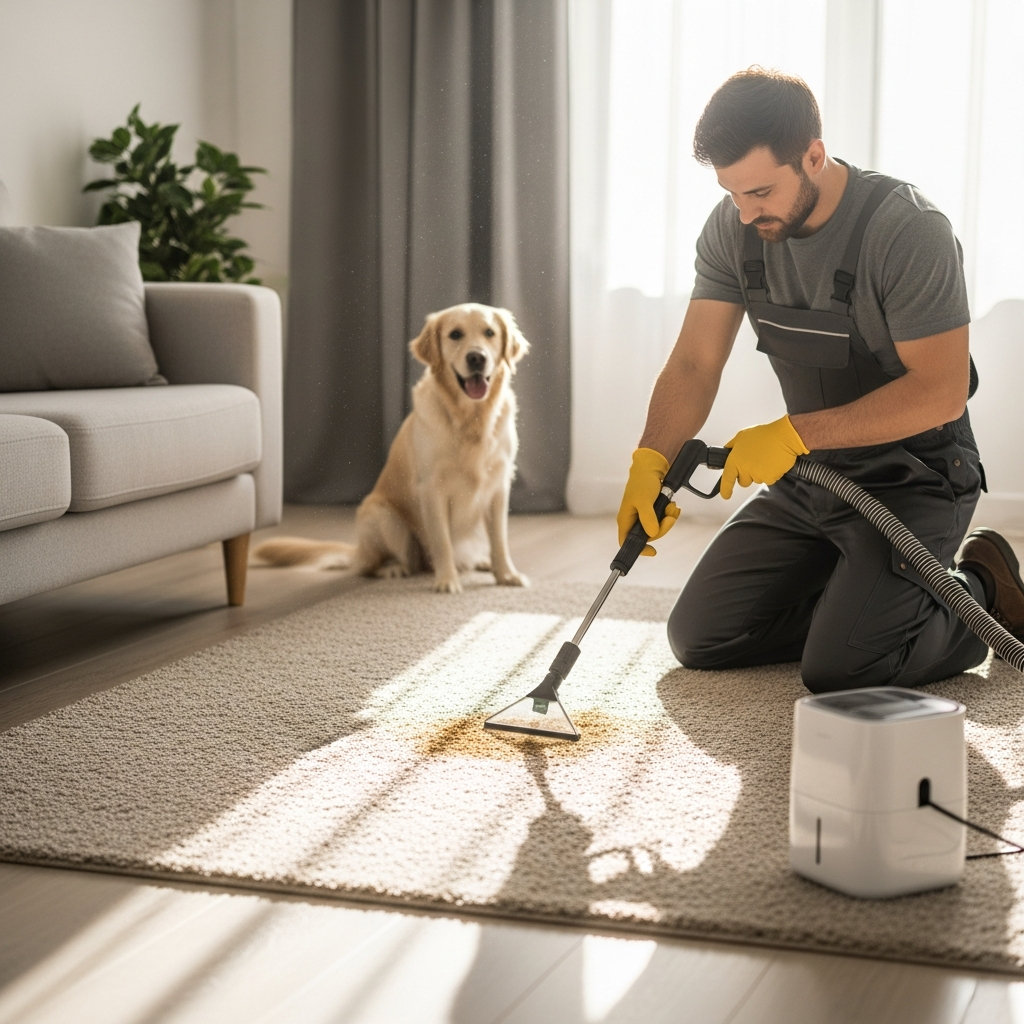
Professionals use specialized extraction equipment, industrial-grade enzyme formulas, and heat-activated treatments that can reach deeper layers in rugs and padding. They often perform a thorough inspection to identify the extent of penetration and determine whether additional steps like deodorization or pad replacement are required. Many pet owners find that one professional treatment dramatically reduces persistent odors and staining, especially when technicians use targeted chemistry and complete rinsing to remove residues rather than just masking smells.
Common Professional Treatment Steps for Pet Stains
Professional services for pet-stained rugs typically include:
- Comprehensive inspection and testing to determine material sensitivity and dye stability.
- Pre-treatment with industrial enzymes to break down organic compounds.
- Deep extraction using heated water or specialized low-moisture systems, depending on rug type.
- Deodorization treatments that neutralize volatile compounds rather than masking them.
- Follow-up inspection to ensure the stain and odor have been addressed.
Professionals may also recommend replacing padding if it retains odor or is heavily contaminated, since remnants in underlayment can cause problems even after the rug itself is cleaned.
Preventing Repeat Accidents
Prevention strategies reduce the likelihood of recurrence:
- Ensure pets have easy access to outdoor relief and maintain a consistent schedule for feeding and bathroom breaks.
- Train pets using positive reinforcement, and consult a veterinarian if accidents coincide with medical issues.
- Use washable rugs or mats in high-risk areas, and rotate rugs to provide fresh surfaces.
- Consider pet-specific repellents or mats for areas where you do not want pets to return.
Combining behavioral training with environmental changes yields the best long-term results.
How to Choose a Pet-Savvy Rug Cleaner
Not every cleaner handles pet stains effectively. When selecting a company, prioritize these qualities:
- Proficiency with enzyme-based chemistry: Companies should explain the products they use and why they are suited for pet waste.
- Strong extraction capability: Look for providers that use industrial extractors or heated systems appropriate for the rug’s fiber.
- Odor-neutralization techniques: Ask if they use oxidizers, ozone, or other neutralizing treatments and whether those are safe for your rug type.
- Pet-safe products: Ensure the cleaners are safe for both people and animals once the rug is fully dried and residues are removed.
Technicians who have handled many pet stains can offer insight into whether a rug is salvageable, whether padding replacement is necessary, and how to prevent recurring issues.
Dealing with Old or Set-In Pet Stains
Old stains are more difficult because residues may have bonded with fibers and backing materials. Professionals often use stronger enzymatic treatments and repeated extraction cycles to remove as much of the compound as possible. In some cases, restoration may include fiber-level work to recover texture or even dye correction to hide discoloration after thorough cleaning. Discuss expectations with the technician — they should explain which outcomes are realistic for a long-standing stain.
Safety and Health Considerations
Pet waste can contain bacteria and other pathogens, so sanitary handling is essential. Cleaning professionals follow protocols to protect technicians and homeowners, including using gloves, proper containment, and waste disposal measures. If you have young children, elderly household members, or immunocompromised individuals, discuss additional sanitization steps and confirm that the company uses safe and effective neutralizing agents.
FAQ
Can all pet stains be completely removed?
Many pet stains can be significantly reduced or eliminated, particularly when treated promptly. Long-standing stains may be more challenging, but professionals can often greatly improve appearance and odor levels.
Is it safe to use enzyme cleaners myself?
Yes, many enzyme cleaners are safe for household use, but always follow label instructions and test on a hidden area before applying widely. If the rug is delicate, consult a professional first.
Will cleaning remove the pet smell completely?
Professional treatments that include deep extraction and neutralization typically remove the majority of odors. If the padding beneath the rug retains odor, the smell may persist until the underlayment is replaced or treated as well.
How soon after cleaning can pets use the rug?
Once the rug is fully dry and any residues are rinsed away, it is generally safe for pets to return. Follow the technician’s guidance about drying times and any residual odors from cleaning agents.
What if my pet repeatedly soils the same area?
Recurring accidents can be behavioral or medical. Consult a veterinarian to rule out health issues and a trainer for behavioral interventions. At the same time, ensure thorough professional cleaning so the underlying scent does not encourage repeat behavior.
Final Steps and How to Book Help
If pet stains or odors are a concern in your home, schedule a professional inspection to determine the best treatment plan. Technicians will assess rug type, stain age, and extent of contamination to recommend extraction methods, enzymatic treatments, or restorative services if needed. Many homeowners see dramatic improvements after a professional cleaning that addresses both visible stains and the underlying causes of odor.
To pursue a reliable solution, choose a provider experienced with pet-related restoration and inquire about their cleaning process, safety protocols, and guarantees. If you are ready to schedule an evaluation or want to learn more about safe, effective treatments for pet stains and odors, consider contacting a reputable specialist who provides tailored care and restoration. For many families, reaching out to trusted professionals that list their services online is the first step toward fresh, clean rugs — and that includes providers who advertise dedicated approaches such as professional rug cleaning services.
Act now to protect your rugs and maintain a healthy home: arrange a consultation, document the affected areas, and follow the expert’s guidance for prevention and aftercare. With the right professional support, your rugs can be restored and maintained so they remain comfortable, safe, and attractive for years to come.