
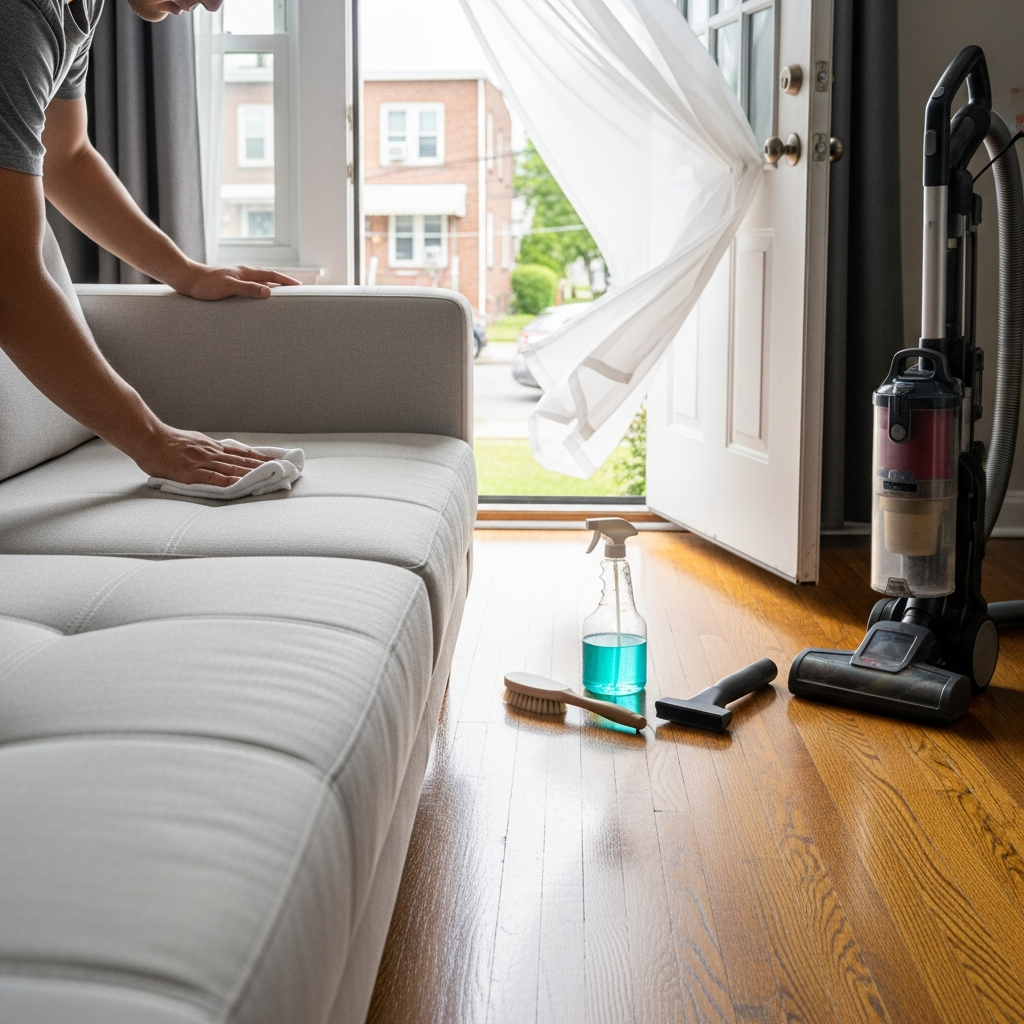
A spotless sofa changes the mood of an entire room. Whether your household in Elizabeth, New Jersey, bustles with kids, pets, or frequent guests, a clear step-by-step plan makes upholstery care easier, faster, and safer for every fabric type. The process below walks you from inspection through drying with practical detail, so you can clean with confidence and protect your sofa for years to come. If you ever decide that a skilled hand would speed things up or address tricky fabrics, you can look into professional sofa cleaning to complement your routine.
Step 1: Identify Your Fabric and Check the Care Tag
Locate the upholstery tag. Codes include W (water-based cleaning), S (solvent-based only), WS/SW (either), and X (vacuum only). If the tag is missing, test cleaners on a hidden area and start with the gentlest method. Knowing your fabric protects color, texture, and shape during cleaning.
Step 2: Prepare Your Workspace
- Open windows or turn on fans for airflow.
- Gather supplies: vacuum with upholstery tools, white microfiber cloths, soft brush, mild upholstery cleaner, solvent spotter for S fabrics, distilled water, enzyme deodorizer if needed.
- Remove throws and pillows; note cushion orientation for later rotation.
Step 3: Thorough Vacuuming
Dry soil removal is essential. Use slow, overlapping strokes with the upholstery tool. Switch to the crevice attachment for seams, tufts, and along the frame. Brush gently to lift embedded dust so the vacuum can capture it. This step prevents soil from turning into muddy residue when you use moisture.
Step 4: Map Out the Cleaning Sequence
Work from top to bottom and in panels: inside arms, outside arms, cushion tops, cushion sides, backrest, and deck. Planning prevents drips onto cleaned areas and ensures consistent results.
Step 5: Spot Test
Apply a small amount of your chosen cleaner to an inconspicuous area using a white cloth. Check for color bleed, texture changes, or rings as it dries. If any occur, adjust to a milder solution or a solvent approach for S fabrics.
Step 6: Treat Spots First
- Water-safe fabrics (W/WS): Lightly apply diluted upholstery cleaner to a cloth. Blot stains from the outside in. Rinse by blotting with a cloth dampened with distilled water.
- S-only fabrics: Use a compatible solvent on a cloth. Blot gently without oversaturating.
- Organic stains: Consider an enzyme-based cleaner if your fabric allows. Give appropriate dwell time, then blot and dry.
Step 7: Clean Panel by Panel
For W/WS fabrics, apply a small amount of diluted cleaner to a cloth and wipe each panel in straight, overlapping strokes. Immediately follow with a damp cloth to rinse and a dry cloth to absorb moisture. For S fabrics, use a solvent cleaner on a cloth and ventilate the room. Keep moisture low, especially near seams and cushion cores.
Step 8: Rinse and Neutralize Residue
Detergent residue can attract new soil. On water-safe fabrics, finish with a light damp blot using distilled water to remove remaining cleaner. Keep cloths clean so you do not redeposit soil. On S fabrics, use fresh, dry cloths to remove residues after solvent cleaning.
Step 9: Deodorize Thoughtfully
If odors linger, apply a compatible deodorizer to a cloth and blot gently. For enzyme products, follow label directions and allow dwell time. Always test first and avoid soaking cushions, which can trap moisture and prolong odors, especially during humid Elizabeth summers.
Step 10: Dry with Airflow
Stand cushions on edge to expose more surface area. Run fans to move air across the sofa and open windows if weather permits. Even drying prevents rings and musty smells. Gently brush nap fabrics after drying to restore a uniform look.
Step 11: Final Grooming and Reassembly
Once dry, brush nap fibers with a soft upholstery brush. Rotate and flip cushions to spread wear evenly. Replace throws and pillows, laundering them regularly to act as a sacrificial layer that intercepts everyday soil.
Advanced Tips for Elizabeth Households
- During wet or snowy weather, place washable throws on armrests where hands and paws often land.
- Vacuum more frequently in spring and fall when pollen and outdoor dust peak.
- Use minimal moisture during humid months; prioritize airflow to accelerate drying.
Problem-Solving for Tricky Stains
- Tannin spills (tea, wine): Blot quickly, apply a mild cleaner on W/WS fabrics, and rinse. Avoid heat until the stain is fully removed.
- Oily residues (makeup, lotion): Use a solvent spotter on S fabrics or follow with a careful rinse on W/WS fabrics to prevent a dull halo.
- Pet accidents: Blot, apply a compatible enzyme product, allow dwell time, then rinse or dry-blot depending on fabric.
- Mud and grit: Let dry fully, vacuum thoroughly, then address remaining discoloration with appropriate cleaner.
Common Mistakes to Avoid
- Skipping the vacuum step before wet cleaning
- Scrubbing aggressively, which distorts fibers
- Over-wetting cushions, leading to slow drying and odors
- Using colored towels that can transfer dye
- Mixing chemicals without testing compatibility
Maintaining Results
Consistency keeps your sofa looking new. Vacuum weekly, spot clean promptly, and rotate cushions monthly. Wash throws often. Keep a small kit ready—white cloths, fabric-safe cleaner, solvent spotter, and a soft brush—so you can address issues immediately.
When to Bring in a Professional
If stains persist, odors return, or your fabric is delicate or unmarked, a professional assessment protects your investment. Technicians perform fiber testing, use balanced chemistry, and manage moisture precisely. They extract suspended soil thoroughly and dry quickly to prevent issues. Many Elizabeth homeowners schedule an annual deep clean and maintain with quick weekly routines. If you want to compare your results to a deeper service, review options for specialized sofa cleaning that align with your fabric and lifestyle.
Frequently Asked Questions
Q: How often should I do a full clean? A: Vacuum weekly and complete a light overall cleaning every few months. Plan a deeper clean annually or more often for busy homes.
Q: What if I do not know my fabric type? A: Test in a hidden area with the mildest method first. If in doubt, limit yourself to vacuuming and blotting or consult a professional.
Q: Is steam safe for all sofas? A: No. Many fabrics are sensitive to high heat or moisture. Follow care codes and test before using any steam-based method.
Q: How can I prevent water rings? A: Use minimal moisture, work in small sections, and dry evenly with good airflow.
Q: What helps with pet odors? A: Enzyme-based deodorizers, used carefully and followed by thorough drying, are effective on organic smells.
Make Your Sofa the Centerpiece Again
With a clear sequence and steady habits, you can keep your upholstery in top shape and your living room feeling fresh. When you are ready for a deeper refresh or need help with delicate fibers, schedule expert sofa cleaning and enjoy a beautifully maintained home in Elizabeth, New Jersey.