
Your car’s seats and interior panels take daily hits from coffee, snacks, gym bags, kids, pets, and the changing New Jersey seasons. In Elizabeth, where commutes, weekend trips, and urban parking are part of life, vehicle upholstery sees constant wear that standard vacuuming can’t fix. Understanding what shapes overall cost and how long a detail-oriented service takes helps you plan more confidently—and it all starts with knowing what effective upholstery cleaning for autos really involves beyond a quick wipe-down.
Auto interiors combine textiles, foam, plastics, and occasionally leather. Each material responds differently to moisture and cleaners. A well-structured process protects electronics and trims while lifting embedded soils, neutralizing odors, and drying quickly enough to get you back on the road.
What influences overall cost for car upholstery care
No two vehicles or usage patterns are the same. The following variables shape the scope of work needed for a safe, thorough cleaning plan:
- Fabric type and condition: Cloth, microfiber, vinyl, faux leather, or real leather need different chemistry and moisture control.
- Soil load and stains: Food, drinks, pet accidents, sunscreen, makeup, and ground-in debris each require targeted treatment.
- Odor concerns: Smoke, food, and pet odors call for neutralization beyond fragrance.
- Vehicle size and seat configuration: More rows and fold-down features add surfaces and seams to treat.
- Access and weather: Garage or driveway space, power access, and seasonal humidity affect setup and drying.
- Detailing extras: Floor mats, cargo liners, seat backs, and headliners may be included or optional depending on your priorities.
Discuss these factors upfront so your plan aligns with your vehicle’s needs and your timeline.
Turnaround time: what to expect
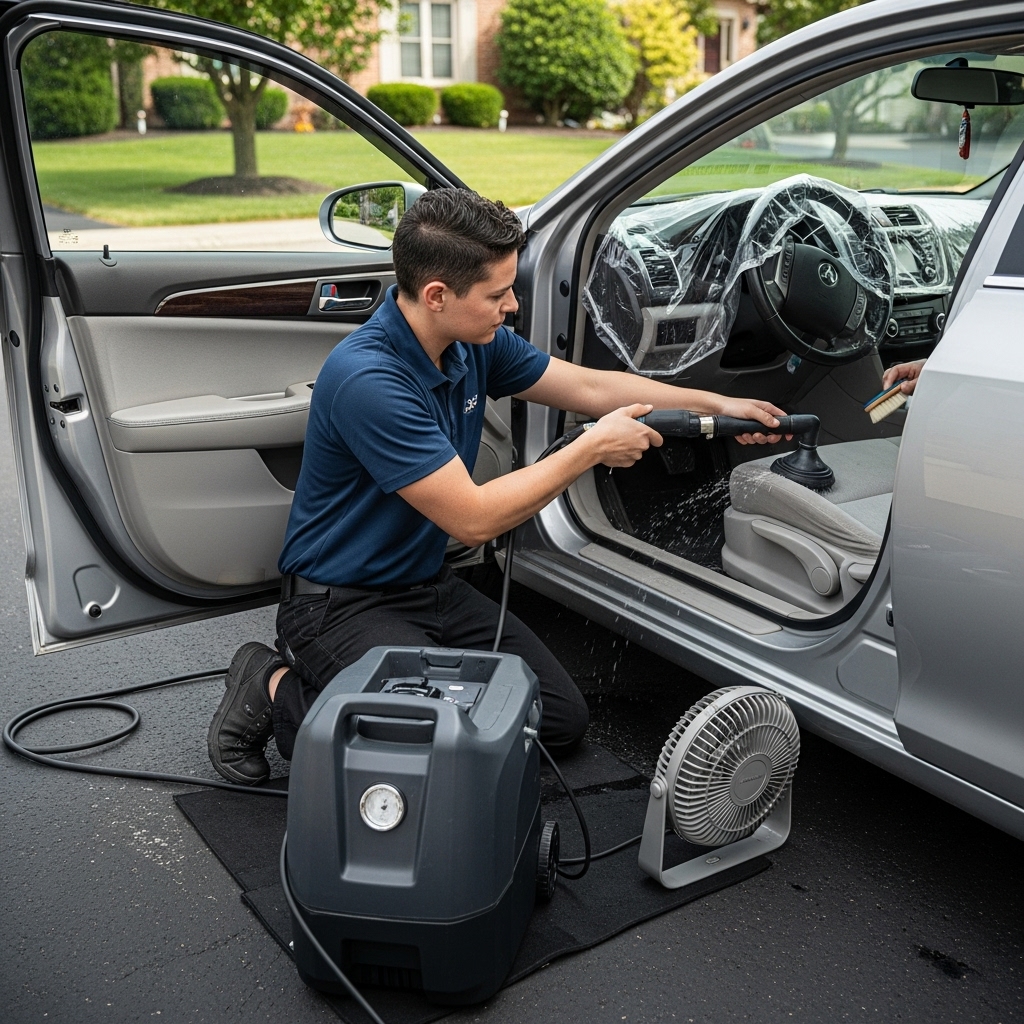
Time depends on fabric type, soil level, seat design, and drying conditions. A careful technician sequences interior cleaning to minimize downtime: pre-vacuuming and dusting, targeted pre-treatment, controlled agitation, extraction or low-moisture methods, and strategic airflow. In cool or humid weather, they may use additional air movement to ensure even drying before you drive.
The professional sequence for car upholstery
Auto upholstery care shares principles with home furniture but adds tight spaces, electronics, and trims that require added caution.
- Inspection and protection: Cover door sills, set mats aside, disconnect or shield sensitive electronics as needed, and test fabrics for colorfastness.
- Dry soil removal: HEPA-enabled vacuuming lifts grit from seams, seat backs, and under cushions to prevent mud when moisture is applied.
- Pre-treatment: Targeted solutions address high-contact zones—driver’s seat, armrests, and cup-holder areas—plus visible stains.
- Agitation: Soft brushes and towels work solutions into fibers and lift embedded soils without fraying textiles.
- Primary method: Hot water extraction on sturdy cloth seats or low-moisture/solvent methods for sensitive materials; leather receives separate cleaning and conditioning.
- Rinse and extraction: Multiple recovery passes remove residues to minimize re-soiling and help prevent wicking.
- Detail work: Seat belts, seams, headrests, and seat sides get focused attention; plastics are wiped and dressed as requested.
- Deodorization and neutralization: Functional agents treat odors at the source rather than covering them with perfume.
- Drying acceleration: Air movement and door or window management encourage fast, even drying with attention to weather.
Cloth vs. leather considerations
Cloth seats benefit from balanced pre-sprays and thorough extraction, while leather requires pH-appropriate cleaners and moisturizers to maintain suppleness and color. Faux leather and vinyl are durable but can crack if harsh solvents are used; gentle, manufacturer-friendly products are best. Mixed-material interiors require a segmented approach so that each surface gets the care it needs without overspray or cross-contamination.
Stain and odor realities
Some stains respond better before they dry or set. Coffee and soda contain tannins and sugars; sunscreen and lotions are oily; pet accidents introduce proteins and ammonia. Each type has a best-fit protocol. Odors tied to spills or moisture trapped in foam respond to neutralizers and proper drying more than to fragrance. The technician’s job is to match chemistry and dwell time to the problem, then remove residues thoroughly.
Elizabeth-specific logistics
Street parking, shared garages, and apartment lots shape how a service sets up equipment. Communicate parking and power access ahead of time. In summer humidity, additional extraction and airflow shorten dry times. In winter, while the air is drier, cold temperatures mean technicians must plan for safe, effective drying without leaving windows open for long.
DIY vs. professional results
Handheld household machines can handle fresh spills and light maintenance, but they often lack the extraction strength to pull moisture from foam cushions. That can lead to slow drying and recurring stains. Professional tools and techniques speed drying, reduce wicking, and remove more embedded soils—especially in high-mileage vehicles or family cars.
Protecting your results
- Blot spills quickly and avoid scrubbing; use a clean, absorbent towel.
- Vacuum seats and crevices regularly to keep grit from abrading fibers.
- Use sunshades and crack windows when safe to reduce heat buildup that can set odors.
- Rotate gear and car seats to avoid permanent pressure marks.
How to evaluate a proposal
Focus on process clarity: fabric testing, method selection, residue control, odor strategy, and drying plan. Ask how they’ll protect electronics and trims, and whether they include belts, headrests, and seat backs. A clear scope translates to predictable results and a realistic turnaround.
Signs of a careful provider
- Pre-inspection with dye and material testing.
- Protective coverings for entry points and trims.
- Equipment that supports strong extraction and airflow.
- Willingness to explain trade-offs and set expectations.
FAQ
Q: How long until I can drive after cleaning? A: It depends on fabric, weather, and extraction quality. Many interiors can be used the same day once surfaces are dry to the touch and airflow has done its job.
Q: Can every odor be removed? A: Odor results depend on the source and how deeply it penetrated. Effective neutralization and drying greatly improve outcomes, but some odors may need follow-up.
Q: Is leather cleaned the same way as cloth? A: No. Leather requires different cleaners and conditioning steps to protect finish and feel.
Q: Will cleaning leave a strong fragrance? A: A good service favors neutral, low-residue products and avoids heavy perfumes, leaving a fresh but subtle scent.
Q: Can I do small stains myself? A: Yes. Blot promptly and use a gentle cleaner tested in a hidden spot. For persistent stains or odors, professional extraction is recommended.
Get back on the road with a fresher interior
If you want seats that look brighter, feel cleaner, and dry efficiently, book a careful, fabric-smart upholstery cleaning service for your vehicle. You’ll enjoy a healthier, more comfortable ride and a result that lasts.