
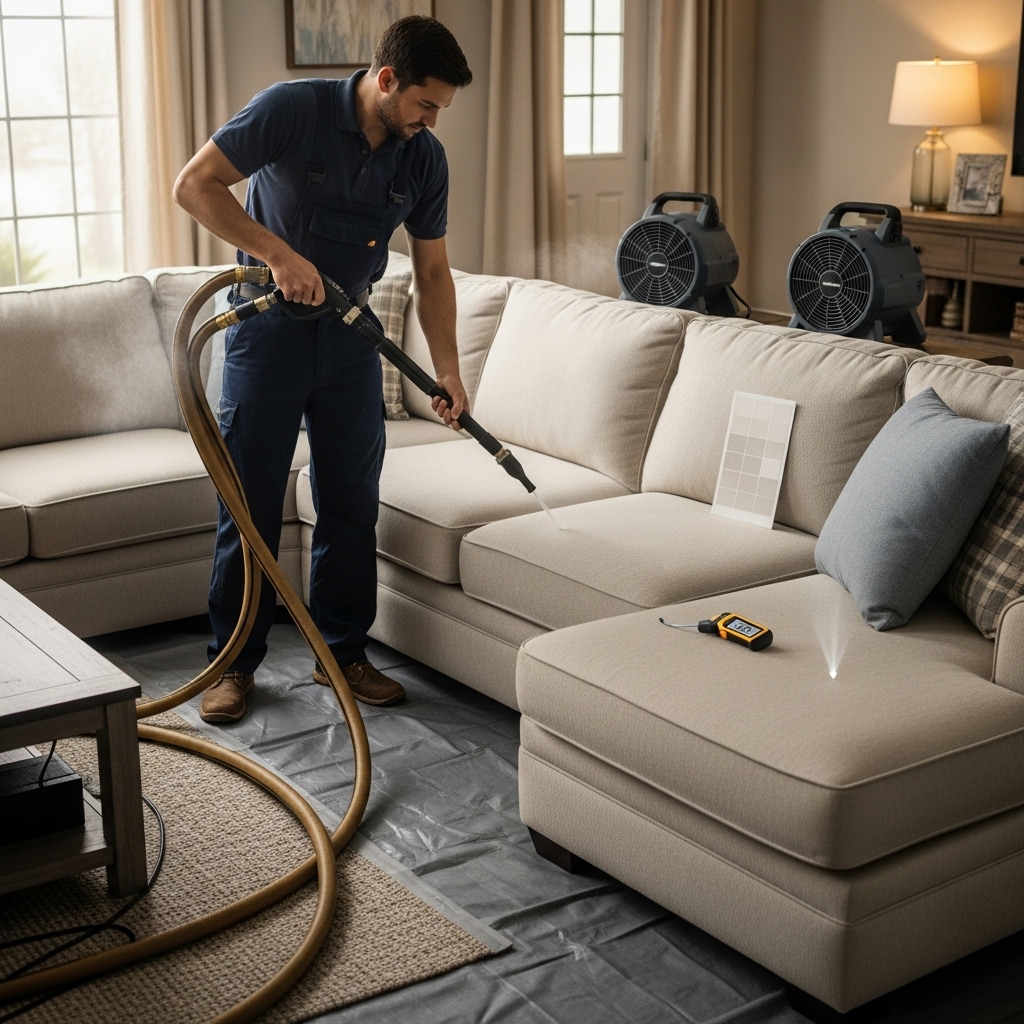
“Steam cleaning” is a popular phrase, but when we talk about upholstery, what most people mean is a controlled hot water extraction process tailored to the fabric. In Elizabeth, New Jersey—where seasonal humidity, busy homes, and apartment living are the norm—choosing when and how to use this method requires nuance. Done well, it delivers deep soil removal and a refreshed feel; used indiscriminately, it can overwet cushions or cause dye issues. This guide lays out the real pros and cons, alternatives for delicate textiles, and the practical steps that make hot water extraction a safe, effective form of upholstery cleaning.
What “steam” means in upholstery care
In many home services, “steam” is shorthand for heated water-based cleaning. For upholstery, professionals rely on adjustable temperature, controlled pressure, and carefully balanced chemistry rather than clouds of literal steam. The goal is to loosen soils, suspend them, and recover as much moisture as possible to speed drying. The method shines when matched to durable, colorfast fabrics and performed by trained technicians who test first.
Pros of hot water extraction on upholstery
- Deep soil removal: Heated solution and thorough extraction reach beyond the surface, rejuvenating flattened pile and dingy arms.
- Residue reduction: Balanced rinses remove detergents that can make fabrics feel sticky and re-soil quickly.
- Odor improvement: Proper neutralizers and moisture recovery help address odors at the source rather than masking with fragrance.
- Allergy relief: Pre-vacuuming and extraction reduce dust, dander, and allergens trapped in cushions.
- Versatility: Works well on many synthetics and sturdy natural blends when care is taken with pH and moisture.
Cons and risks to consider
- Overwetting potential: Without strong extraction and controlled application, moisture can penetrate foam, slowing drying and causing wicking.
- Dye migration: Some fabrics release dye when exposed to water or higher pH; testing is essential.
- Texture change: Sensitive fibers like rayon or viscose can distort with agitation and moisture.
- Ring formation: Improper technique may leave water rings on arm rests or cushion edges.
These drawbacks are manageable with proper testing, method choice, and patient technique, but they’re real risks when the process is rushed or applied uniformly to every fabric.
How professionals manage moisture
Technicians control flow rates, use multiple dry passes, and groom fabrics to align fibers for even drying. They may set cushions vertically to promote airflow and deploy air movers when needed. In humid Elizabeth summers, they adjust technique and drying support to suit conditions in the home.
Alternatives for delicate fabrics
Not every fabric loves water. For sensitive textiles, pros choose low-moisture or solvent-based methods that lift soils with minimal wetting. Encapsulation can freshen synthetics quickly, while specialized solvents help with certain natural fibers. The key is flexibility: pick the method for the fabric, not the other way around.
Step-by-step: a careful extraction process
- Inspection and testing: Identify fiber type, check dye stability, and note prior DIY attempts or damage.
- Pre-vacuum: Remove dry soils and dander that would otherwise create muddy residue.
- Pre-treatment: Apply fabric-appropriate solutions to high-contact zones and visible spots with measured dwell time.
- Agitation: Light brushing or towel work to lift soils without roughing delicate fibers.
- Rinse and extract: Controlled passes with balanced rinse; more dry strokes than wet for optimal moisture recovery.
- Detail spotting: Specialized treatments for tannins, inks, or dye transfer as needed.
- Neutralization and grooming: Balance pH and align pile to prevent marks and speed drying.
- Airflow management: Fans or open windows when weather allows for quicker, even drying.
Elizabeth-specific realities
Apartment elevators, narrow staircases, and street parking affect setup. Seasonal humidity influences dry times and technique. Reputable providers plan protection for walls and floors, manage hoses carefully, and set expectations about re-use timelines based on your home’s airflow and fabric type.
How to decide if extraction is right for your piece
Use a simple decision tree: Is the fabric sturdy and colorfast? Are soils more than light surface dust? Do you notice body oils on arms and headrests? If yes, hot water extraction is likely a good option. If the fabric is labeled “dry clean only,” the weave is loose, or dye rubs off during testing, a low-moisture or solvent approach may be safer.
What results should look and feel like
Expect an even, refreshed appearance without ring marks, a neutral scent, and a soft hand with no tackiness. Cushions should dry evenly without dark edges. A follow-up check the next day should reveal no new stains rising to the surface.
Maintenance between services
- Weekly vacuuming with the upholstery tool to remove lint and dander.
- Prompt blotting for spills; avoid aggressive scrubbing.
- Rotate cushions and manage sunlight exposure to minimize fading and wear.
- Consider protector on high-use seating to buy time for spill response.
Common misconceptions
- “Steam ruins upholstery.” Misapplied moisture can, but controlled extraction is designed to be safe on suitable fabrics.
- “More heat is always better.” Excess heat can set stains or affect fibers; professionals balance temperature with fabric tolerance.
- “Fragrance equals clean.” True cleanliness relies on soil removal and residue control, not strong scents.
Questions to ask a provider
- Which method do you recommend for my specific fabric and why?
- How will you prevent overwetting and ring formation?
- What is your plan if dyes migrate during testing?
- Do you use neutralizing rinses to minimize residue and re-soiling?
- How will you accelerate drying in humid weather?
Who benefits most from hot water extraction
Active households, allergy-conscious families, and homes with pets tend to benefit from deeper soil removal and better odor control. If your main seating looks dull despite regular vacuuming, controlled extraction often delivers the reset you’re hoping for.
When to choose a different method
If your fabric is delicate, the weave is loose, or the label warns against water-based cleaning, low-moisture or solvent methods protect your investment while still delivering a visible improvement. A flexible provider will explain the trade-offs honestly and recommend the safest route.
Mid-project checkpoints
During cleaning, a conscientious technician reassesses stains after initial extraction, adjusts chemistry as needed, and invites you to review progress. This collaborative approach keeps expectations aligned and surfaces issues early.
FAQ
Q: Is hot water extraction safe for all upholstery? A: Not for every fabric. It’s excellent for many synthetics and sturdy blends, but delicate fibers may need alternative methods. Testing determines the best approach.
Q: Will the process leave a strong smell? A: A properly performed job leaves a neutral, clean scent without heavy perfumes.
Q: How is ring formation prevented? A: By controlling moisture, balancing pH, and grooming edges and seams for even drying.
Q: Can extraction fix old, set stains? A: It often improves them substantially, but some stains resist complete removal. Honest providers set realistic expectations.
Q: How can I keep results longer? A: Routine vacuuming, prompt blotting, cushion rotation, and optional protector on high-use areas help maintain cleanliness.
Bring the best out of your fabrics
If you want a deep, even clean with careful fabric testing and smart drying strategies, choose a provider that treats each piece individually. Reclaim the comfort and look you love—book a thoughtful, fabric-aware upholstery cleaning service in Elizabeth and enjoy fresher rooms day after day.