
Keeping upholstery clean at home in Elizabeth, New Jersey, is part science, part habit, and part knowing when to call in help. Between winter slush, humid summers, and bustling family routines, chairs and sofas take on dust, pollen, and the occasional spill. This guide lays out a practical plan you can follow with tools you already own, plus smart upgrades worth considering. We will also highlight how to choose your moments for professional support so your do-it-yourself routine goes further. Early in your journey, it helps to define what effective upholstery cleaning looks like: gentle soil removal, fabric-safe spot work, and moisture control that avoids rings or musty odors.
Before anything else, identify your fabrics. Many pieces include a code on the underside of cushions or the frame: W, S, WS, or X. While these are guidelines, they orient your approach. W means water-based products are usually acceptable; S points to solvent-based cleaners; WS allows either with care; and X is vacuum-only. Even with codes, always test in an inconspicuous area and wait to see the result before treating visible spots. In Elizabeth’s varied housing stock—from pre-war buildings to newer condos—older pieces may lack labels, making testing even more important.
Step 1: Dry Soil Removal That Actually Works
Vacuuming is more than a quick once-over. Use a vacuum with strong suction and genuine upholstery tools. Start with cushion tops, then edges and seams where crumbs and grit collect. Tip cushions upright and vacuum the zipper edge and welt cords. For tufted pieces or textured weaves, use a soft brush attachment to agitate lightly; you will free particles trapped by the fabric structure. Flip loose cushions and vacuum the base deck of the sofa as well. The goal is to remove as much dry material as possible before you introduce any moisture.
Dust the surrounding area—side tables, lamp bases, window sills—so freshly cleaned upholstery does not immediately pick up nearby dust. Entry mats by apartment doors or front steps help limit the soil that migrates from shoes to cushions. In Elizabeth’s winter months, keep an eye on salt and road residue, which can transfer from clothing onto arms and seats.
Step 2: Smart Spotting That Does Not Set Stains
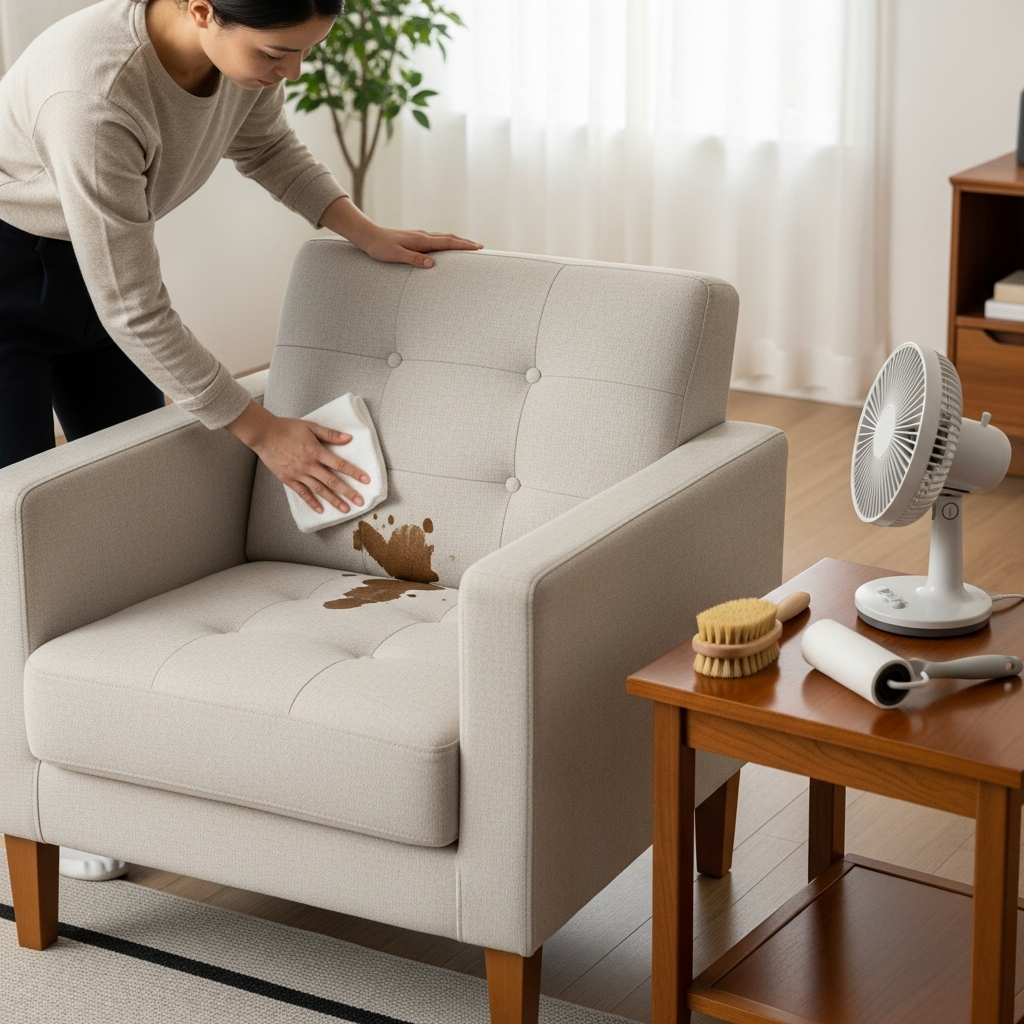
Spills happen. The first rule is to blot, never rub. Use a clean, white, absorbent cloth and press to lift liquid; replace the cloth section as it becomes saturated. For food spots, lift solids gently with a dull spoon. If your fabric code permits water-based cleaners, mix a mild solution and lightly apply to the spot edge, working inward to prevent spreading. Still, restraint is key—too much product drives soil deeper or causes rings.
For oily marks—body oils on arms, a butter drip during a movie night—consider a small amount of solvent-based spotter safe for S or WS fabrics. Test first. Apply sparingly and blot. Follow with a light water-based rinse if the fabric allows, then blot again. The point is to loosen the offending material without overwetting or scrubbing the fiber surface.
Step 3: Low-Moisture Maintenance Cleans
Between deeper services, a gentle, low-moisture clean can perk up dull fabric. Lightly mist a fabric-appropriate cleaner and work it in with a clean microfiber towel, turning the towel to capture soil. Keep applications light; you are not trying to soak the piece. Finish by grooming the nap with a soft brush so the surface dries uniformly. Use fans and open interior doors for airflow. In Elizabeth’s humid summers, air conditioning helps pull moisture from the air so drying is quicker and odor-free.
If cushions have removable covers, resist the urge to launder them unless manufacturer instructions explicitly allow it. Washing can cause shrinkage or zipper strain. Often, a careful in-place cleaning preserves fit and shape better than removal.
Seasonal Strategies for Elizabeth Homes
Spring brings pollen; vacuum more frequently and consider a quick wipe-down of arms where dust settles. Summer humidity raises the stakes for moisture control—use less liquid and more air movement. Fall is a good time for a maintenance clean before holiday gatherings. In winter, place throws on arms and headrests to intercept oils and road residues that migrate from coats and scarves.
Apartment dwellers who crack windows for fresh air may notice more dust. Balance airflow with filtration; a clean HVAC filter reduces airborne particles that land on upholstery. In older homes near busier roads, fine soot can collect faster; lean into vacuuming and prompt spot work.
Common DIY Mistakes to Avoid
Over-wetting tops the list. Water marks, browning on natural fibers, and musty odors come from too much moisture and too little ventilation. Another frequent misstep is using the wrong cleaner—general-purpose products can leave sticky residues that attract soil faster. Finally, aggressive scrubbing distorts textures like chenille and microfiber, leaving permanent shading. Gentle agitation, light application, and patience are your friends.
Skipping the dry soil step undermines the whole effort. If grit remains in the fabric, any dampness you add turns particles into abrasive paste. Think of vacuuming as the foundation of all other steps; it delivers a cleaner result with less effort later.
When to Bring in a Professional
Call for help when stains are set, odors persist after your best efforts, or fabrics are unlabeled and delicate. Heirloom pieces, velvet, silk blends, and complex designs with tufting or nailhead trim all benefit from expert handling. If pets are part of your family, periodic professional rinsing removes oils and dander that domestic vacuums cannot fully extract. Households with allergies often notice the biggest improvements after deep, residue-light cleaning that targets fine particulate.
In the midlife of your DIY routine, it helps to remember what comprehensive upholstery cleaning achieves: uniform soil removal that reaches padding interfaces, a neutralized finish that does not feel tacky, and a drying plan designed for the fabric and the season.
Care for Specific Fabrics
Microfiber: Vacuum thoroughly to lift hair and grit. For spots, use a fabric-appropriate cleaner and a light circular motion with a microfiber cloth, then groom in one direction as it dries to avoid ring patterns. Microfiber responds well to controlled moisture but can show water marks if flooded.
Cotton and Linen Blends: These breathe beautifully but are sensitive to moisture. Keep spot work minimal, and follow with quick air movement. Browning can occur if over-wet; a light, balanced approach prevents this.
Velvet and Chenille: Always work with the nap. Use a very soft brush to align fibers after any treatment. Avoid heavy scrubbing, which crushes the pile and creates shiny patches.
Leather and Faux Leather: Dust and wipe with a slightly damp cloth, then condition real leather periodically. Keep sharp objects and harsh cleaners away to prevent cracks and color loss. While these materials differ from textiles, they share rooms and benefit from routine attention.
Odor Control at Home
Neutralizing odors starts with dry soil removal and targeted spot cleaning. Ventilation helps, too. If a cushion smells musty, prop it vertically and aim a fan across the surface; airflow breaks up damp pockets. Avoid masking scents that leave residue. If odors persist, deeper flushing from a professional may be needed because smells can live in the foam or batting beneath the cover.
Family and Pet-Friendly Practices
Use washable throws where kids snack or pets lounge. Brush pets regularly to cut shedding. Teach family members to blot spills immediately and place cups on trays. Simple habits prevent many deep-clean emergencies and make routine upkeep faster.
Frequently Asked Questions
Q: How often should I vacuum upholstery? A: Aim for once a month in average-use rooms and more often in high-traffic areas or during pollen season. Quick, consistent care yields better results than infrequent, intensive efforts.
Q: Can I steam clean my sofa? A: Be cautious. Many fabrics do not appreciate high heat and unregulated moisture. Without proper extraction and drying, steam can leave rings or encourage odors. Low-moisture cleaning methods are generally safer at home.
Q: Are homemade cleaners safe? A: Mild, fabric-appropriate solutions can work, but always test first. Avoid vinegar on natural fibers—it can set some stains and alter pH in ways that cause browning.
Q: What if dye transfers onto my cloth while blotting? A: Stop, let the area dry, and reassess. That indicates fugitive dye. Professional testing and methods are recommended to avoid spreading color loss.
Q: How do I handle unknown stains? A: Treat them as gently as possible. Start with blotting and a small amount of a mild cleaner if allowed by your fabric code. If no change, pause and consult a professional to avoid setting the issue.
Building Your At-Home Kit
Assemble a small bin with white cotton cloths, a soft upholstery brush, a gentle fabric cleaner, a solvent spotter for appropriate fabrics, and a compact fan. Add a lint roller for quick touch-ups and a dedicated upholstery vacuum tool. Keep the kit where you store other cleaning supplies so you reach for it quickly after spills.
Putting It All Together
A reliable routine is simple: vacuum monthly, blot spills immediately, perform light low-moisture cleanings when fabric looks dull, and schedule professional help based on use and season. By respecting fabric limitations and harnessing airflow, you will avoid most pitfalls and keep seating looking inviting year-round in Elizabeth’s changing climate.
Bring Your Seating Back to Its Best
When you are ready to pair smart DIY with expert support for lasting results, schedule professional upholstery cleaning and enjoy fresher, healthier rooms across your Elizabeth home.