Commercial Carpet Cleaning Services in Elizabeth, New Jersey: An Operations-Focused Guide
In Elizabeth, New Jersey, commercial facilities face a perfect storm of carpet challenges: commuter foot traffic, seasonal moisture, food service spills, and continuous occupancy. From office towers and medical suites to retail floors and hospitality venues, a strong carpet maintenance plan protects your brand, supports indoor air quality, and extends flooring life. This guide outlines methods, scheduling strategies, compliance considerations, and vendor management tactics to help facility leaders partner effectively with a commercial-focused provider. To evaluate options, many managers begin by surveying local carpet cleaning services that can deliver predictable results with minimal disruption.
Operational Goals Drive the Right Plan
Commercial carpet care is about continuity. The objective is not only to restore appearance but also to keep it consistent day after day. That requires a maintenance plan that integrates routine vacuuming, interim low-moisture cleaning, and periodic restorative extraction. Align the plan to traffic patterns, material types, and business hours to maintain a clean, safe, and presentable environment for employees and patrons.
Understanding Material Mix and Traffic Zones
Facilities often combine carpet tile, broadloom, entry mats, and transition zones. Each responds differently to moisture, chemistry, and mechanical agitation. Entryways and corridors collect the most abrasive soil; conference rooms and open offices accumulate fine particulates and oils; retail spaces face spills and cart wheel tracks. A zone-based approach applies the right method and frequency to each area, optimizing outcomes and budget.
Methods for Commercial Success
- Low-Moisture Encapsulation: Ideal for interim cycles in offices and retail where quick turnaround is essential. It improves appearance rapidly and controls resoiling when coupled with thorough vacuuming.
- Hot Water Extraction: Provides restorative depth for heavy traffic lanes, cafeterias, and spill-prone zones. Truckmount or high-performance portable systems deliver strong recovery for faster drying.
- Bonnet Maintenance: Useful as a surface-level brightening step between deeper services, especially near entries and elevators.
- Dry Compound: Helpful for moisture-sensitive carpet tile and spaces that cannot accommodate hoses or extended drying windows.
Scheduling and Access Strategy
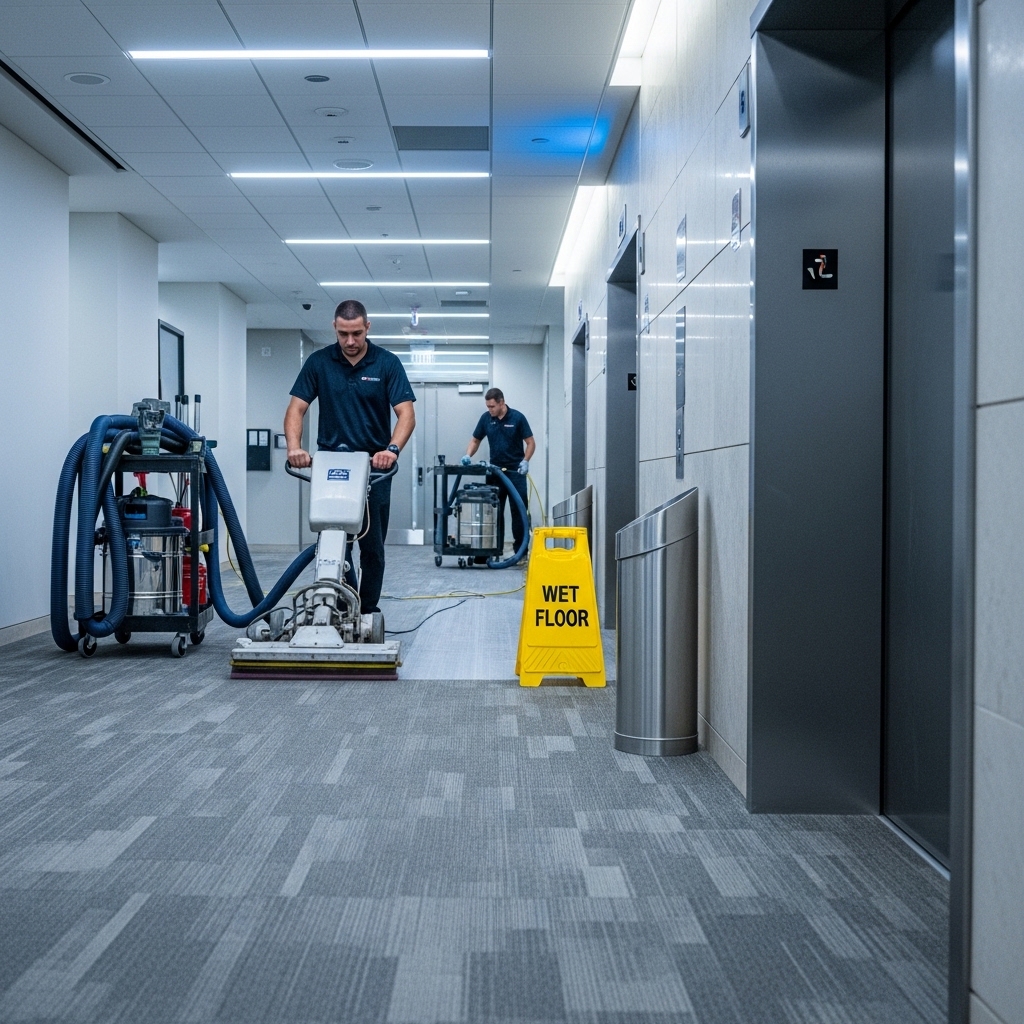
Plan around occupancy to minimize disruption. After-hours or staggered service allows for thorough cleaning and proper drying before opening. Coordinate access badges, elevator control, loading dock timing, and staging areas for equipment. A well-structured work order details square footage, zones, method per zone, special concerns, and safety measures to protect assets and people.
Safety, Compliance, and Communications
- Safety: Vendors should deploy wet floor signage, corner guards, and cable management. They should confirm chemical safety data and maintain ventilation where needed.
- Compliance: Medical facilities and food service areas may require specific protocols. Ensure your provider understands relevant standards and building policies.
- Communications: Clear updates before, during, and after service keep stakeholders aligned. Post-service reports document results, issues, and recommendations.
Performance Metrics That Matter
- Appearance Consistency: Measured by periodic inspections against baseline photos or glossaries for traffic lanes, entries, and elevators.
- Dry Time: Target rapid turnover to restore access and reduce slip risk.
- Resoiling Rate: A function of residue control and vacuuming quality; lower rates indicate effective chemistry and process.
- Spot Recurrence: Track reappearing spots to identify wicking or unaddressed sources.
Building a Maintenance Schedule
- Daily and Weekly: High-performance vacuuming and spill response. Entry mats cleaned and rotated regularly.
- Monthly or Bi-Monthly: Low-moisture encapsulation for main corridors and open office areas.
- Quarterly to Semiannual: Restorative extraction for heavy lanes, cafeterias, and entrances.
- Annual Review: Evaluate wear patterns, replace protectors, and adjust frequencies.
Managing Stains and Spills at Scale
Institutional settings must respond quickly to protect fibers and prevent stains from setting. Train staff to blot, not rub, and to note the spill type. Your provider should supply an approved spot guide and safe on-site spotter. For chronic spill zones, pre-scheduled quick-response visits can prevent visible degradation and maintain a clean image between full services.
Carpet Tile Considerations
Carpet tile allows selective replacement of damaged squares, but long-term success still depends on effective cleaning. Low-moisture methods often pair well with tile to prevent seam swelling and adhesive issues. When extraction is needed, vendors should control moisture and use wands or tools designed to limit overwetting and wick-back.
Protecting Indoor Air Quality
Commercial spaces concentrate dust, allergens, and volatile residues from traffic and operations. Effective cleaning reduces these contaminants while careful product selection avoids heavy fragrances or residues that can trigger sensitivity. Ventilation and filtration maintenance enhance results, particularly in sealed office environments where recirculated air magnifies any issues.
Vendor Qualification Checklist
- Documented Process: A written sequence from inspection to drying, with method-by-zone detail.
- Training and Supervision: Experienced crew leads, ongoing education, and demonstrated problem-solving on specialty fibers.
- Insurance and Risk Management: Certificates of insurance, safety data, and incident reporting protocols.
- Equipment Readiness: Clean, well-maintained machines, backup units, and contingency plans.
- Reporting: Post-service photos, findings, and recommendations for preventive care.
Budgeting Without Cutting Corners
Cost control is about smart frequency, not skipped steps. Interim low-moisture cycles preserve appearance between deeper extractions, reducing overall restorative burden. Entry mat investment and staff training lower imported soil. Align expectations with realistic schedules, and prioritize zones that shape customer perception and safety first.
Elizabeth, New Jersey Logistics
Urban density and older building stock require planning. Confirm loading dock hours and elevator protections. Winter months demand extra attention to de-icing residues and moisture control; summer humidity can extend drying unless airflow is engineered. Coordinate with security and cleaning crews to stage equipment and manage trash removal from recovery tanks in a sanitary, compliant manner.
Mid-Contract Reviews and Adjustments
Quarterly reviews align outcomes with goals. Inspect high-traffic paths, evaluate recurring spots, and calibrate schedules. When foot traffic patterns shift—such as office reconfigurations or retail promotions—update the plan to maintain visual standards. Encourage your provider to recommend method changes or protector reapplication to control long-term wear.
Frequently Asked Questions
Q: How quickly can areas reopen after cleaning? A: Low-moisture encapsulation can allow near-immediate use; restorative extraction typically requires a few hours of dry time with airflow assistance.
Q: Will cleaning disrupt our operations? A: With after-hours scheduling and clear zone sequencing, disruption is minimal. A good provider stages work to keep critical paths functional.
Q: How do we prevent rapid resoiling? A: Balanced chemistry, thorough rinsing during extraction, and consistent vacuuming reduce residues that attract dirt.
Q: Can we standardize results across multiple floors? A: Yes. A method-by-zone plan with defined frequencies and KPIs ensures consistent outcomes.
Q: How do we handle recurring coffee or toner spills? A: Targeted spot protocols and quick-response visits reduce recurrence and protect appearance ratings.
Q: Are green products effective for large facilities? A: Modern eco-conscious products perform well at scale and contribute to healthier workspaces.
Move Forward With Confidence
Clean, consistent carpets support safety, brand image, and occupant satisfaction. Partner with a provider that documents processes, communicates clearly, and aligns service windows to your operation. To compare capable partners and plan your next maintenance cycle, review local carpet cleaning services that can deliver commercial-grade results with minimal downtime.