
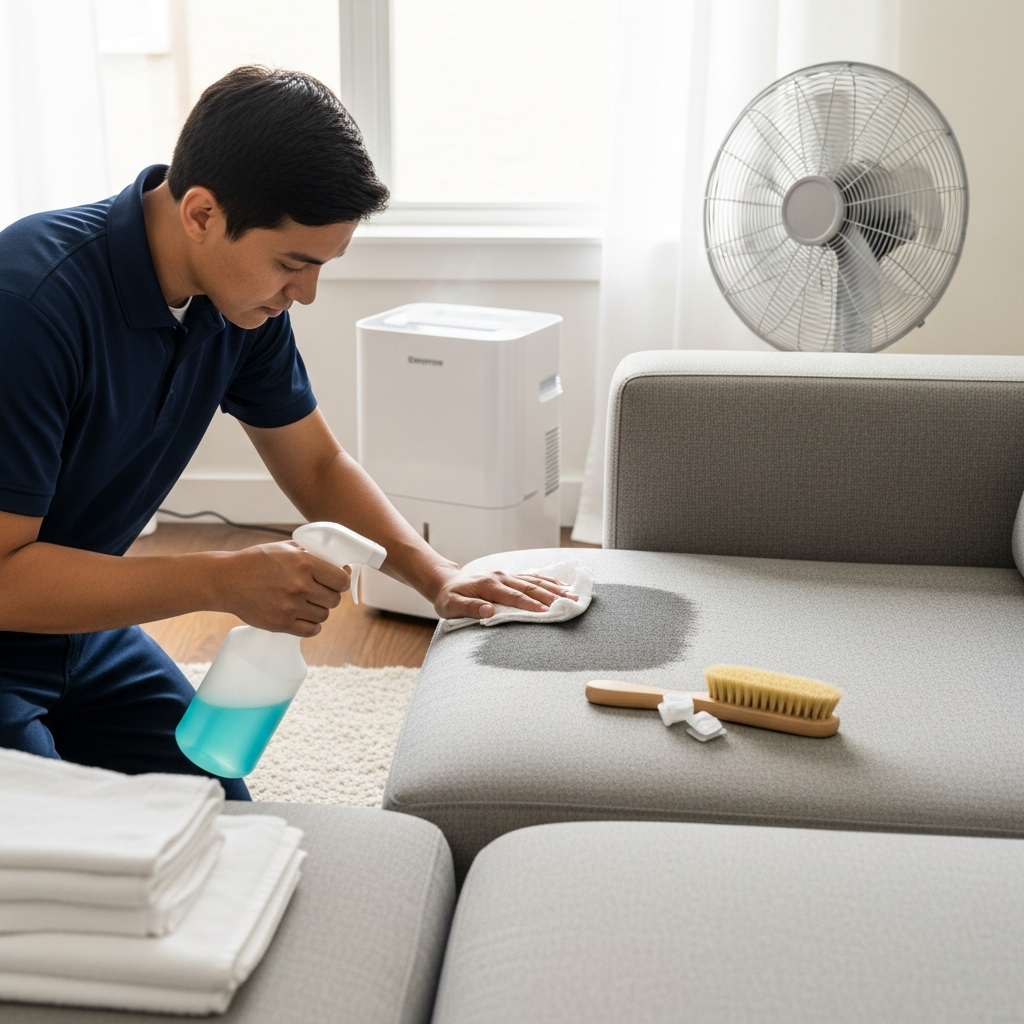
Solving the Toughest Upholstery Problems in Elizabeth, NJ
Some upholstery challenges go beyond basic spot removal. When you face persistent odor, recurring stains, cellulosic browning, or dye migration, a standard routine can fail despite your best efforts. This advanced troubleshooting guide equips you with targeted strategies for stubborn issues, informed by the fiber types and climate conditions common to Elizabeth, New Jersey. To align your plan with proven methodologies, you can reference comprehensive guidance on upholstery cleaning and adapt the following techniques to your exact fabric and construction.
Problem 1: Wick-Back and Recurring Stains
Symptoms: Spots look gone when wet, then reappear as edges or halos during drying. Causes include residues in backing or cushion foam that migrate upward.
Solutions:
- Use minimal moisture; work in small sections.
- Make multiple light extraction passes rather than one heavy flush.
- Feather-clean beyond the original spot to avoid hard rings.
- Place absorbent towels on the spot with light weight during the first hour of drying to capture upward migration.
Problem 2: Cellulosic Browning on Natural Fibers
Symptoms: Yellow or brown discoloration after cleaning cotton, rayon, or linen. Often linked to overwetting and high pH.
Solutions:
- Pre-acidify with a mild, fabric-safe acid rinse to stabilize color.
- Limit moisture and shorten dwell times.
- Dry aggressively with airflow and dehumidification, especially during humid Elizabeth summers.
- If browning appears, apply a reducing agent formulated for textiles, test first, then groom and dry again.
Problem 3: Dye Bleed and Color Transfer
Symptoms: Color movement onto towels or adjacent areas during spotting or rinsing.
Solutions:
- Stop water-based cleaning and switch to a solvent-safe, low-moisture approach.
- Lower temperature and pH; avoid aggressive agitation.
- Work from light to dark areas, using protective towels between colors.
- Dry quickly to lock color position and minimize migration.
Problem 4: Persistent Pet Odors
Symptoms: Odor fades after cleaning but returns within days as humidity rises.
Solutions:
- Assess depth: unzip cushions slightly and smell the foam; deep contamination requires treatment beyond the fabric surface.
- Use enzyme-oxidizer systems with adequate dwell, then extract or towel-blot thoroughly.
- Vent cushions and elevate for crossflow drying; consider a second application for severe cases.
- If odor persists from foam cores, replacement may be the most practical long-term fix.
Problem 5: Texture Distortion and Matting
Symptoms: Flattened microfiber, velour pressure marks, or uneven nap on velvet.
Solutions:
- Reduce heat and agitation; use soft-bristle tools in a single nap direction.
- Lightly mist with a fabric-safe conditioner, groom while drying, and brush again after 10–15 minutes.
- For stubborn microfiber matting, use a clean terry towel and light circular motions, followed by grooming strokes in one direction.
Problem 6: Residue and Rapid Resoiling
Symptoms: Fabric looks dingy again within days. Often due to sticky residues from high-alkaline products or insufficient rinsing.
Solutions:
- Re-clean with a low-residue, slightly acidic system.
- Increase rinse passes or switch to towel extraction to remove leftover detergents.
- Apply a protector only after residues are gone to avoid locking in stickiness.
Problem 7: Water Rings and Edge Marks
Symptoms: Distinct ring outlines where localized cleaning occurred.
Solutions:
- Re-wet slightly beyond the ring with a properly diluted cleaner, then feather outward.
- Extract with overlapping passes and immediate grooming.
- Use airflow across the entire panel to promote uniform drying.
Problem 8: Rust and Metal Transfer
Symptoms: Orange or dark marks near zippers, staples, or nail heads.
Solutions:
- Use a textile-safe rust remover; test carefully as these are often acidic.
- Neutralize and rinse promptly; avoid contact with surrounding metals to prevent new corrosion.
- Dry thoroughly to reduce future oxidation.
Advanced Testing and Monitoring
Go beyond a single colorfastness test. Check multiple zones, especially transitions between fabrics on mixed-media pieces. Monitor pH during rinsing—aim slightly acidic to stabilize color and feel. For odor cases, consider UV light to locate hidden contamination and moisture meters to confirm internal dryness before reassembly.
Process Controls for Consistent Results
- Standardize your section size and pass count.
- Keep a log of dwell times, chemistry, and observations.
- Set a maximum moisture threshold for natural fibers.
- Groom, dry, and re-groom pile fabrics on a timed schedule.
Elizabeth, NJ Environment and Its Effects
Summer humidity along the Arthur Kill can slow evaporation and encourage odor recurrence. Mitigate with dehumidification and crossflow fans. In winter, dry heated air increases static and dust; vacuum more often and neutralize residues to reduce soil attraction. Pollen surges in spring warrant extra attention to headrests and top edges where fine particles settle.
When to Escalate or Defer
If a fabric shows active dye bleed or severe distortion during testing, defer deep cleaning and reassess with a drier method—or consult a specialist for color stabilization. For antique or heirloom textiles, preservation often outranks perfect soil removal; aim for gentle improvement and structural protection.
Case-Style Playbooks
- Microfiber sectional with recurring drink rings: Increase dry soil removal, use feathered re-wet, short overlapping extraction, towel capillary pull during first hour of drying.
- Linen blend chair with browning: Pre-acidify, micro-mist cleaner, minimal agitation, fast crossflow drying; apply reducing agent if needed.
- Velvet sofa with pressure marks: Low heat, linear grooming strokes, staged grooming during drying, finish with a soft brush to unify nap.
Frequently Asked Questions
Q: Why do stains come back days after cleaning?
A: Residual contamination in backing or foam wicks to the surface as moisture evaporates. Control moisture, use multiple light passes, towel-pull during drying, and neutralize residues.
Q: How can I tell if a fabric is too fragile for standard extraction?
A: If testing shows dye transfer, distortion, or rings with light moisture, switch to solvent-safe, towel-applied methods and limit agitation.
Q: Will a protector stop every future stain?
A: No, but it buys you time to blot and clean before penetration. Apply only after residue-free cleaning and full drying.
Q: What helps most with pet odor that keeps returning?
A: Treat the source in foam or batting, not just the fabric. Use enzyme-oxidizer systems with dwell and ensure rapid, thorough drying.
Q: Can I fix cellulosic browning after it appears?
A: Often yes, with a reducing agent formulated for textiles, followed by grooming and fast drying. Prevention with low moisture and acidic rinse is still best.
Q: Is heat ever helpful?
A: Moderate warmth speeds chemistry and drying, but high heat risks distortion and dye movement. Favor airflow and dehumidification instead.
Q: How do I protect seams and trims during troubleshooting?
A: Use towel barriers, lower suction, and avoid saturating welt cords and decorative tapes which can wick and discolor.
Q: Should I disassemble cushions for severe issues?
A: Partial disassembly, like unzipping to access foam, can help. Full removal should follow manufacturer guidance to avoid shrinkage or seam stress.
Q: What records should I keep?
A: Log chemistry, pH, dwell times, moisture levels, and outcomes. These notes speed future decisions and reduce risk.
Q: When should I stop DIY and consult a pro?
A: Active dye bleed, severe browning, deep pet contamination, or antique textiles warrant professional stabilization or specialized tools.
Get Stubborn Stains Under Control
Advanced issues demand disciplined testing, controlled moisture, and precise chemistry. Follow the playbooks above, document your results, and stabilize color and texture before escalating. If you want to cross-check your approach or hand off a complex case, review expert methods for upholstery cleaning and restore comfort and confidence to your Elizabeth home.