
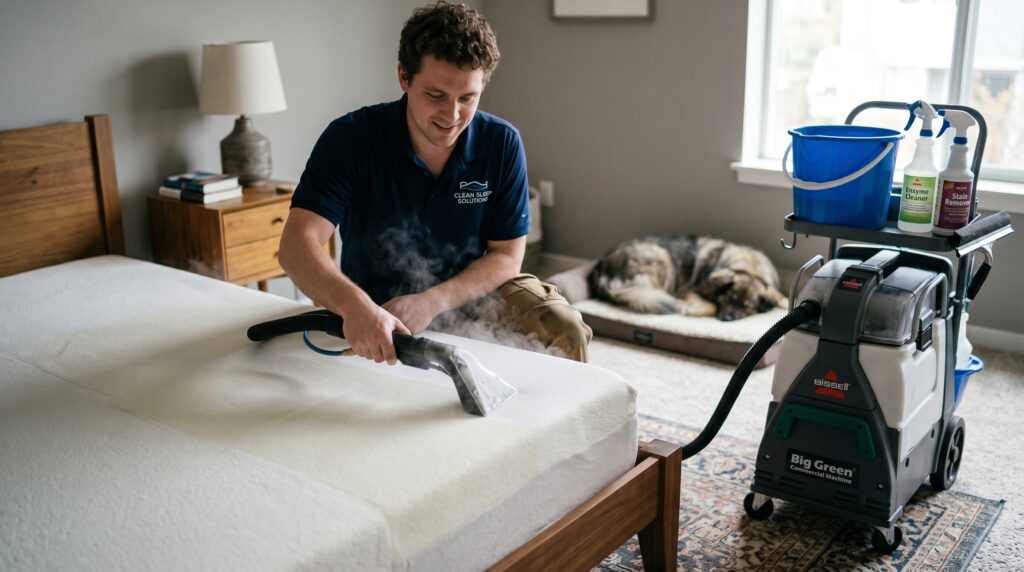
When DIY methods are not solving odor, stains, or allergy flare-ups, many households in Elizabeth, New Jersey turn to trained technicians for a thorough, moisture-controlled clean. Understanding what professionals actually do—step by step—helps you prepare your home, set expectations, and protect your mattress investment. This guide walks you through the professional process from inspection to final drying, explains why certain techniques are chosen, and shows how the workflow adapts to Elizabeth’s climate and common household needs. If you want results without the learning curve or the risk of overwetting sensitive foams, enlisting local mattress cleaning services can be the most efficient path to a truly fresh, hygienic bed.
Pre-visit preparation
Before the appointment, clear a path to the bedroom, remove fragile items from nightstands, and strip bedding. If possible, share photos of stains or odor-prone areas in advance so the technician can plan the right solutions. Note any sensitivities (fragrance, asthma, pets) and the mattress type—memory foam, latex, hybrid, or traditional innerspring.
Step 1: Detailed inspection and testing
On arrival, professionals inspect both sides of the mattress, seams, handles, and the headboard area. They identify the types of stains—biological, tannin, oil-based—and evaluate colorfastness with small pretests. If pests are suspected, they will recommend treatment before cleaning to avoid spreading or interfering with pest control protocols.
Step 2: Dry soil removal
A powerful HEPA-equipped vacuum and specialized tools lift dry soils, dust, skin flakes, and grit. Slow, overlapping passes are crucial. Removing as much dry material as possible improves the efficiency of later steps and reduces the amount of solution needed.
Step 3: Targeted preconditioning
Technicians select solutions matched to each soil type: enzymes for biological stains, oxygen-based agents for discoloration, and gentle surfactants for cosmetic oils. These are applied sparingly to control moisture. Dwell time is carefully managed so the chemistry works without soaking the ticking or foams.
Step 4: Gentle agitation
Using soft upholstery brushes or tamping tools, pros loosen bonded soils without rough scrubbing. This protects the knit or woven fabric, prevents pilling, and limits fiber distortion.
Step 5: Low-moisture extraction or rinse
Depending on construction and manufacturer guidance, the technician performs a controlled rinse and extraction. For innerspring or durable hybrid surfaces, they may use low-flow upholstery extraction. For water-sensitive foams, they switch to towels, bonnet pads, or encapsulation systems that lift soil with minimal liquid. The goal is to remove residues, not to saturate.
Step 6: Odor neutralization
If odors persist, an enzyme or oxidizing deodorizer is applied in thin, even layers with strong airflow. This stage addresses deeper odor sources while maintaining quick dry times—important in Elizabeth’s humid months.
Step 7: Speed drying and humidity control
Professionals position high-velocity fans to move air across the surface and may recommend running your home’s HVAC or a dehumidifier. Drying is tracked by touch and sometimes with moisture meters to confirm the bed is safe to remake.
Optional add-ons
Some providers offer fabric protectors, UV-C sanitizing, or allergen treatments for dust-mite reduction. These should be matched to your sensitivities and mattress materials; reputable techs explain benefits, limitations, and care instructions afterward.
Why the professional process works
Pros bring three advantages: the right chemistry, the right tools, and the judgment to control moisture on delicate surfaces. The result is a deeper clean, quicker drying, and less risk of rings, wicking, or damage to stitching and foams. For homes with recurring odors, pets, or allergy needs, this approach can reset the mattress more thoroughly than DIY methods.
Adapting to Elizabeth’s climate
Humidity and temperature swings near the coast change how cleaning behaves. In summer, pros shorten dwell times, use more airflow, and rely on low-residue formulas to avoid stickiness. In winter, they balance ventilation with room warmth to maintain evaporation without cooling the mattress.
How to prepare your space
- Clear the perimeter of the bed for easy access on all sides.
- Vacuum the floor to minimize dust kicking up during fans and movement.
- Secure pets and share any fragrance sensitivities in advance.
- Have clean sheets and a protector ready for when drying is complete.
What to expect during and after
You may hear fans and see towels or bonnet pads used for moisture control. Expect clear communication about which stains will lighten versus disappear; some old oxidized spots may improve but not fully vanish. After cleaning, the surface should feel neutral—no stickiness, residue, or damp coolness. Reputable technicians provide aftercare tips and realistic timelines for remaking the bed.
Maintenance between professional visits
To extend results, vacuum monthly with a HEPA tool, rotate the mattress quarterly, and wash protectors monthly. Address spills the same day and maintain bedroom humidity near 45–50%. Pairing these habits with occasional professional mattress cleaning keeps both the surface and deeper layers in good condition.
Frequently asked questions
Q: How long does professional mattress cleaning take? A: Most visits last 45–90 minutes per mattress, plus drying time that varies with materials and weather.
Q: Will every stain be removed? A: Fresh stains respond best. Older oxidized or set-in spots may lighten significantly but can leave a faint shadow.
Q: Is the process safe for memory foam and latex? A: Yes, when low-moisture methods and careful chemistry are used. Technicians tailor the approach to the construction of your mattress.
Q: How soon can I sleep on the bed? A: Once fully dry to the touch with neutral temperature—often the same day with proper airflow.
Q: Do I need to move the mattress? A: Usually no. Pros can work in place and lift edges as needed. Clearing a three-foot path around the bed is helpful.
Q: Are the products scented? A: Many pros stock fragrance-free options. Request unscented if you have sensitivities.
Q: What about bed bugs? A: Cleaning is not a substitute for pest control. If bed bugs are suspected, treatment should occur first, and the cleaning plan is adjusted afterward.
Ready to experience a truly fresh bed?
If you want a mattress that smells clean, feels renewed, and supports better rest without the risk of overwetting or guesswork, schedule trusted mattress cleaning and let trained technicians handle the process from start to finish while you enjoy the results.