
Introduction: Conquer Messes Without Stress
Pets, parties, and everyday life in Elizabeth, New Jersey bring joy—and the occasional mess—to your sofas and chairs. The good news is that a steady method for handling accidents can keep your home smelling fresh and looking great. This guide focuses on pet accidents, food and drink spills, and the lingering odors and marks they can leave behind. You will learn how to act fast, choose the right technique for your fabric type, and minimize moisture so stains do not spread or reappear. If you ever need an extra boost beyond DIY, consider scheduling professional upholstery cleaning to reset heavily used pieces and protect delicate fibers.
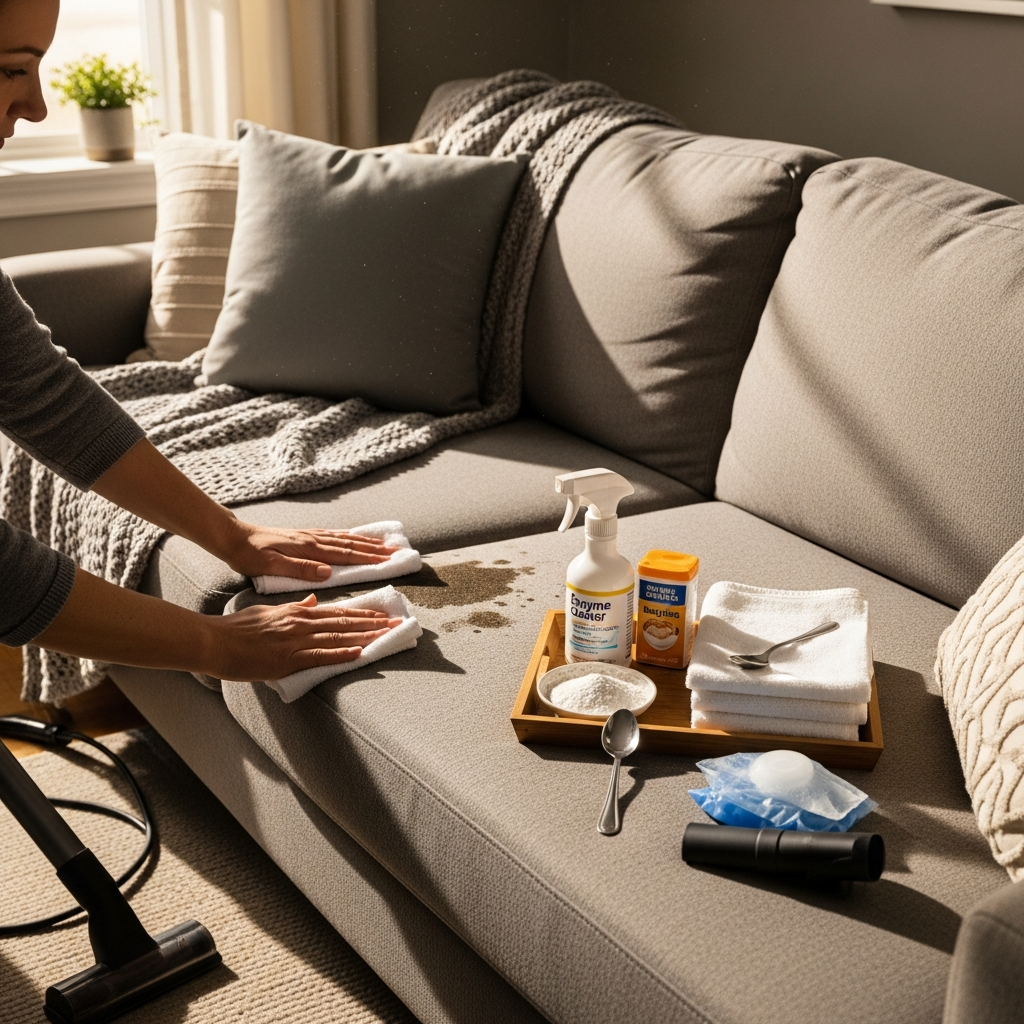
Success with stains starts with calm, quick action and the discipline to blot instead of rub. Keep a small kit handy so you are prepared when mishaps happen.
Your Rapid-Response Kit
- Microfiber cloths or white cotton towels
- Spray bottle with distilled water
- Mild, dye-free dish soap
- Isopropyl alcohol for S-coded fabrics
- Baking soda for light deodorizing
- Enzyme-based cleaner designed for pet accidents (only if your fabric code allows water-based products)
- Ice pack and dull spoon for sticky residues
- Vacuum with upholstery tools
Store these items together in a reachable spot. The minutes you save can make the difference between a temporary mark and a permanent stain.
Know Your Fabric Codes
Check tags for W, S, W/S, or X. For pet accidents, many W/W-S fabrics tolerate an enzyme cleaner designed to break down proteins and odors; S-only fabrics require a solvent approach and should not be saturated. If there is no tag, test cautiously on a hidden section. The goal is to use the mildest, least-wet option capable of removing the contaminant.
Pet Accidents: Urine, Vomit, and Odor Control
Act immediately. Blot liquids thoroughly with a dry towel—press down to lift moisture without pushing it deeper. For W/W-S fabrics, apply a small amount of an enzyme cleaner or a mild soap solution, then blot again and follow with a lightly damp cloth to remove residue. For S-only fabrics, avoid water; instead, dab with a cloth lightly moistened with isopropyl alcohol, ventilate, and blot dry. Odors often linger in padding, so keep airflow strong and consider repeating light treatments over several hours rather than flooding the area once. Avoid ammonia or overpowering fragrances, which can set smells or irritate pets.
Food and Beverage Spills
For dairy, sauces, and sugary drinks, begin by lifting excess with a spoon or dry cloth. On W/W-S fabrics, use a drop of gentle soap in distilled water and dab from the edges toward the center. Rinse with a water-only cloth and blot dry. For S-only, try a careful solvent dab on your cloth, rotating to fresh sections to prevent re-depositing color. For red or dark dyes, swap cloth sections frequently and consider multiple light passes rather than one heavy attempt, which can cause wicking and rings.
Grease and Body Oil on Armrests and Headrests
Grease, lotions, and natural oils build up slowly and attract dust. On W/W-S, preface your cleaning with thorough vacuuming, then use a slightly damp cloth with a tiny amount of mild soap. Follow with a clean water wipe and blot dry. On S-only, gently dab with isopropyl alcohol on the cloth, then blot with a dry towel. Regular attention to these zones prevents the grayish halo that can develop along cushion fronts and seams.
Prevent Reappearing Stains
Reappearing stains happen when residue remains or moisture draws hidden soil to the surface during drying. The fix is simple: use minimal liquid, blot extensively, and give the area ample airflow. If you see a ring forming, expand your cleaning zone slightly and blend edges with feather-light passes. A final wipe with a cloth dampened in distilled water helps remove soap films on W/W-S fabrics.
Odor Management in New Jersey’s Changing Seasons
Humidity can trap smells. After cleaning, prop cushions for ventilation and run a fan. On dry fabric, a light sprinkle of baking soda followed by a thorough vacuum can help. For persistent pet odors, repeat enzyme treatments on W/W-S fabrics with patience—let chemistry work over time. Never saturate cushions; interior foams dry slowly and can sour.
Protect Fabrics from Future Spills
- Place washable throws over pet-favorite spots.
- Establish a “towel first” rule—blot before you reach for cleaners.
- Rotate cushions weekly to distribute body oils evenly.
- Vacuum seams and crevices to remove the dust that creates gray shading.
- Keep a clean cloth draped over the sofa arm during gatherings to intercept fingerprints and food smudges.
When DIY Needs Reinforcement
Some stains—ink, permanent dyes, or deep-set pet accidents—benefit from expert attention. If gentle methods cause color transfer or the fabric’s surface changes, stop and reassess. Strategic help from a local upholstery cleaning team can stabilize dyes and flush residues more thoroughly than home methods, preserving the structure and look of your textiles.
Frequently Asked Questions
Q: How quickly should I treat a pet accident? A: Immediately. Blot first to remove as much liquid as possible before introducing any cleaner. Fast action reduces odor and staining.
Q: Are enzyme cleaners safe for all upholstery? A: No. They are generally for W or W/S fabrics. Always read labels, test in an inconspicuous spot, and avoid saturating the area.
Q: What if my couch now smells worse after cleaning? A: Likely slow drying or residue. Improve airflow, blot again, and perform a light rinse with distilled water if fabric allows. Repeat short sessions instead of one heavy one.
Q: Can I use vinegar to remove pet odors? A: In small, diluted amounts on W/W-S fabrics, vinegar can help neutralize light odors. Test first and avoid overuse, which can leave a lingering scent or affect dyes.
Q: How do I treat greasy pizza stains on microfiber? A: Blot dry, test the fabric code, and for W/W-S microfiber use a mild soap solution sparingly; for S-only microfiber, dab isopropyl alcohol on your cloth. Brush the nap lightly after drying.
Q: Why do rings appear after my spot treatment? A: The border dried at a different rate or held more residue. Enlarge the cleaned area slightly, keep passes light and even, and finish with a dry blot and strong airflow.
Q: Are pet hair removers or rollers safe? A: Yes, when used gently. Follow with vacuuming to remove loosened hair and fine dust so they do not settle back into the fabric.
Refresh Your Home with Confidence
For stubborn stains, recurring odors, or delicate fabrics, pair your routine with professional upholstery cleaning in Elizabeth, New Jersey. With prompt blotting, smart solutions, and timely expert help, your furniture can look—and smell—its best every day.