
Keeping a sofa looking its best in Elizabeth, New Jersey can feel like a constant project, especially with humid summers from Newark Bay, busy streets, and four full seasons that track dust, pollen, and grit right into your living room. Whether your sofa has a removable cover or a fixed one, a well-structured plan saves time and protects the fabric. This guide explains how to evaluate your material, choose the right methods, and create a cleaning routine tailored to Elizabeth homes. To make bigger jobs easier, you can explore professional-grade approaches to sofa cleaning while still mastering safe, effective DIY care at home.
Before you start, remember that every sofa is unique. Fabric blends, cushion construction, and even dye methods affect how a sofa responds to moisture and detergents. The tips below will help you interpret care tags, pick the right products, and avoid common mistakes that lead to fading, water rings, or misshapen cushions. With a little prep, you can lift winter salt residue, late-summer pollen, and everyday spills without stressing the fabric.
Know Your Fabric and Care Tag Codes
Most modern sofas include cleaning codes that tell you which products and methods are safe. Look under cushions or along seams for a tag and note these common codes:
- W: Water-based cleaners are safe. Spot clean with a mild solution.
- S: Use solvent-based cleaners only. Avoid water to prevent rings or shrinkage.
- WS or SW: Either water-based or solvent cleaners may be used carefully.
- X: Vacuum only. Do not use water or solvents; call a professional for stains.
In Elizabeth, where humidity can linger, using too much water on an S or X fabric can trap moisture, inviting odors or mildew. When in doubt, test a tiny, hidden area.
Essential Tools and Supplies for Elizabeth Homes
- Vacuum with upholstery attachment and crevice tool
- Soft-bristle upholstery brush and lint roller
- White microfiber cloths (to avoid dye transfer)
- Spray bottle for diluted solutions
- Mild dish soap or a dedicated upholstery shampoo (for W or WS fabrics)
- Solvent-based cleaner approved for upholstery (for S fabrics)
- Baking soda for deodorizing
- Ice cubes and dull butter knife for gum and wax
- Distilled water to minimize mineral rings
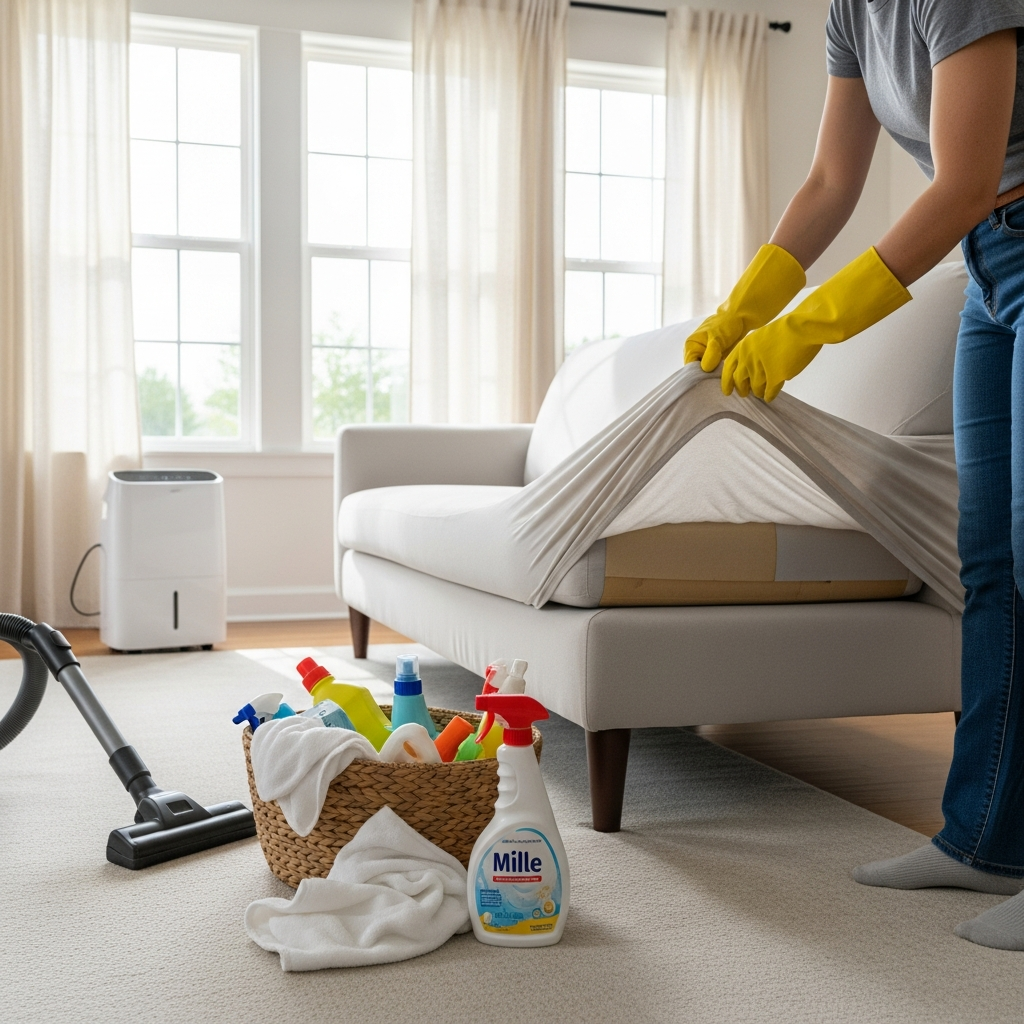
Keep supplies together in a basket so you can respond to spills right away. Quick, correct action is the difference between a faint shadow and a permanent stain.
First Step: Thorough Dry Cleaning by Vacuum
Start every cleaning with vacuuming—it removes abrasive grit that erodes fibers and it prevents soil from turning into mud when you add moisture. Use a crevice tool along seams and under cushions. Brush the nap gently in both directions to lift embedded dirt. In Elizabeth’s older homes where radiator dust circulates in winter, this step is essential and should be done weekly.
How to Clean Removable Sofa Covers
- Check the care tag: Confirm machine-washable status and temperature recommendations. Many blends recommend cold water.
- Pre-treat spots: Dab stains with a mild solution (for W or WS) or a targeted solvent (for S). Blot—never rub.
- Use gentle cycles: Wash one or two covers at a time to avoid twisting. Choose a mild, dye-free detergent.
- Dry carefully: Air-dry flat on a clean rack or line. Avoid high heat, which can shrink or warp covers.
- Reinstall while slightly damp: This helps maintain the correct fit and reduces wrinkles as the fabric finishes drying.
Machine washing is tempting, but always respect the fiber blend. Cotton-linen mixes may shrink; synthetic blends may stretch if overheated. If your covers have zippers, close them to protect the teeth and prevent snags.
What If the Covers Are Not Removable?
Fixed covers demand cautious, targeted cleaning. For W or WS codes, mix a small amount of mild soap with distilled water. Lightly mist the cloth (not the sofa) and blot stains from the outside inward. For S code fabrics, use the appropriate solvent sparingly and ensure good ventilation. Always blot with a dry white cloth after treatment to lift residue and moisture.
Stain-Specific Tactics That Work
- Food and drink: Blot immediately with a dry cloth. For W or WS, follow with a mild soap solution. Rinse with a separate cloth dampened with distilled water and then blot dry.
- Grease and body oils: Sprinkle baking soda, let it sit 15 minutes, then vacuum. Follow with the correct cleaner for your code.
- Ink: For S code fabrics, a small amount of solvent on a cotton swab can help, applied gently. For W fabrics, test a specialized ink remover on a hidden spot first.
- Gum or candle wax: Harden with an ice cube in a bag, then lift gently with a dull knife. Vacuum and spot clean any residue.
Always avoid oversaturation. The goal is to lift the stain into the cloth, not to drive it deeper into the foam.
Deodorizing Without Masking Odors
Open windows on a dry day and allow cross-ventilation. Lightly sprinkle baking soda across cushions and the backrest. Let it sit 30–60 minutes, then vacuum slowly. For persistent odors, repeat after 24 hours. In Elizabeth’s humid stretches, run a dehumidifier during and after cleaning to discourage musty smells.
Allergy and Pet Strategies for Elizabeth Families
- Pollen periods: Vacuum every other day during peak seasons. Remove throws and wash them weekly.
- Pet hair: Use a slightly damp microfiber cloth to gather hair before vacuuming. A lint roller along seams helps lift clingy strands.
- Dander and dust mites: Schedule a deeper clean monthly, focusing on cushion seams and under-seat cavities.
Regular maintenance not only keeps fabric brighter but also improves indoor air quality, a welcome relief for anyone sensitive to pollen blowing in from nearby parks and tree-lined streets.
Smart Moisture Management
Moisture is the enemy of upholstery foam. After any spot treatment, press a dry microfiber cloth onto the area to pull moisture back out. If you have ceiling fans or box fans, set them on low to encourage evaporation. Never point space heaters directly at upholstery; uneven heat can cause rings or puckering.
Fabric Protection and Wear Rotation
Simple habits extend the life of your sofa. Rotate and flip cushions monthly so wear distributes evenly. Place washable throws in high-contact zones—especially helpful during football season gatherings or family movie nights. If your sofa faces bright windows, draw sheer curtains midday to reduce UV fading while still enjoying daylight.
Deep Cleaning Rhythm for a Busy Year
Create a calendar that aligns with Elizabeth’s seasons. Do a deeper clean in early spring to remove winter grit, again in late summer after the heaviest pollen, and a quick refresh before holiday guests arrive. In the midyear tune-up, consider learning how the pros structure their process; many homeowners mix periodic DIY with periodic professional sofa cleaning to keep fabrics resilient without over-wetting or leaving residue.
Child- and Guest-Proofing Your Sofa
- Keep stain wipes or approved spot cleaner in a labeled caddy out of children’s reach.
- Serve dark beverages at a dining table or with lids during parties.
- Place a tray on the ottoman to catch drips from snacks.
- Use washable slip throws for sleepovers or pet nap zones.
Prevention is always easier than correction. A few small steps will significantly cut down the number of urgent spill cleanups.
Mistakes to Avoid
- Scrubbing: This damages fibers and spreads stains.
- Using colored cloths: Dyes can transfer when damp.
- Ignoring the care tag: The wrong cleaner can permanently dull fabric.
- Overloading the washer with covers: Twisting and stretching can distort the fit.
- Skipping a rinse blot: Detergent residue attracts soil and makes future stains harder to remove.
When Weather Works in Your Favor
Crisp, breezy days in Elizabeth are golden opportunities for sofa care. Open windows to speed drying and air out the room. In summer, run air conditioning during cleaning to counter humidity. In winter, schedule early in the day so there is time for full evaporation before nightfall.
Quick Reference Routine
- Vacuum thoroughly.
- Spot treat according to fabric code.
- Blot-rinse with distilled water if using a soap solution.
- Deodorize with baking soda and re-vacuum.
- Dry with fans and airflow.
- Rotate cushions and refresh throws.
FAQ
Q: How often should I vacuum a sofa in Elizabeth, NJ? A: Weekly for general upkeep, and every other day during heavy pollen or pet shedding periods.
Q: Are removable covers always machine washable? A: Not always. Check the care tag; some blends require hand washing or professional attention, even if the covers zip off.
Q: What is the safest way to test a cleaner? A: Apply a small amount on a hidden area, blot, and allow to dry fully. Check for color change or rings.
Q: How do I handle ring marks from water? A: Feather the edge with a lightly dampened cloth using distilled water, then blot dry. Avoid saturating the area.
Q: Can I use vinegar on upholstery? A: It can help with odors on some W fabrics when well diluted, but it may etch finishes or alter dye on others. Test first and never use on S or X fabrics.
Q: What can I do about lingering pet smells? A: Vacuum thoroughly, use baking soda, and ensure complete drying after any spot work. Persistent odors may require deeper foam extraction by a trained technician.
Q: Is steam cleaning safe for all sofas? A: No. Steam is risky for S and X code fabrics and can cause shrinkage or bleeding. Follow the tag and manufacturer guidance.
Q: When should I seek professional help? A: Large stains, delicate fabrics, or repeated ring formation are signs to bring in experts who can control moisture and residue precisely.
Ready for a Fresher Sofa in Elizabeth, NJ?
If your living room centerpiece needs more than a quick refresh, schedule a thorough service to supplement your routine. For a meticulous process and fabric-safe methods, consider professional sofa cleaning that pairs perfectly with the DIY steps in this guide. With smart maintenance and occasional expert care, your sofa will stay comfortable, clean, and guest-ready all year long.