Life with pets brings joy, companionship, and the occasional mess. When an accident hits your carpet, the challenge is both visible and chemical: discoloration on the surface, odor compounds that can linger, and—in some cases—contamination that wicks from the pad or even the subfloor back to the surface. In Elizabeth, New Jersey, where apartments, row homes, and single-family houses each present access and airflow quirks, you need a plan that resolves the problem at the right depth. This guide explains how professionals diagnose and treat pet stains and odors, why certain methods are more effective than others, and what homeowners can do to prevent repeat issues. For those ready to bring in experienced help, we also point you toward full-service carpet cleaning services that emphasize safe chemistry, careful inspection, and step-by-step communication.
Why pet stains are different from ordinary spills
Pet accidents are complex. Urine begins as an acidic solution that can turn alkaline as it dries, binding to fibers and producing distinctive odors. Some components are water-soluble, others bond tightly, and crystals can remain in the backing or padding if not addressed. Feces and vomit bring protein and dye risks, along with bacteria that require careful handling. Because of this chemistry, a one-size-fits-all spotter rarely solves the full problem.
How professionals diagnose the situation
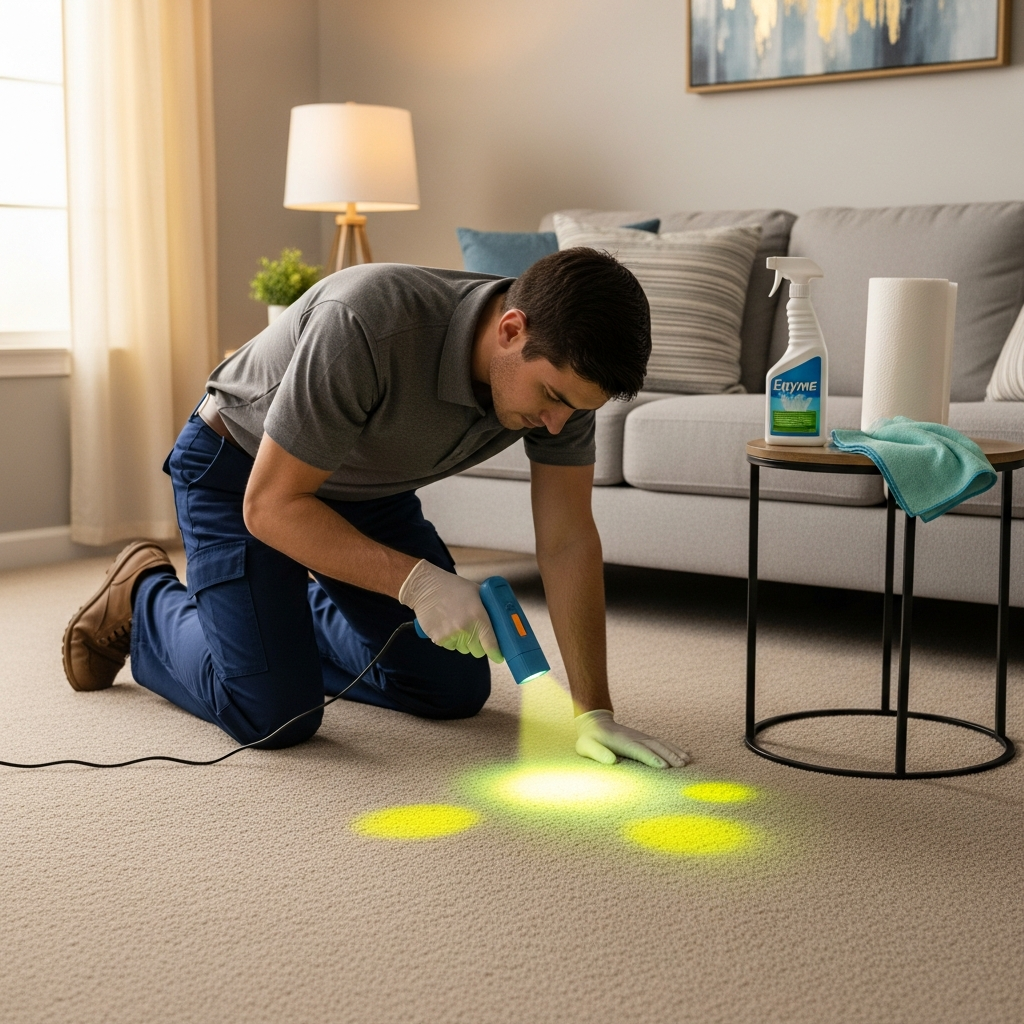
- Mapping with UV light: Specialized lighting helps locate affected zones beyond what you can see in normal daylight.
- Moisture and odor assessment: Technicians determine whether contamination is limited to the face fiber or has reached the backing, pad, or subfloor.
- Fiber identification: Wool, nylon, polyester, and olefin respond differently to heat, pH, and agitation. Matching chemistry to fiber type avoids damage and improves outcomes.
- History of recurrence: If a spot returns after home treatment, it often signals residue or wicking from deeper layers.
Method selection: treating the problem at the right depth
A successful plan pairs targeted chemistry with the appropriate level of flushing and extraction. In many cases, hot water extraction serves as the primary deep-cleaning method, with enzyme treatments and specialty steps for odor sources. For mild, recent incidents, localized treatments may be sufficient. For recurring or intense odors, deeper strategies are required.
- Surface-level response: For fresh accidents, blotting and a carefully chosen neutralizer can prevent setting and reduce odor before professional care.
- Face-fiber treatment with extraction: Technicians apply enzyme or oxidizing solutions, agitate gently, allow dwell time, then rinse and extract thoroughly.
- Pad-targeted approaches: When contamination has migrated below the face fiber, controlled saturation and extraction in the affected area may be used to address odor sources.
- Subfloor considerations: In severe cases, carpet may be lifted for pad inspection, subfloor sealing, and reinstallation. Honest providers explain when this level is necessary.
Elizabeth-specific realities
Apartment living in Elizabeth can concentrate pet accidents near entryways and balconies, where airflow and sunlight vary. Shared corridors and elevators add logistics for equipment and timing. In single-family homes, winter weather tracks in salt that can interact with existing residues, and summer humidity may lengthen natural dry times. Experienced teams adapt to these factors with protective gear, smart extraction strategies, and drying support.
What a thorough pet-focused visit looks like
- Pre-inspection: Discuss pet routines, accident locations, and any previous treatments you have tried.
- UV mapping and testing: Identify the full footprint of the issue, not just the visible spot.
- Dry soil removal: Vacuum thoroughly to remove debris that could interfere with solutions.
- Targeted chemistry: Apply enzyme or oxidizing treatments matched to the accident type and fiber sensitivity.
- Dwell and agitation: Allow time and gentle action for chemistry to work effectively.
- Rinse and extraction: Hot water extraction removes suspended soils, residues, and treatment solutions.
- Focused odor steps: If needed, apply pad-level or subfloor strategies to address persistent sources.
- Grooming and drying: Set the pile and promote airflow for uniform drying.
- Aftercare guidance: Provide instructions for traffic, ventilation, and spot response going forward.
Missteps to avoid with pet stains
- Over-scrubbing: Aggressive rubbing can distort fibers and spread contamination.
- Using the wrong spotter: High-pH or heavily perfumed products can set odors or create sticky residue.
- Skipping dwell time: Enzymes need time to work; rushing reduces effectiveness.
- Masking odors: Covering smells without addressing the source leads to fast returns.
Prevention strategies for pet-friendly homes
- Create a response kit: Keep absorbent towels, a neutralizing solution suitable for your carpet type, and gloves on hand.
- Establish routines: Regular walks, litter box maintenance, and rewarding outdoor habits help reduce incidents.
- Protect high-risk zones: Use washable runners or mats in entryways and near feeding areas.
- Plan maintenance: Combine periodic deep cleans with interim touch-ups in traffic lanes.
Midway insight: balancing deep solutions with everyday life
Most pet households benefit from a blended approach—fast surface response for fresh accidents and scheduled professional care for recurring problems or seasonal resets. A thoughtful provider will communicate clearly about what is achievable in one visit, when pad-level work is appropriate, and how to maintain progress between appointments. In Elizabeth’s mix of apartments and single-family homes, a team that offers full-spectrum carpet cleaning services can tailor steps to your layout, airflow, and flooring construction for dependable odor and spot improvement.
Aftercare and monitoring
Once treatment is complete, keep airflow moving with open doors and fans. Avoid heavy foot traffic until the carpet is dry to the touch. Monitor the area over several days; if a faint odor or halo returns, contact your provider promptly so they can advise on next steps. Quick follow-up is especially important when pad-level contamination is suspected, as deeper sources sometimes release more odor molecules during drying.
Working with sensitive fibers
Wool and certain blends need careful temperature and pH control, along with gentle agitation. Professionals test in inconspicuous areas and adjust chemistry accordingly. With the right preparation and rinse, even delicate fibers recover well from pet mishaps without unnecessary risk.
Commercial and multi-unit needs
Pet-friendly apartment communities, leasing offices, and shared lounges experience a steady stream of traffic and the occasional accident. A maintenance plan that pairs periodic deep cleaning with rapid-response spot care keeps spaces welcoming. Coordination with building management for timing and access reduces disruption to residents.
Frequently Asked Questions
Q: Why does the same spot keep coming back after I clean it myself? A: Residue from store-bought products can attract soil, and moisture may carry contamination from the pad back to the surface. A professional rinse and, when needed, deeper treatments address both issues.
Q: Can every pet odor be eliminated? A: Many can be significantly reduced or resolved, especially when sources are limited to the face fiber. If contamination has penetrated the pad or subfloor, additional steps may be required for lasting results.
Q: Is hot water extraction safe for pet-related cleanups? A: Yes, when technicians match temperature, chemistry, and agitation to your fiber. It is often the backbone of a successful pet treatment plan.
Q: How do I prevent future accidents in the same spot? A: Neutralize thoroughly, keep the area clean and dry, and reinforce positive habits with consistent routines. Pets can be drawn back to lingering odors, so source removal is key.
Q: Will treatments be safe for my animals? A: Reputable providers use fiber-safe, pet-considerate solutions and communicate re-entry guidelines clearly. Keeping pets in a separate area until surfaces are dry is standard advice.
Q: How soon should I call a professional after an accident? A: The sooner the better. Early intervention limits setting, reduces odor bonding, and improves the likelihood of full resolution.
Confident care for pet-friendly homes in Elizabeth
Pet accidents do not have to define the look or smell of your home. With smart diagnosis, targeted chemistry, and the right level of extraction, you can restore freshness and appearance while protecting your carpet’s fibers. If you want a partner who communicates clearly, treats your home gently, and follows through with practical aftercare, connect with local experts who deliver end-to-end carpet cleaning services for Elizabeth households. Share your concerns, schedule a visit, and enjoy the comfortable, clean space you and your pets deserve.