
Introduction
Advanced rug cleaning troubleshooting helps homeowners and enthusiasts resolve persistent issues that go beyond everyday maintenance. In Elizabeth, New Jersey, climate, household activity, and the variety of rugs used in homes can create unique challenges. Whether you’re facing dye transfer, stubborn odors, backing deterioration, or moth damage, this guide outlines advanced strategies and decision points to recover and preserve rugs. When advanced troubleshooting reaches its limits, a professional intervention often provides the safest and most effective resolution — for example, consider professional rug cleaning for complex restoration jobs.
This resource assumes familiarity with basic cleaning techniques and focuses on diagnostic steps, specialized treatments, and restoration pathways. We’ll cover testing protocols, targeted treatments for common advanced problems, and guidance on when to escalate to professional conservators.
Diagnosing Advanced Rug Problems
Start by systematically assessing the rug. Examine fiber type, construction, and any visible damage. Use a magnifying glass if needed to inspect pile condition and knot integrity. Document discoloration patterns — are they localized or spread evenly? Smell for mildew or other distinct odors that suggest biological growth or chemical residues. Carefully lift edges to inspect backing condition for adhesive failure or water staining.
Running a colorfastness test is essential before applying any chemical treatments. Apply a small amount of your chosen cleaner or solvent to an inconspicuous area, blot with a white cloth, and check for color transfer and fiber reaction. This test protects against irreversible damage when treating delicate or antique rugs.
Dye Transfer and Color Migration
Dye transfer or bleeding can occur when rugs with unstable dyes become wet or damp. To address this, first stabilize the rug by reducing water exposure and isolating it from other textiles. Use minimal moisture and apply a dye lock product recommended by textile conservators, but only after testing. Professionals can execute color correction, where they remove migrated dye from affected fibers and re-dye or over-dye areas as necessary to restore uniformity.
Attempting aggressive bleach or solvent-based treatments at home risks further color loss and fiber damage. If you suspect dye migration, consult a professional who can evaluate fiber compatibility and apply industry-standard color correction methods.
Persistent Odors and Biological Growth
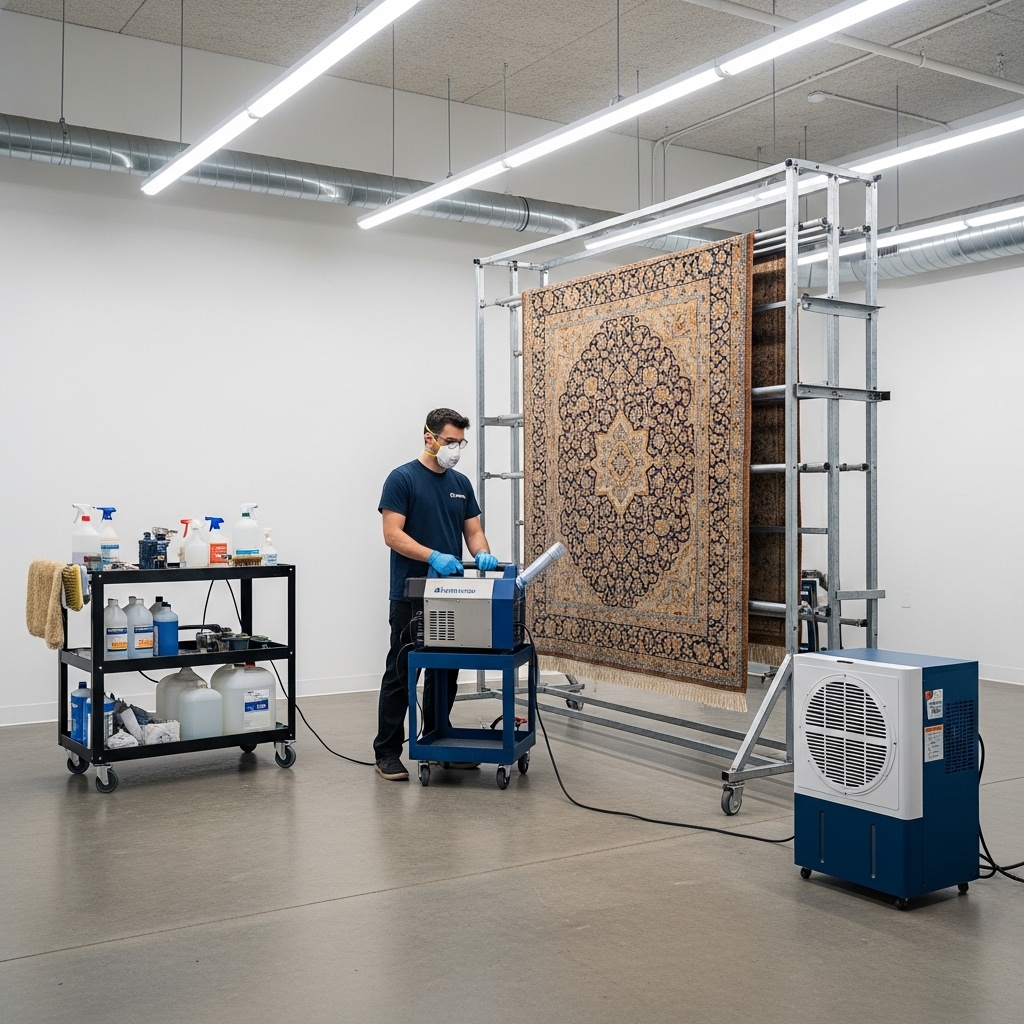
Persistent odors often stem from pet incidents, mildew, bacteria, or trapped residues. A thorough cleaning that includes enzymatic treatments for organic residues is a first step. For biological growth such as mold or mildew, drying is critical: use controlled extraction and drying equipment to remove moisture, and apply antifungal treatments safe for textile use.
When odors persist despite cleaning, investigate backing and padding, as these can retain contaminants. Replace contaminated pads and inspect flooring beneath the rug for hidden moisture. Advanced ozone or activated charcoal treatments can neutralize odors in some cases, but these should be used with caution and ideally under professional guidance to avoid damage to fibers and dyes.
Backing Failure and Delamination
Rug backings can deteriorate due to age, heat, moisture, or improper cleaning. Symptoms include curling edges, softened or separated backing, and reduced dimensional stability. Small areas of failure can sometimes be repaired by re-adhering loose sections with adhesives designed for textile repair, but backing replacement or re-lining is often required for significant delamination.
Because heat and moisture can worsen backing adhesion problems, avoid high-heat drying and excessive water when cleaning. Professional workshops can remove old backing, replace or reinforce it, and reattach fringe or borders to restore structural integrity.
Moth and Insect Damage
Moths and carpet beetles target natural fibers like wool. Early signs include small holes, thinning areas, or scattered tufts of missing pile. For active infestations, isolate the rug, vacuum thoroughly to remove larvae and eggs, and treat with appropriate insecticidal dusts or professional fumigation as needed.
Freezing small, removable rugs at temperatures below -20°C (-4°F) for several days can kill larvae, but this is not practical for larger pieces. Professional pest control combined with cleaning and possible pad replacement is often the most thorough solution.
Fiber Felting and Abrasion Damage
Felting occurs when wool fibers mat together, usually from excessive agitation or incorrect cleaning. Once fibers have felted, pile structure is permanently altered and cannot be fully restored. Prevention is crucial: avoid vigorous scrubbing and high-heat treatments on wool rugs. If felting is minor, careful carding and grooming may improve appearance, but serious felting often requires professional re-pile or restoration techniques.
Abrasion from foot traffic manifests as worn, flattened areas. Professional pile lifting, combined with rotation and the use of rug pads, reduces further abrasion. In cases of extreme wear, repair specialists can reweave or replace pile in localized areas.
Stain Chemistry: Matching Treatments to Stain Types
Understanding stain chemistry helps determine appropriate treatments. Protein-based stains (blood, dairy) respond to cold water rinses and enzyme cleaners. Tannin stains (coffee, tea, wine) often lift with mild alkaline solutions but require caution on natural fibers. Oil-based stains need absorbents and solvent-based degreasers formulated for textiles.
Always identify the stain before treating, and perform colorfast tests. For complex, mixed stains, professional assessment prevents trial-and-error that can set stains or damage fibers further.
Advanced Cleaning Methods and When to Use Them
Professional services use various advanced methods: low-moisture encapsulation for delicate rugs, hot water extraction for synthetic and sturdy rugs, dry cleaning solvent systems for extremely delicate textiles, and controlled immersion for heavily soiled but stable rugs. Choose methods based on fiber type, dye stability, and backing condition.
For antique rugs, conservative approaches that minimize moisture and handling are preferred. Textile conservators may combine gentle surface cleaning, minimal aqueous treatments, and targeted chemical applications to stabilize and preserve originals.
Documenting and Communicating with Professionals
When escalation is necessary, document the rug’s condition with photographs, note prior treatments, and provide a history of spills or incidents. Clear communication helps technicians select the right approach and set realistic expectations for results and restoration possibilities.
Ask about guarantees, drying protocols, and whether the facility uses fiber-appropriate cleaning agents. Request references or reviews from similar restoration projects to ensure expertise aligns with your rug’s needs.
FAQ
Q: Can all rugs be fully restored after severe damage? A: Restoration potential depends on the rug’s age, fiber condition, extent of damage, and the type of problem. Some structural damage or extensive felting may be irreversible, though partial restoration is often possible.
Q: How do professionals handle dye loss during cleaning? A: Professionals will test for dye stability, use minimal water, and employ color correction or re-dyeing techniques when necessary. Prevention through testing is key to avoiding dye loss.
Q: Is it safe to use ozone or ozone-based treatments for odors? A: Ozone can neutralize odors but may affect sensitive dyes and materials. Use ozone treatments carefully and only under professional supervision for textiles.
Conclusion and Recommended Actions
Advanced rug cleaning and troubleshooting require careful diagnosis, restrained interventions, and, often, professional expertise. For persistent odors, dye migration, backing failure, or significant pest damage, professionals provide targeted treatments and restoration services. Their controlled environments, specialized solvents, and textile-safe methods minimize risk and often achieve results that DIY attempts cannot.
If your rug has complex issues or high value, seek an initial consultation from a qualified provider who can assess the problem and propose a treatment plan. Professional services protect both the rug and your peace of mind; when restoration is needed, experts deliver the precision and materials necessary to preserve textile integrity. To arrange a detailed evaluation and appropriate treatment for advanced rug problems, consider contacting a professional offering experienced cleaning and restoration services: professional rug cleaning.