
Introduction: Understanding the Value Behind Oriental Rug Care in Elizabeth
Elegant, intricate, and often handcrafted over many months or years, Oriental rugs bring an unmistakable presence to homes in Elizabeth, New Jersey. Their beauty and heritage deserve mindful maintenance that goes far beyond routine vacuuming. While many homeowners begin their research with questions about budgets and numbers, a more useful starting point is to understand what goes into responsible care: fiber science, dye stability, soil removal, controlled washing, and careful drying. As you explore options in the area, consider choosing professionals with a comprehensive approach to Oriental rug cleaning who treat each piece as a unique textile, not just another floor covering.
Oriental rugs encompass an array of origins, knots, fibers, and dyes—Persian, Turkish, Caucasian, Indian, Pakistani, and Chinese traditions among them. Each has distinct characteristics that influence the right cleaning path. By learning what shapes the scope of work, you can better evaluate providers in Elizabeth and feel confident in the care your rug receives.
What Makes Oriental Rug Care Different
Compared to standard area rugs, Oriental pieces often feature hand-spun wool, natural dyes, silk highlights, complex borders, and delicate fringe. They respond best to cautious testing and measured cleaning steps. Skipping these steps risks dye migration, texture change, or structural stress. The difference between a passable outcome and a superb one lies in the details: how soils are separated from fibers, how rinse water is managed, and how the rug is dried and blocked.
- Fiber identification and dye testing: Determines whether a full wash, controlled rinse, or a low-moisture method is appropriate.
- Dry soil removal: Removes gritty particles that erode fibers during washing and dull colors over time.
- Targeted pre-treatment: Addresses oils, spills, and odor sources without overwhelming delicate dyes.
- Careful rinsing: Flushes residues that attract new soil, helping colors appear more nuanced and true.
- Controlled drying and blocking: Maintains shape, relieves waviness, and prevents musty odors.
Rug Construction and Fiber Considerations
Many Oriental rugs feature wool pile on cotton warps and wefts, though all-wool or silk elements are common. Wool’s natural resilience and dye receptivity make it both durable and magnificent, but it needs pH-appropriate care to protect its natural oils. Cotton foundations demand mindful moisture management to avoid shrinkage or warping. If silk is present, professionals tailor techniques to guard sheen and texture.
The Role of Pre-Inspection and Testing
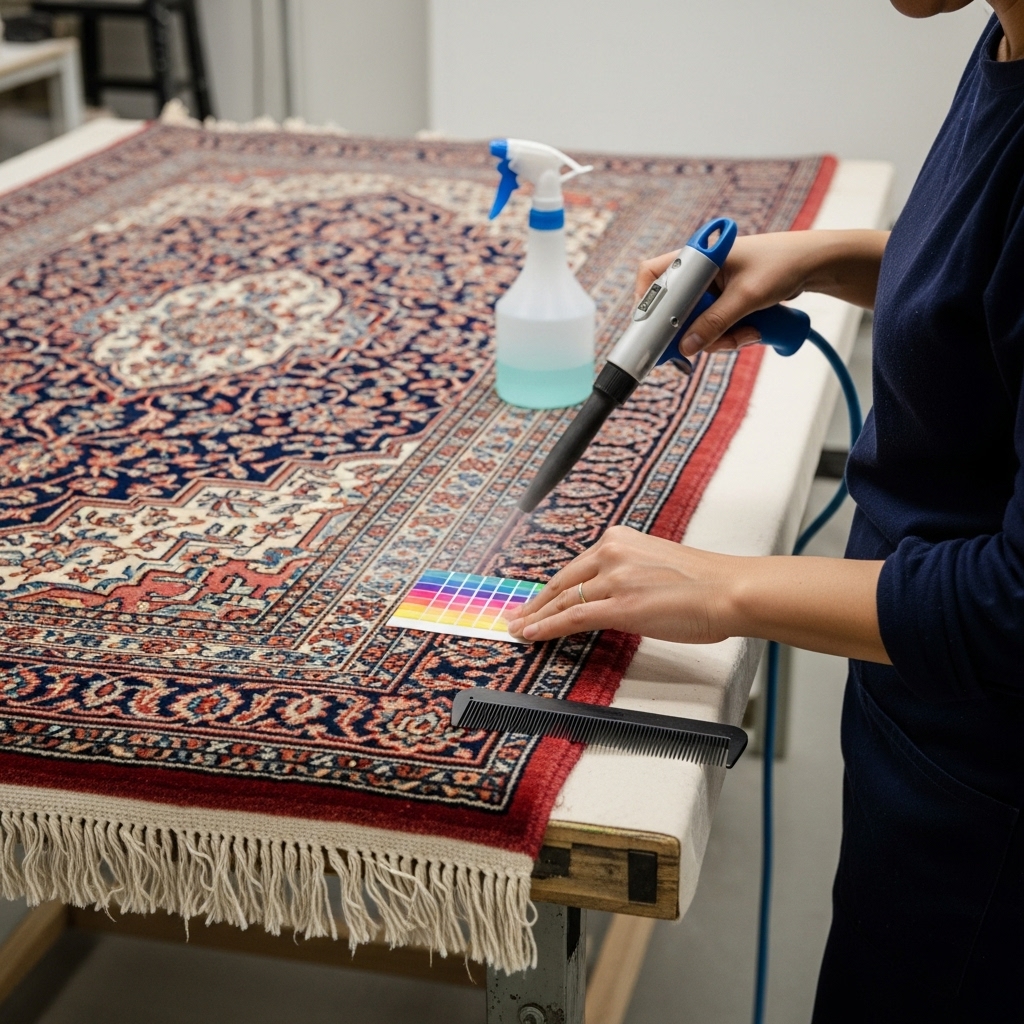
Before water touches the rug, professionals methodically inspect for dye stability, weak areas, moth activity, pre-existing fraying, and previous cleaning residues. They may perform small spot tests in inconspicuous areas to predict how dyes will behave. Testing informs decisions about bath type, cleaning agents, and agitation levels, leading to safer, more predictable outcomes.
Why Dry Soil Removal Matters
Dry soil is the silent enemy of Oriental textiles. Even a rug that appears clean may host pounds of embedded grit. If not removed before washing, this grit acts like sandpaper. Advanced dusting—via vibration, air-washing, or beating frames—dislodges soil the vacuum misses and prepares the rug for an effective wash. Colors brighten, pile responds better to grooming, and the entire process becomes more fiber-friendly.
Responsible Washing, Rinsing, and Drying
Some Oriental rugs tolerate immersion washing beautifully; others require a restrained approach. The guiding principles remain the same: protect dyes, respect fiber, and purge residues. Once rinsed, controlled extraction and airflow reduce moisture quickly. Blocking helps the rug relax into true shape, while careful fringe work maintains a clean, crisp edge without fraying.
Local Realities in Elizabeth That Shape Care
Elizabeth’s seasons influence both how rugs get dirty and how they should be dried. Winter slush and road treatments can leave residue at entryways. Summer humidity lengthens dry times if not managed in a controlled environment. Busy households near transit corridors see accelerated soiling in traffic lanes. A local cleaner familiar with these patterns will design a process that anticipates them—robust dusting, targeted treatment for winter residues, and drying systems that remove moisture quickly and evenly.
How Scope of Work Is Determined
Instead of focusing on numbers, consider the professional evaluation that shapes the scope of care your Oriental rug needs. After inspection, the team defines the cleaning plan: dry soil removal intensity, pre-treatment zones, wash method, drying strategy, and any optional finishing like protector. Transparent communication ensures you understand what will be done and why those steps matter.
- Soil load and traffic patterns: Entryway rugs, family rooms, and hallways collect more grit and oils, requiring more thorough preparation and rinsing.
- Fiber and dye sensitivity: Natural dyes call for pH-balanced solutions and measured agitation.
- Construction and condition: Aging cotton foundations, prior repairs, or latex patching may limit immersion and favor a controlled approach.
- Odor concerns: Pet accidents or mustiness often require treatment beyond the pile to reach foundation layers.
- Finishing preferences: Protector, grooming, and blocking help the rug look and perform its best after cleaning.
Trust Signals When Choosing a Provider
Evaluating providers in Elizabeth is easier when you know what to look for. Trust signals include a dedicated rug-cleaning facility, documented processes, dye testing before washing, and clear aftercare instructions. The most reliable teams will explain how they tailor solutions to your rug’s origin, fiber, and condition—especially important for heirloom pieces.
Preserving Color and Texture
Natural dyes glow when soils and residues are properly flushed, yet they can be vulnerable to migration under the wrong conditions. Professionals manage temperature, solution strength, and rinse flow to keep colors where they belong. Wool’s texture benefits from a gentle hand; preserving springy, soft pile requires avoiding harsh alkalinity and rough agitation. For silk highlights, low-moisture touch-ups and precise drying guard sheen and hand feel.
Longevity and Preventative Care
Beyond the immediate refresh, the real value of responsible Oriental rug care shows up year after year. Quality cleaning reduces abrasion, slows fiber wear, and mitigates odors that might otherwise seep into backing materials. Protector can make routine upkeep easier, buying time to blot spills and reducing stubborn staining. Rotate the rug quarterly to balance sun and foot traffic, use furniture pads to prevent deep impressions, and consider entry mats to catch grit before it reaches the rug.
Mid-Article Perspective: Choosing Experience
Many Elizabeth homeowners cherish Oriental rugs for their stories and craftsmanship. A seasoned cleaner respects that heritage by taking time to test, dust, wash, rinse, and dry with precision. If you are comparing local specialists, look for those who offer comprehensive professional rug cleaning for intricate textiles, including careful dye checks and controlled drying tailored to natural fibers and traditional constructions.
DIY vs. Professional Care
Surface maintenance at home is important, but certain risks make professional help the wise choice for Oriental textiles. Household spotters may leave residues or disturb dyes. Over-wetting can cause rippling or uneven drying. Aggressive scrubbing may fuzz the pile. Professionals bring purpose-built tools and methods designed to respect the rug’s structure while achieving a deep, residue-free clean.
Spot Treatment Tips for Homeowners
When a spill happens, fast action helps:
- Blot, do not rub: Use a clean white cloth and dab from the outside inward.
- Cool water only: Hot water can set stains and disturb dyes.
- Test discreetly: If you use a mild solution, test a tiny spot first.
- Elevate to dry: Allow airflow under and over the rug to speed surface drying after blotting.
- Call in specialists: For persistent discoloration or odor, arrange a professional evaluation.
Fringe, Edges, and Repairs
Oriental rugs often feature delicate fringes that need special attention. Cleaning is typically performed separately, then groomed carefully to avoid fraying. If edges show signs of wear, a professional may recommend repairs to prevent unraveling. Addressing small issues early preserves structural integrity and protects against more extensive work later.
Allergens and Indoor Air Quality
Embedded dust and dander accumulate over time, especially in high-traffic households. Robust dusting and rinsing significantly reduce these allergens, contributing to a fresher home. For families with sensitive members, scheduling cleanings on a predictable cycle and using entry mats can make a noticeable difference.
Frequently Asked Questions: Oriental Rug Care in Elizabeth
Q: How often should an Oriental rug be professionally cleaned? A: Frequency depends on foot traffic, pets, and indoor air quality goals. Many homes benefit from a thorough cleaning every 12 to 24 months, with rotation and vacuuming in between.
Q: Will cleaning affect natural dyes? A: Responsible cleaners test dyes and adjust methods accordingly. When handled properly, colors appear clearer and more nuanced after residues are removed.
Q: Can pet odors be neutralized? A: Often yes, especially when treatments reach the rug’s foundation. Surface-only approaches are less effective.
Q: Is immersion washing safe for all Oriental rugs? A: Not always. The method depends on fiber, dye stability, and construction. Alternatives exist for sensitive pieces.
Q: How can I prevent fringe damage? A: Avoid vacuuming fringe directly. Let professionals clean and groom it, and address loose edges before they worsen.
Q: What about sun fading? A: Rotate quarterly and use window treatments during peak sun to reduce uneven fading.
Q: Can I spot clean at home? A: Yes, carefully. Blot spills promptly with cool water and avoid harsh chemicals. Seek help for persistent stains or odors.
Q: How do I store an Oriental rug? A: Have it cleaned first, then roll (not fold) and wrap in a breathable material. Store in a cool, dry space off the floor.
Move Forward with Confidence
An Oriental rug rewards thoughtful care. When you partner with a skilled local team, the difference shows in brighter colors, softer hand feel, and a fresher indoor environment. If you are ready to elevate the care of your favorite textile, connect with Elizabeth specialists who prioritize testing, dusting, meticulous washing, and controlled drying. To begin your search with reliable experts, explore comprehensive rug cleaning services designed for fine textiles and attentive home stewardship.