
Creating a reliable tile and grout cleaning checklist for your Elizabeth, New Jersey home or business can save time, reduce stress, and keep floors looking pristine throughout the year. Whether you manage a busy household near Midtown, a brownstone by the waterfront, or a storefront on Broad Street, the right structure turns daunting deep-cleaning days into a set of predictable, effective habits. In this guide, you will build a practical, room-by-room plan tailored to New Jersey’s seasons, local water conditions, and the typical wear patterns of homes and small businesses. If you want a professional standard to model, look for trusted resources and services that specialize in tile and grout cleaning so your checklist captures the high-impact tasks that truly preserve surfaces.
Elizabeth’s climate brings humid summers, freeze-thaw winters, and springtime pollen, all of which influence how residue, moisture, and soil behave on tile. In kitchens and entryways, road salt and grit can scratch glazed finishes in winter, while steamy bathrooms can encourage mold and mildew growth during hot months. A well-built checklist keeps pace with those cycles. It also reduces confusion by clarifying which products to use, how often to repeat each step, and how to spot early warning signs of grout issues before they become complicated repairs.
What Makes a Great Checklist
A great checklist is clear, repeatable, and prioritized. Clarity means anyone in your household or team can follow it, even if they have never cleaned tile professionally. Repeatability means it fits your schedule, uses supplies you actually own, and defines success with observable benchmarks, like “grout lines return to uniform color.” Prioritization means the highest-impact actions appear early and often, while cosmetic steps wait until the fundamentals are complete. In Elizabeth, New Jersey, that may translate into emphasizing dry soil removal, targeted dwell time for bathroom grout, and ventilation steps during humid weeks.
Before writing anything down, decide the purpose of the checklist. Are you preserving a newly renovated bath, restoring a busy kitchen after a big cooking season, or keeping a customer-facing lobby presentable? Your answers shape frequency, product selection, and time estimates. For instance, a family kitchen near a backyard may demand daily dry soil removal and weekly damp mopping, while a guest bath used occasionally can thrive with a gentler cadence.
Core Principles for Tile and Grout Cleaning
Every effective checklist flows from a few core principles: remove dry soil before adding moisture, match your chemistry to the soil and surface, use gentle agitation, allow adequate dwell time, and rinse thoroughly. Dry soil removal protects tile finishes and keeps cleaning solutions from turning dust into muddy films. Chemistry should address common soils—grease in kitchens, body oils and soap scum in bathrooms, and mineral spots from hard water. Agitation, whether with a soft brush or microfiber pad, dislodges residue without scratching. Dwell time gives products a chance to act. Proper rinsing and drying prevent films and inhibit microbial growth.
Finally, document and adjust. A checklist is a living tool. If you discover that your powder room grout brightens more when you extend dwell time by two minutes, update the document. If your garage entry tracks in more grit after snowstorms, add a seasonal step. Your Elizabeth location, family size, and flooring types will make your plan unique—and that is its strength.
Supplies and Tools You’ll Actually Use
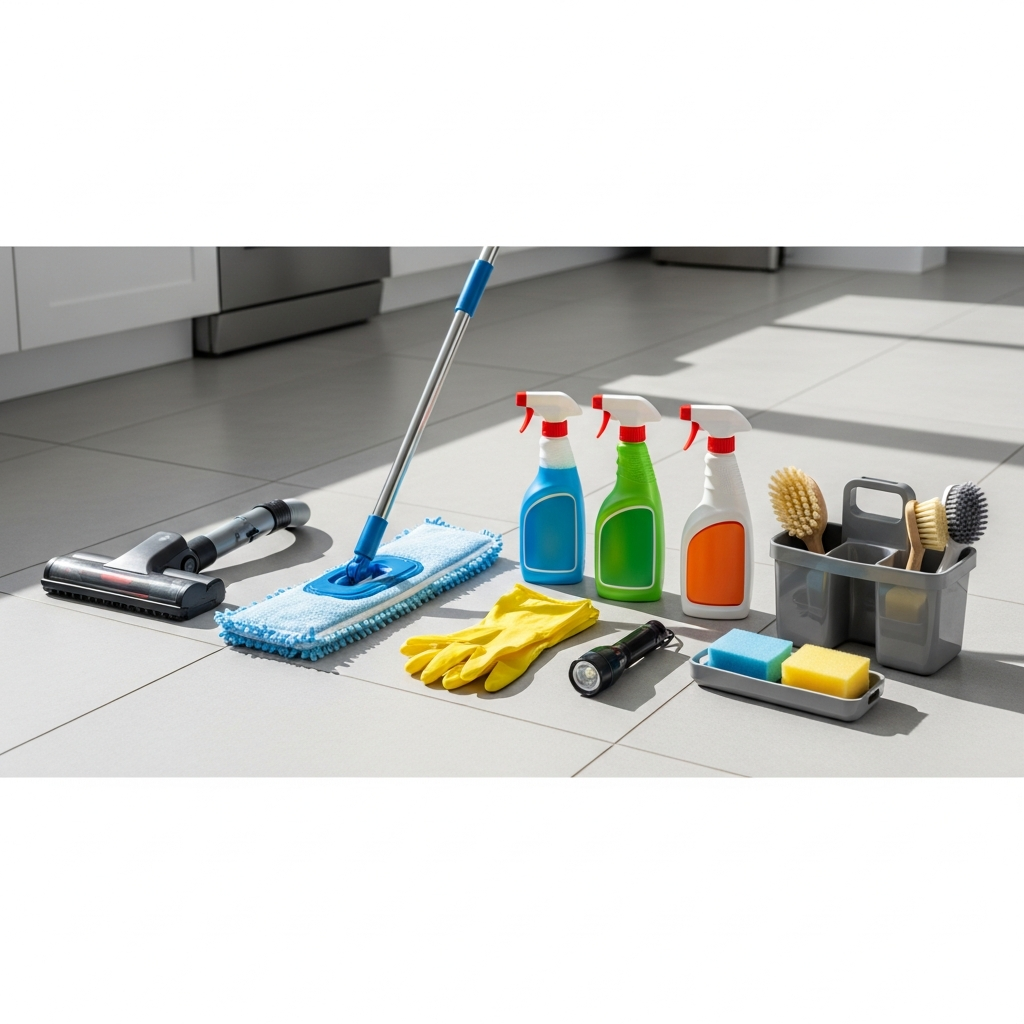
It is tempting to buy an armload of specialized products, but the most effective kits remain simple and repeatable. Include a quality vacuum with a hard-floor setting, a dedicated microfiber dust mop, neutral pH floor cleaner, a gentle alkaline cleaner for greasy areas, a non-acidic bathroom cleaner for soap scum, a food-safe degreaser for heavy kitchen buildup, and a specialized grout cleaner safe for sanded or unsanded grout. Add soft nylon grout brushes, colorfast microfiber cloths, mop buckets labeled for clean and dirty solution, spray bottles, and protective gloves. Keep a small squeegee for shower walls and a flashlight to check grout color consistency.
Label everything and store it near use zones—bathroom tools in a caddy under the sink, kitchen items in a pantry bin, and entryway tools in a closet. This reduces setup friction and makes it more likely you will stick to the plan. Keep a notepad or digital note in your phone to log which products worked best on particular stains and which days you performed deep tasks.
Daily and Weekly Foundations
Daily: Focus on dry soil removal and moisture control. Vacuum or dust mop high-traffic areas like kitchen pathways, entryways, and the base of stairwells. In bathrooms, squeegee shower walls after use to minimize hard water spotting and mildew risk. Spot-clean spills with a microfiber cloth dampened in neutral cleaner solution. Reinforce doormat use indoors and outdoors to capture grit before it reaches tile.
Weekly: Add damp maintenance. Vacuum or dust mop first, then mop with neutral cleaner in low-soil zones and an appropriate degreaser in kitchens. In bathrooms, apply a non-acidic cleaner to address soap residues and body oils, using a soft brush on grout lines where discoloration begins. Rinse with clean water and dry with a microfiber towel, especially on polished tile, to prevent streaks and mineral spotting. Check edges and corners where soil tends to accumulate.
Monthly and Seasonal Tasks in Elizabeth, NJ
Monthly: Inspect grout color uniformity and touch up stubborn lines with a grout-safe cleaner. Agitate gently, extend dwell time two to four minutes, rinse thoroughly, and dry. Test fan ventilation and window operation to ensure adequate airflow. Wipe baseboards and thresholds where residue collects. Rotate mats to distribute wear, and verify that cleaning tools are rinsed, sanitized, and fully dried between uses.
Seasonal: In winter, increase entryway vacuuming to manage salt and grit. In humid summer months, bolster bathroom ventilation and monitor for mildew, adding a preventive wipe-down schedule for shower corners. In spring, target pollen and fine dust with more frequent dry mopping. In autumn, clean and store fans or dehumidifiers, and review caulk lines around tubs and backsplashes as cooler weather approaches. Mid-year and end-of-year, evaluate whether sealing high-risk grout lines would reduce soiling.
The Elizabeth Tile and Grout Checklist You Can Follow
1. Confirm safety and ventilation: Open windows where practical, start exhaust fans, and wear gloves. 2. Pre-vacuum or dry mop all target areas, paying special attention to doorways and appliance edges. 3. Scan for stains, mineral deposits, and fresh spills. 4. Mix cleaning solutions per label, using separate buckets for clean and recovery water. 5. Treat the least soiled areas first, then progress to tougher zones to minimize cross-contamination. 6. Apply cleaner to a manageable section, allow recommended dwell time, and agitate gently. 7. Rinse with clean water. 8. Dry surfaces, especially polished tile, to avoid haze. 9. Inspect grout lines under bright light, spot-treat as needed. 10. Reset the room: return mats, wipe baseboards, and confirm fans are off.
Document any areas that needed extra attention so you can pre-treat them in the next cycle. Keep before/after photos for recurring problem spots like stovetop splash zones or the back edge of a walk-in shower. Over time, your checklist will evolve into a powerful reference that makes future cleanings faster and more consistent.
Room-by-Room Customization
Kitchen: Prioritize degreasing around cooktops and prep surfaces. Vacuum crumbs along cabinet toekicks before mopping. Address grout lines behind trash bins and pet feeding stations. In Elizabeth homes where winter cooking increases indoor humidity, plan an extra monthly deep pass on grout behind ranges and close to dishwashers.
Bathroom: Target soap scum and mineral deposits. Squeegee walls daily, then weekly scrub grout with a non-acid product safe for your tile and grout type. Run the fan during and after showers. If your bathroom has little ventilation, add a timed wipe-down of corners and niches to discourage mildew. Replace shower liners and wash fabric curtains regularly.
Entryways and Mudrooms: These spaces collect road grit in winter and garden soil in summer. Vacuum frequently and use tough indoor-outdoor mats. Wipe thresholds and under shoe benches. If salt marks appear, neutralize and rinse quickly to protect porous grout.
Commercial or Mixed-Use Spaces: For a storefront or office in Elizabeth, build a rotating schedule among staff. Assign daily dry mopping, weekly damp cleaning, and a quarterly deep inspection. Create a sign-off sheet so maintenance happens even during busy seasons. Consider color-coding microfiber cloths and buckets by area to prevent restroom-to-kitchen cross-contamination.
Mid-Project Quality Check
Halfway through a deep-clean, pause and review your progress. Are grout lines returning to a consistent tone? Do you see residual haze on glossy tile? Do traffic lanes look streak-free? If not, adjust: increase dwell time by a minute, switch to a microfiber pad with slightly more texture, or rinse more thoroughly. If recurring stains persist, you can research Elizabeth-specific solutions or even model your approach on the standards used in professional tile and grout cleaning so your technique and sequence reflect proven field results.
Preventive Measures That Pay Off
Small, consistent steps reduce heavy lifting later. Encourage a shoes-off culture during slushy months. Maintain exterior mats and shake them out frequently. Repair drips under sinks to reduce chronic moisture. Re-caulk failing joints to prevent water intrusion behind tile. In pet-friendly homes, clean feeding areas daily and check grout for trapped food residue. In commercial spaces, increase dry mopping during high-traffic hours and keep spill-response kits readily accessible.
For renters, keep your checklist flexible so you can complete tasks quickly before inspections or move-outs. For homeowners, align your plan with other maintenance like HVAC filter changes and gutter cleanings so you have seasonal anchors for deeper floor care. If you occasionally host large gatherings, schedule a post-event pass focused on entryways and kitchens where soils concentrate.
Troubleshooting Common Issues
Persistent Haze: Often caused by insufficient rinsing or using too much product. Solution: Reduce concentration, rinse with clean water, and buff dry with microfiber.
Darkened Grout Lines: Caused by embedded oils or fine particulate soils. Solution: Use a grout-safe cleaner, extend dwell time, and apply gentle brush agitation. Rinse thoroughly and dry.
Musty Odors in Bathrooms: Typically due to retained moisture. Solution: Increase ventilation, squeegee after showers, and dry surfaces thoroughly. Consider a dehumidifier during humid weeks in Elizabeth.
Uneven Shine on Tile: Usually residue or product incompatibility. Solution: Verify product suitability and application method, then correct with a rinse and dry cycle.
Grout Sealing Decisions
Sealing can slow soiling and simplify cleanup, but it is not a universal fix. Test a small, inconspicuous area. If water no longer beads or if stains penetrate quickly, you may benefit from resealing. Record the product used, application date, and expected lifespan so your checklist reminds you when to reapply. Avoid sealing over contaminants; always deep-clean and verify dryness first.
How to Keep the Checklist Alive
Post your checklist in a shared space or store it digitally with reminders. After each session, record what worked and what did not. Add time estimates for each room as you learn your pace. Highlight quick wins for busy weeks and two or three deep tasks for slower weekends. If your family or team grows, assign sections and rotate responsibilities to encourage shared ownership of clean, healthy floors.
FAQ
Q: How often should I deep-clean grout in Elizabeth, NJ? A: For active households, aim for a focused grout session monthly in kitchens and every four to six weeks in bathrooms, adjusting for seasonal humidity and use.
Q: Can I use vinegar on grout? A: Avoid acids on cementitious grout and some natural stones. Non-acidic cleaners formulated for grout are safer and more predictable.
Q: What is the best mop type? A: A well-maintained microfiber mop is reliable for most glazed tile. Always vacuum or dust mop first to avoid grinding grit into the surface.
Q: Do I need to seal my grout? A: It depends on traffic, porosity, and cleaning habits. Test water beading and evaluate staining speed to decide on resealing intervals.
Q: Why does haze keep returning? A: Overuse of cleaner and under-rinsing are common culprits. Use correct dilution and a clean-water rinse, then dry with microfiber.
Q: How do I reduce mildew in showers? A: Squeegee after use, run exhaust fans, increase air circulation, and dry corners where moisture lingers.
Q: What if my checklist is too long to follow? A: Introduce tiers: daily essentials, weekly maintenance, and monthly deep tasks. Keep the top tier short so progress always happens.
Bring Your Checklist to Life
Elizabeth residents succeed with floor care when they translate intention into routine. Start small, track results, and celebrate quick wins like brighter grout near the sink or a streak-free foyer. If a room consistently resists improvement, experiment with dwell time, agitation, and drying—then update your plan. When you are ready to benchmark your progress against proven field standards or to hand off periodic deep work, consider partnering with experts in expert tile and grout cleaning who understand the climate, foot traffic, and finishes common to New Jersey homes and businesses.
Ready for Fresher Floors in Elizabeth?
Your customized tile and grout cleaning checklist is a powerful tool—clear, repeatable, and tuned to local conditions. Put it to use this week in one small area and refine as you go. If you decide a periodic professional reset would help you maintain momentum, book a trusted team that specializes in tile and grout cleaning and enjoy brighter grout lines, safer traction, and healthier indoor spaces season after season.