
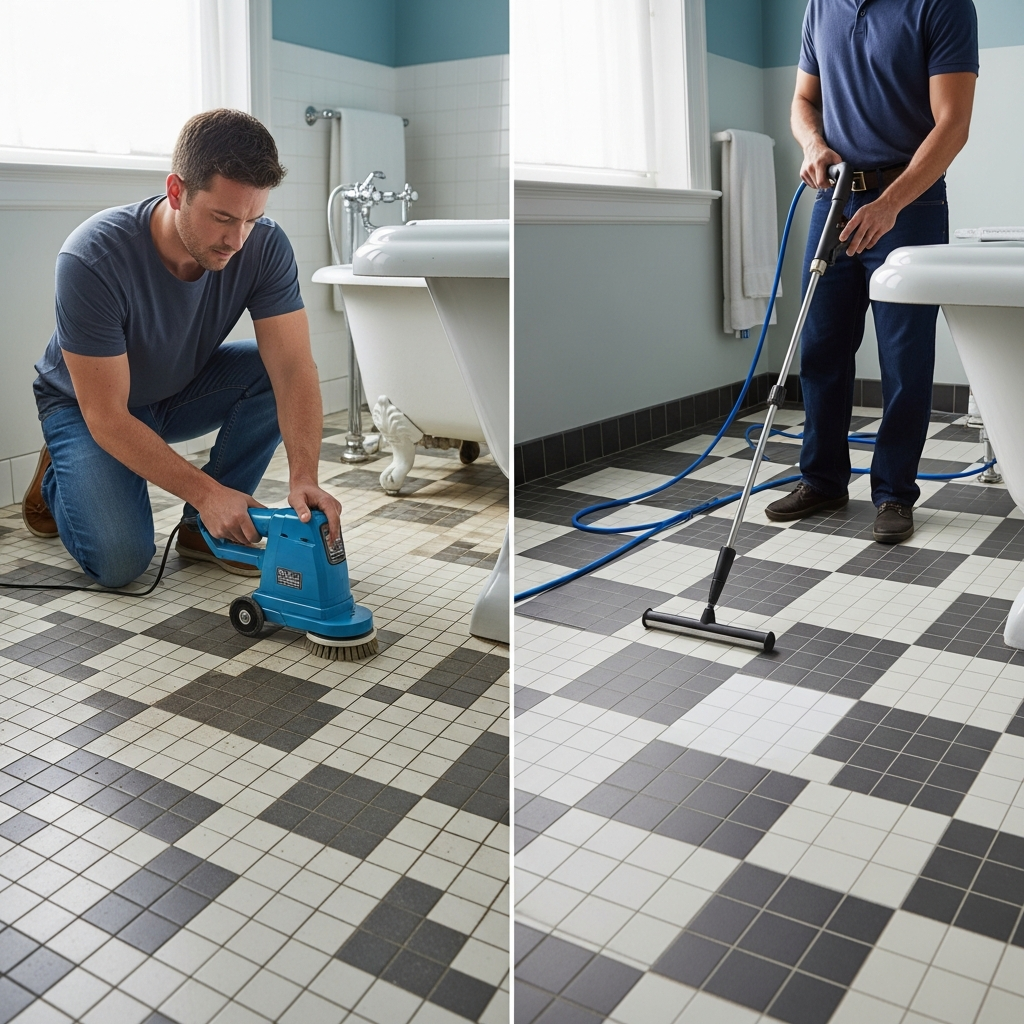
Home improvement aisles are full of devices promising quick wins, and grout machines are no exception. If you live in Elizabeth, New Jersey and are deciding between buying or renting a grout machine and hiring professional tile and grout cleaning, it helps to understand how each option performs in real homes. The right choice depends on tile type, grout condition, soil level, and the value you place on your time and long-term results. To compare fairly, consider the proven methods behind professional tile and grout cleaning and how they stack up against consumer and prosumer-grade machines.
Grout machines range from compact scrubbers to steam devices and oscillating tools with grout-focused attachments. These tools can help with maintenance, but their effectiveness varies widely depending on the soils you are tackling and the sensitivity of your tile. Meanwhile, trained technicians use a suite of tools and controlled processes optimized for different materials, soil types, and room layouts common in Elizabeth’s mix of historic and modern homes.
How Grout Machines Work
Most grout machines rely on agitation to loosen soils. Some use brushes that rotate or oscillate, others use steam to heat and lift residues, and a few combine agitation with limited extraction. The logic is simple: scrub the line, dislodge the buildup, and wipe it away. In practice, there are trade-offs. Excessive agitation can roughen grout or scratch certain tiles, and steam can drive moisture into gaps if not managed correctly. Devices without strong extraction can leave behind dirty slurry, which may dry into a film that attracts new soil.
How Professional Tile and Grout Cleaning Works
Professionals generally follow a multi-step process: inspection and testing, dry soil removal, targeted solutions applied with proper dwell time, controlled agitation tailored to the tile and grout, and high-quality extraction to rinse away suspended soils. This systematic approach manages variables that single-purpose machines often cannot handle—especially when dealing with mixed soils like kitchen grease blended with tracked-in grit or soap scum layered over mineral deposits.
Common Challenges With DIY Grout Machines
Several pitfalls arise when homeowners rely solely on grout machines:
- Uneven results: Scrubbing may brighten some lines while leaving others shadowed, especially where textures trap soil.
- Residue: Without strong extraction, lifted dirt can settle into adjacent areas or dry into a new film.
- Surface risk: Aggressive brushes or scouring pads can scratch glazed tile or damage natural stone.
- Moisture management: Steam and heavy water use can seep into grout or subflooring if tiles are not perfectly sealed.
- Time investment: Thoroughly treating large areas is labor-intensive and can be difficult to sustain.
These challenges do not make grout machines useless; they simply highlight where their limits often appear in real-life conditions.
Where Grout Machines Shine
Grout machines can be helpful for quick touch-ups, small areas, and maintenance between deeper services. In low-traffic spaces with light soils, they can refresh the look of grout lines when paired with a compatible, residue-free cleaner. They are also useful for spot treatment of accidental spills or localized discoloration when you need a fast response.
Where Professionals Excel
Professional teams bring calibrated tools, stronger extraction, and the ability to tailor agitation to your materials. They handle mixed soils efficiently, lift residues that embed in textures, and deliver an even finish across the entire surface. In Elizabeth’s older bathrooms with narrow grout lines or intricate mosaics, this level of control prevents damage while achieving a noticeable transformation. In kitchens, experts target oily films without leaving a tacky feel underfoot.
Evaluating Your Tile Type and Grout Condition
Before choosing a path, identify your tile type—ceramic, porcelain, or natural stone—and examine grout porosity and wear. Glossy tiles are more susceptible to scratching from abrasive pads. Natural stone may react poorly to acidic products or harsh agitation. If grout is crumbling or uneven, aggressive scrubbing can worsen the problem. On the other hand, stable grout with light soils is a better candidate for machine-assisted maintenance.
Process Comparison: Step by Step
To visualize the difference, consider a side-by-side outline:
- Preparation: A homeowner using a grout machine typically sweeps and chooses a cleaner. A professional begins with inspection, testing, and dry soil removal to protect surfaces.
- Application: The homeowner applies product and scrubs. The professional applies targeted solutions with dwell time, then agitates with tools matched to grout width and tile texture.
- Rinse: The homeowner wipes or mops, sometimes multiple times. The professional uses extraction that leaves minimal residue and reduces re-soiling.
- Detailing: The homeowner may miss edges and tight corners. The professional details thresholds and fixtures for a uniform finish.
- Protection: The homeowner might skip grout sealing. The professional offers optional protection to slow future staining.
This comparison shows why outcomes from professionals tend to look clearer and last longer.
Time, Effort, and Consistency
Consistency is where professional service often wins. Treating an entire kitchen or multiple bathrooms with a consumer-grade machine can take far longer than expected, especially when rinsing is required to remove lifted soils. Professionals streamline each step, balancing dwell time and agitation with efficient extraction. For busy households in Elizabeth, this efficiency reduces disruption while delivering a consistent finish that can be hard to replicate on your own.
Midway Checkpoint: Blending Strategies
Many homeowners find that a blended approach works best: periodic professional resets combined with light machine-assisted maintenance between visits. This way, you enjoy the clarity and uniformity that comes from expert work while using your grout machine for quick touch-ups. As you evaluate options, review established practices in tile and grout cleaning to set benchmarks for what strong results look like and how to maintain them.
Frequently Asked Questions
Q: Will a grout machine scratch my tile? A: It depends on the brush, pad, and tile finish. Glossy glazes and some stones are more vulnerable. Always test in an inconspicuous area first.
Q: Can I use steam safely on all grout? A: Steam can be helpful but is not universal. Excess moisture or heat may affect weak grout or push water into gaps. Professional evaluation is best for sensitive areas.
Q: Why does my tile feel sticky after DIY cleaning? A: Residue from certain products or incomplete rinsing can cause tackiness, which attracts more soil. Thorough extraction reduces this problem.
Q: How often should I use my grout machine? A: Use it as needed for maintenance and spot cleaning, and consider periodic professional resets for uniform results.
Q: Do professionals use grout machines too? A: Professionals use a variety of tools, some of which agitate grout lines, but they combine them with targeted solutions and strong extraction for a complete system.
Q: What about natural stone? A: Natural stone needs care tailored to its porosity and sensitivity. Harsh agitation or acidic products can damage it, so professional guidance is recommended.
Q: Can I seal grout myself? A: DIY sealing is possible but requires clean, dry grout and careful application. Professionals can advise on product choice and timing after cleaning.
Q: Are there risks to over-scrubbing? A: Yes. Over-scrubbing can roughen grout, making it hold more dirt in the future. Balanced agitation is key.
Practical Maintenance Tips
Regardless of your approach, several habits keep tile looking its best. Sweep or vacuum regularly to remove grit before it scratches. Mop with a neutral cleaner and change water often to avoid spreading residue. Use mats at entrances and under sinks. In bathrooms, improve ventilation and squeegee surfaces after use to slow buildup. These routines amplify the impact of both DIY and professional efforts.
Elizabeth, NJ Considerations
Local conditions influence care. Winter slush and road grit make entryways prime candidates for frequent dry soil removal. Kitchens benefit from degreasing routines that do not leave films. Older homes with small-format tiles require careful agitation to protect narrow grout lines. By tailoring your strategy to these realities, you protect your surfaces and extend the time between deeper cleanings.
Choosing the Best Path for Your Home
If you enjoy DIY projects and have manageable soils, a grout machine can be a helpful maintenance tool. If your grout is heavily discolored, your tile has complex textures, or you want predictable, uniform results across multiple rooms, professional service is likely the more efficient choice. Many households combine the two: professionals reset the surface, and homeowners maintain the look with light, periodic touch-ups.
Step Forward With Confidence
You do not have to choose blindly. Evaluate your tile type, soil level, and the time you are willing to invest. Consider the strengths and limits of machines versus the comprehensive methods of professionals. When the goal is a clear, consistent finish that lasts, scheduling expert tile and grout cleaning is a straightforward way to achieve a lasting refresh while protecting your surfaces.