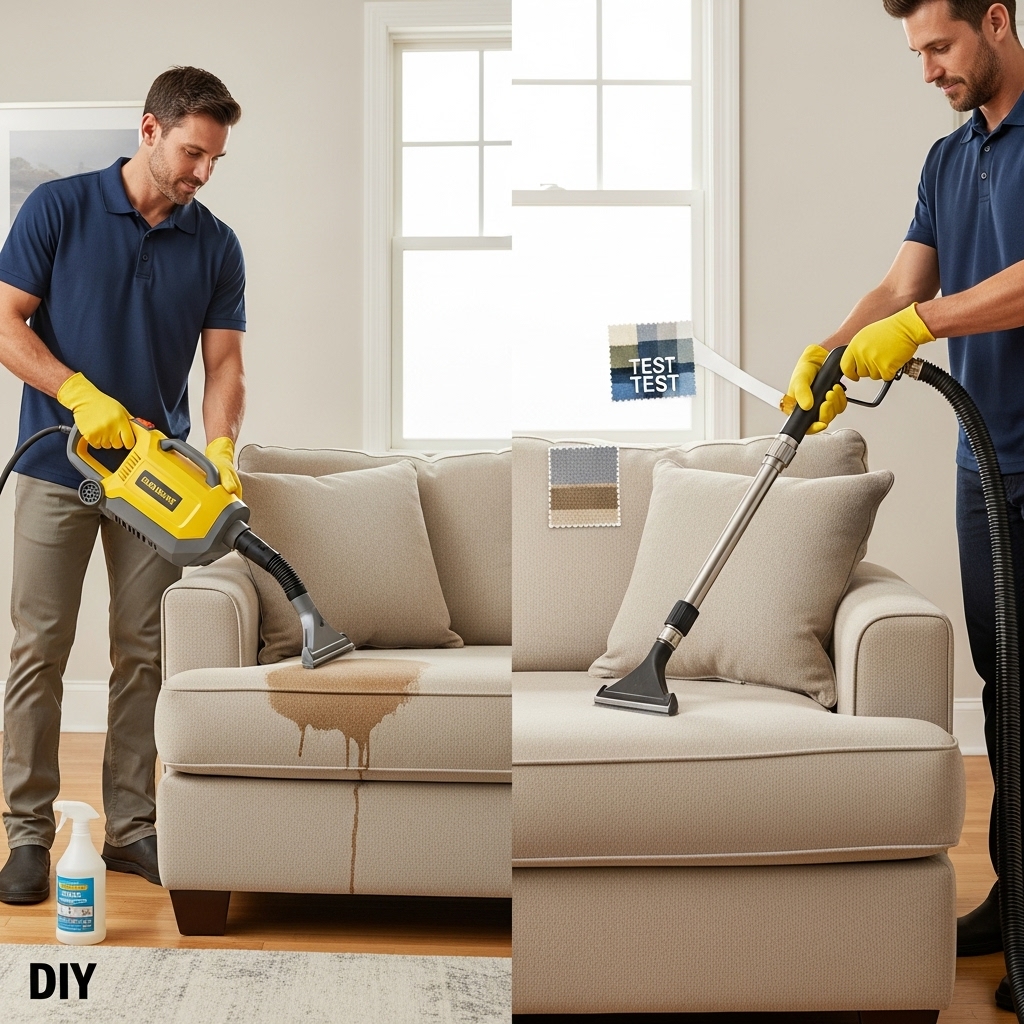
Should you rent or buy a machine and tackle your own upholstery, or call a professional team in Elizabeth, NJ? The right choice depends on fabric type, soil level, time constraints, and your comfort using cleaning chemistry. While DIY machines can handle light maintenance, trained pros bring stronger extraction, tailored methods, and the experience to prevent issues like overwetting or dye bleed. This guide breaks down when to do it yourself and when to hire out, with practical tips for safer results either way—and it starts by understanding what true upholstery cleaning entails beyond a quick pass of suds and water.
Unlike floors, upholstery sits closer to the body and traps oils, lotions, pet dander, and small crumbs. Fabrics vary widely in how they react to moisture and heat. Successful cleaning requires matching the method to the fiber, controlling pH, and extracting thoroughly so residues do not invite rapid re-soiling.
What consumer machines can do well
Modern consumer and rental units have improved in portability and ease of use. For lightly soiled synthetic fabrics, they can deliver a noticeable refresh between deeper services.
- Spot treatment convenience: Immediate response to fresh spills limits staining—key for families and pet owners.
- Routine upkeep: Occasional, light passes can prevent surface soils from building up.
- Budget control: Once you have a machine, you can address minor issues as they arise without scheduling a visit.
- Compact tools: Small hand tools reach arms, sides, and tight corners on chairs and sectionals.
Despite these advantages, limits appear when soils are oily, the fabric is delicate, or the item has complex details like tufting, welted seams, or mixed materials.
Where DIY machines struggle
Upholstery-specific challenges aren’t always obvious until after a piece dries. The most common pitfalls stem from incomplete extraction and the use of one-size-fits-all detergents.
- Overwetting: Excess water soaks foam and batting, leading to slow dry times and potential browning or odor.
- Inadequate rinsing: Detergent residue can leave fabrics sticky and attract soil, making items look dull again quickly.
- Limited heat and vacuum: Consumer units often lack the power to rinse deeply or recover moisture effectively.
- Unmatched chemistry: Using a high-pH solution on delicate fibers can cause dye shift or texture changes.
- Wicking: Subsurface stains can rise as the piece dries, reappearing a day or two later.
DIY is best for hardy, colorfast synthetics with light, recent soils. Anything delicate or heavily used benefits from professional controls.
Strengths of professional service
Trained teams bring a toolkit that adapts to each piece rather than forcing one approach across the board.
- Fabric identification and testing: Quick tests inform safe moisture levels and chemistry choices.
- High-performance extraction: Professional vacuums pull more water from the cushion core, speeding dry times and reducing wicking.
- Method variety: Hot water extraction, low-moisture encapsulation, dry-solvent cleaning, and specialized spotting cover the full spectrum.
- Residue management: Balanced rinses and neutralization leave fabrics soft and less prone to re-soil.
- Protection and grooming: Pile set, seam checks, and optional protector help maintain appearance longer.
Pros also anticipate real-world variables in Elizabeth buildings—like elevator timing, ventilation limits in winter, and strategies to protect hallways and corners during equipment transport.
Safety and fabric risk
Upholstery often includes hidden materials: foam types, glues, linings, and decorative trims that respond unpredictably to moisture. Professionals assess these factors during pre-inspection. With DIY, it’s easy to unknowingly force water into the core or over-agitate a sensitive weave.
Another subtle risk is dye migration. Some richly colored fabrics release dye when exposed to water or high pH. Pros perform dye-stability tests in inconspicuous areas and choose a method accordingly. This simple step can prevent a costly mishap.
Hygiene and allergen reduction
Deep extraction and HEPA-grade pre-vacuuming remove more dust and dander from cushions and crevices. In homes with allergies or pets, this matters as much as appearance. Pros also use neutralizers for persistent odors, not just fragrances to mask smells.
Time, effort, and results
DIY demands setup, learning the machine, and drying management afterward. If you have a small spill or single chair, that trade-off is reasonable. For a sectional, dining suite, and a recliner in one session, the effort and risk of inconsistency grow. Pro teams, accustomed to moving methodically through whole-room projects, finish with predictable quality and leave clear aftercare guidance.
When DIY makes sense
- Fresh spills on synthetic microfiber or polyester.
- Maintenance between deeper cleanings of everyday seating.
- Budgeting time rather than coordinating a service visit for minor touch-ups.
- Trial on an inconspicuous cushion with careful, minimal moisture and gentle agitation.
If trying DIY, test a small area first, use diluted solutions recommended by the manufacturer, and perform extra dry passes. Slow, overlapping strokes help extract more water.
When to hire professionals
- Delicate or mixed fabrics: Linen, rayon, viscose, silks, or blends with trim and buttons.
- Heavily soiled or odorous items: Pet accidents, cooking odors, or long-term buildup.
- Large projects: Multiple rooms or whole-home upholstery needing consistent results.
- Health priorities: Allergy management with HEPA pre-vacuuming and residue control.
Elizabeth’s seasonal humidity and compact apartments can complicate drying without pro-grade airflow and extraction. For many homes, a planned professional visit twice a year for main seating, complemented by DIY touch-ups, strikes a practical balance.
Understanding method choices
Pros may recommend hot water extraction for durable synthetics, low-moisture encapsulation for quick turnarounds, or solvent-based methods for sensitive fibers. The right choice hinges on fabric testing and the kind of soils present. Asking why they chose a method—and how they’ll control moisture—helps you learn and adds accountability.
Residue, re-soiling, and the science of pH
Detergents lift soils but must be fully neutralized and rinsed. Leftover residue acts like a magnet for dirt. That’s why professionals sequence pre-sprays, agitation, and balanced rinses carefully. They also use multiple extraction passes and airflow to speed drying. The result is a cleaner feel that lasts longer.
What to expect from a visit
A thorough visit includes inspection, fabric tests, dry soil removal, targeted pre-treatment, agitation, rinse and extraction, detail spotting, grooming, and drying acceleration. Technicians protect floors and walls, move through rooms systematically, and review results with you before leaving. You’ll get practical advice for blotting spills and simple weekly maintenance so results hold up.
Common myths
- “All steam cleaning is the same.” Not true. Equipment quality, technique, and chemistry vary widely, and upholstery isn’t carpet—controls must be finer.
- “More soap equals cleaner results.” Excess detergent without proper rinsing causes stickiness and faster re-soiling.
- “Sunlight will finish drying whatever the machine misses.” Direct sun can fade dyes and stiffen fibers; controlled airflow is better.
A balanced strategy for Elizabeth households
Many residents combine both approaches: DIY for small mishaps and periodic professional service for whole-piece restoration. That way, you maintain appearance while avoiding the pitfalls of deep DIY attempts. When you do book a visit, look for clear explanations, photos of similar work, and a careful plan suited to your pieces. The most reliable outcomes come from pairing smart habits with expert professional upholstery cleaning at sensible intervals.
FAQ
Q: Are rental machines safe for all upholstery? A: They can be safe for hardy, colorfast synthetics, but always test in a hidden spot and limit moisture. Delicate fabrics often need a different method.
Q: How long does drying take after DIY vs. pro cleaning? A: Dry times vary by fabric, humidity, and extraction. Professional gear usually recovers more moisture, leading to faster, more even drying.
Q: Will DIY void furniture warranties? A: Some warranties specify professional care or method limits. Check your documentation to avoid issues.
Q: Can pros remove old stains that DIY could not? A: Often yes, thanks to targeted chemistry and stronger extraction, though no cleaner can guarantee removal of every stain.
Q: Is protector necessary after cleaning? A: It can help reduce staining and make spot cleanup easier on frequently used seating. Discuss fabric suitability with your technician.
Ready for cleaner, safer fabrics?
If you want expert fabric testing, powerful extraction, and guidance tailored to your home, schedule a visit with a trusted local team and enjoy the comfort of a meticulous upholstery cleaning service that keeps your furniture looking and feeling fresh.