
Introduction: Why a Clear Upholstery Cleaning Process Matters in Elizabeth, New Jersey
In a busy Union County city like Elizabeth, your furniture works as hard as you do. Between family life, social gatherings, and the seasonal shift from coastal humidity to winter dryness, soil and odors can build up quickly on sofas, sectionals, dining chairs, and accent pieces. A structured, repeatable process is the difference between guesswork and consistently fresh results. This guide walks you through every step, from fabric identification to drying and post-care, so you can protect both appearance and longevity. If you prefer to compare your DIY plan with a professional method, the fundamentals of upholstery cleaning outlined here will help you speak the same language as the pros.
Whether you live in a modern apartment near Midtown Elizabeth or a historic home with delicate textiles, the process below is adaptable. It reduces risk, improves outcomes, and keeps your family’s favorite seating sanitary and comfortable throughout the year.
Step 1: Identify Fabric Type and Construction
Start by finding the manufacturer’s cleaning code, typically on a tag under cushions or the frame. Codes often include W (water-based cleaners), S (solvent-based only), W/S (either with caution), and X (vacuum only). Equally important is the fabric composition and weave: cotton, linen, wool, silk, rayon, viscose, acetate, polyester, nylon, acrylic, olefin, or blends. Pay attention to texture (chenille, velvet, microfiber, jacquard) and backing materials, which influence how the fabric behaves when wet.
Construction details matter. Loose cushions can be removed for better access, while tight-back or channel tufting demands targeted tool work and precise drying. Delicate piping, buttons, and trims require low-moisture techniques and careful agitation to avoid fraying or dye transfer.
Step 2: Assess Soils, Stains, and Use Patterns
Map out the furniture like a professional. Identify body oils on armrests and headrests, snack spills on seat cushions, pet hair along seams, and dust on skirts and undersides. Note any previous attempts at stain removal, as residues from household products can react unexpectedly to professional detergents.
Common Elizabeth, New Jersey concerns include salt and grime tracked in during winter, pollen and fine grit in spring, and sweat and sunscreen residues in summer. Each contaminant type has a preferred chemistry and dwell time that will be applied later in the process.
Step 3: Dry Soil Removal
Before you think about moisture, remove as much dry soil as possible. Use a vacuum with a crevice tool and soft-bristle furniture attachment. Work methodically from the top down and from the inside out, focusing on seams, tufts, welt cords, and cushion zipper lines. If pet hair resists suction, use a rubber grooming brush or slightly damp microfiber cloth to ball it up, then vacuum again.
Dry soil removal dramatically reduces the risk of muddying stains and makes preconditioning more effective.
Step 4: Colorfastness and Compatibility Testing
Always test an inconspicuous spot. Apply a small amount of your chosen cleaner to a white towel and press for 10–15 seconds. Check for dye transfer, fabric distortion, or browning. Test water-based and solvent-based cleaners according to the manufacturer’s code, and choose the safest option that still delivers the needed cleaning power.
Step 5: Preconditioning the Fabric
Apply a fabric-appropriate preconditioner. For W-coded synthetics and many blends, a mild, neutral to slightly alkaline upholstery detergent works well. For natural fibers (cotton, linen, wool), lean toward a lower pH solution, use controlled moisture, and keep dwell times conservative. For S-coded materials, consider specialized solvent-based products with excellent ventilation and minimal saturation.
Preconditioners should be misted lightly and evenly. Allow proper dwell (typically 3–7 minutes), avoiding overwetting. Agitate gently with a soft upholstery brush or a terry cloth to break the bond between fibers and soils.
Step 6: Targeted Stain Treatments
Treat stains after preconditioning so you can see what remains. Match chemistry to stain type:
- Protein-based (food, milk, sweat): Enzyme spotters with moderate dwell, then blot.
- Tannins (coffee, tea, wine): Mild acidic spotters; avoid heat that can set stains.
- Oils and cosmetics: Solvent-based spotters; work from the outside in to prevent spreading.
- Ink and dye transfer: Specialty ink removers and short contact time; blot, do not rub.
- Pet accidents: Enzyme-oxidizing combos; address both stain and odor sources in the cushion core when possible.
Always neutralize after strong spotters to restore fabric pH and reduce resoiling.
Step 7: Agitation Techniques for Different Weaves
Use soft brushes on chenille and microfiber to avoid pile distortion. On velvet and velour, limit agitation and maintain a consistent nap direction. For jacquard and textured blends, small circular motions with a microfiber applicator lift soil while protecting pattern clarity. Keep agitation short and purposeful.
Step 8: Rinse and Extraction
For W and many W/S fabrics, use low-moisture rinse-extraction. Choose a rinse with a slightly acidic pH to neutralize detergents, prevent browning, and leave a soft hand. Work in small sections, overlapping passes to avoid streaking. Extract with controlled vacuum power; excessive suction can distort delicate weaves or pull color.
When water is not advised, use a solvent-safe approach: apply product to a towel rather than direct-to-fabric, then blot and towel-extract. This method minimizes saturation while still removing residues.
Step 9: Speed Drying
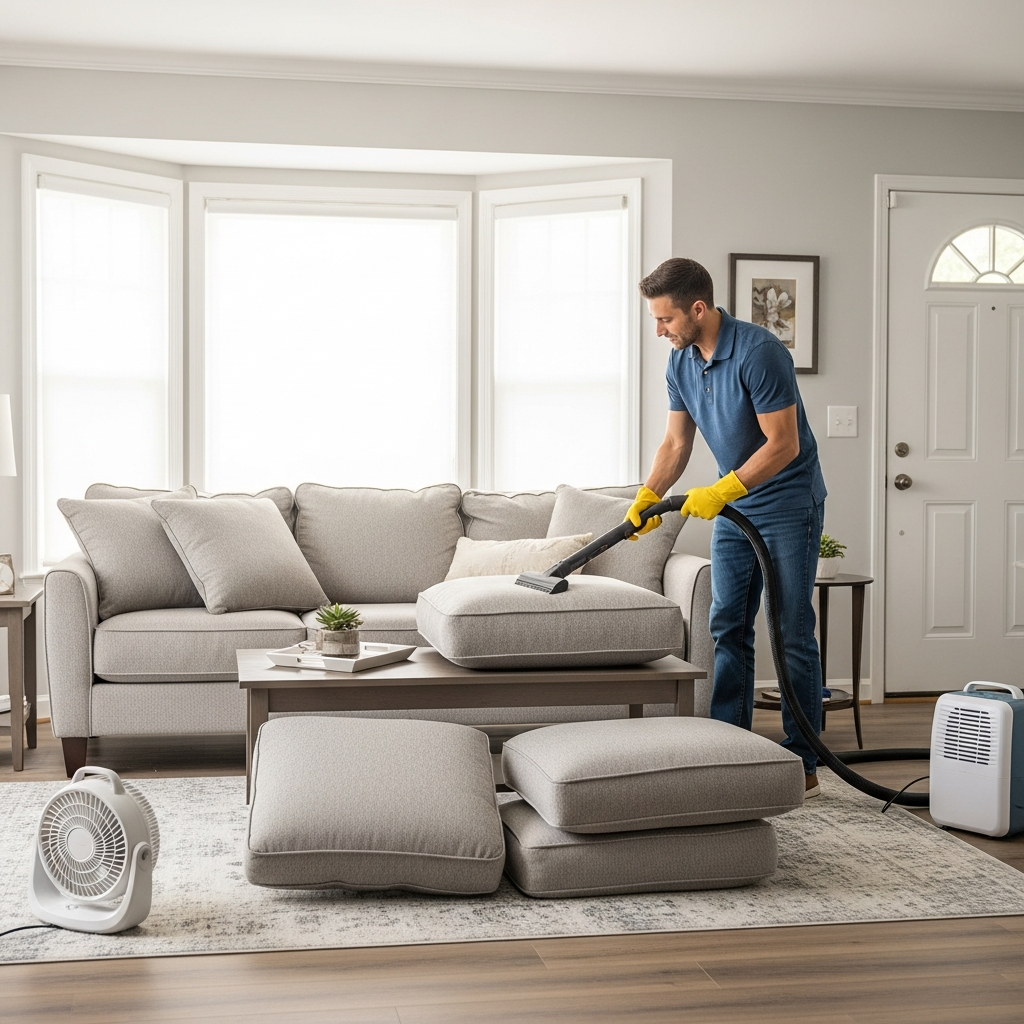
Rapid drying is essential for appearance and hygiene. Elevate cushions to promote air circulation, place fans to move air across surfaces (not directly at one point), and in humid weather, run a dehumidifier or the home’s HVAC system in dry mode. Groom pile fabrics after the first few minutes of drying to prevent wand marks and shading.
Step 10: Post-Clean Finishing
Grooming smooths the nap and evens the visual texture. On velvet and microfiber, lay fibers in a uniform direction with a clean brush. Replace cushions in original orientation to maintain wear patterns, or rotate intentionally if you are rebalancing use. Consider a protector formulated for upholstery to shield against new spills without stiffening the hand.
Seasonal Considerations in Elizabeth, NJ
Spring pollen and airborne grit can cling to damp fibers after rain, so schedule deeper cleans when you can ensure good indoor airflow. Summer humidity near the Arthur Kill can lengthen dry times; use extra air movement and ventilation. In fall and winter, forced-air heating redistributes dust; vacuum more frequently and attend to armrests where body oils attract additional soil.
Common Pitfalls to Avoid
- Skipping the vacuum step, which leads to muddying and wick-back.
- Overwetting natural fibers, causing browning, shrinkage, or dye migration.
- Using high-alkaline products on delicate textiles.
- Neglecting pH neutralization after spotting.
- Inadequate drying, which can promote odors or microbial growth.
When to Call in a Professional
If you encounter cellulosic browning on cotton or rayon, persistent pet odors deep in cushion cores, dye bleed, or water rings that reappear after drying, specialized chemistry and equipment are often necessary. Clear documentation of your steps helps a technician troubleshoot quickly and protect the fabric. In the middle of your project, it can be reassuring to benchmark your method against a pro-level approach; exploring professional upholstery cleaning processes can clarify next steps and prevent missteps.
Maintenance Schedule
- Weekly: Quick vacuum, especially at seams and under seat fronts.
- Monthly: Address visible spots before they set; rotate cushions.
- Quarterly: Light overall clean for high-use pieces; re-groom pile fabrics.
- Annually: Deep clean and reapply protector if appropriate.
Eco-Conscious Choices
Look for low-VOC formulas, rinse agents that reduce chemical residue, and washable, reusable microfiber towels. Ventilate well to minimize indoor air impact. Responsible disposal of used towels and empty containers keeps chemicals out of storm drains and the local watershed.
Frequently Asked Questions
Q: How do I know if my sofa can handle water-based cleaning?
A: Check the tag for a W or W/S code and confirm with a colorfastness test on an inconspicuous area. If dye transfers or the fabric rings easily, switch to lower-moisture or solvent-safe methods.
Q: What causes browning after cleaning?
A: Natural fibers like cotton and rayon can release lignin or cellulosic browning when overwet or left too alkaline. Use mildly acidic rinses, minimal moisture, and fast drying to prevent it.
Q: Can I treat pet urine without removing cushion covers?
A: You can reduce surface odor and staining, but if urine penetrates foam, full remediation often requires treating or replacing the cushion core. Enzyme-oxidizing products help, but contact time and penetration are key.
Q: Is steam cleaning safe for all upholstery?
A: True steam at high temperature can distort many fabrics. Most upholstery responds better to warm, low-moisture rinse-extraction with controlled pressure and heat.
Q: How often should I apply fabric protector?
A: For high-use seating, once a year is common, but only after a thorough clean. Test for color change, and avoid over-application that can alter feel.
Q: Why do stains reappear after drying?
A: Wick-back occurs when residues in the backing or cushion rise to the face fibers as moisture evaporates. Reduce saturation, use multiple light extraction passes, and dry rapidly.
Q: What is the safest way to clean velvet?
A: Minimal moisture, gentle agitation, consistent nap grooming during and after drying, and a slightly acidic rinse help maintain luster and avoid pressure marks.
Q: Are solvent-only (S) fabrics difficult to maintain?
A: They require patience and ventilation, but careful towel application, blotting, and targeted solvent spotters can produce excellent results without water rings.
Q: Do protectors make fabric feel stiff?
A: Quality upholstery protectors are designed to maintain hand feel. Over-application or the wrong product can cause stiffness, so apply lightly and evenly.
Q: Can I clean antique or heirloom pieces myself?
A: Proceed cautiously. Perform extensive testing, use the gentlest products, and prioritize preservation over aggressive soil removal. Consider professional evaluation for fragile textiles.
Bring Your Living Room Back to Life
Great results come from a thoughtful process: identify the fabric, remove dry soil, precondition carefully, rinse or blot with precision, and dry quickly. If you want expert backup for a delicate textile, busy schedule, or stubborn stain challenge, schedule a local consultation and compare options with trusted resources on upholstery cleaning so your home in Elizabeth looks and feels its best.