
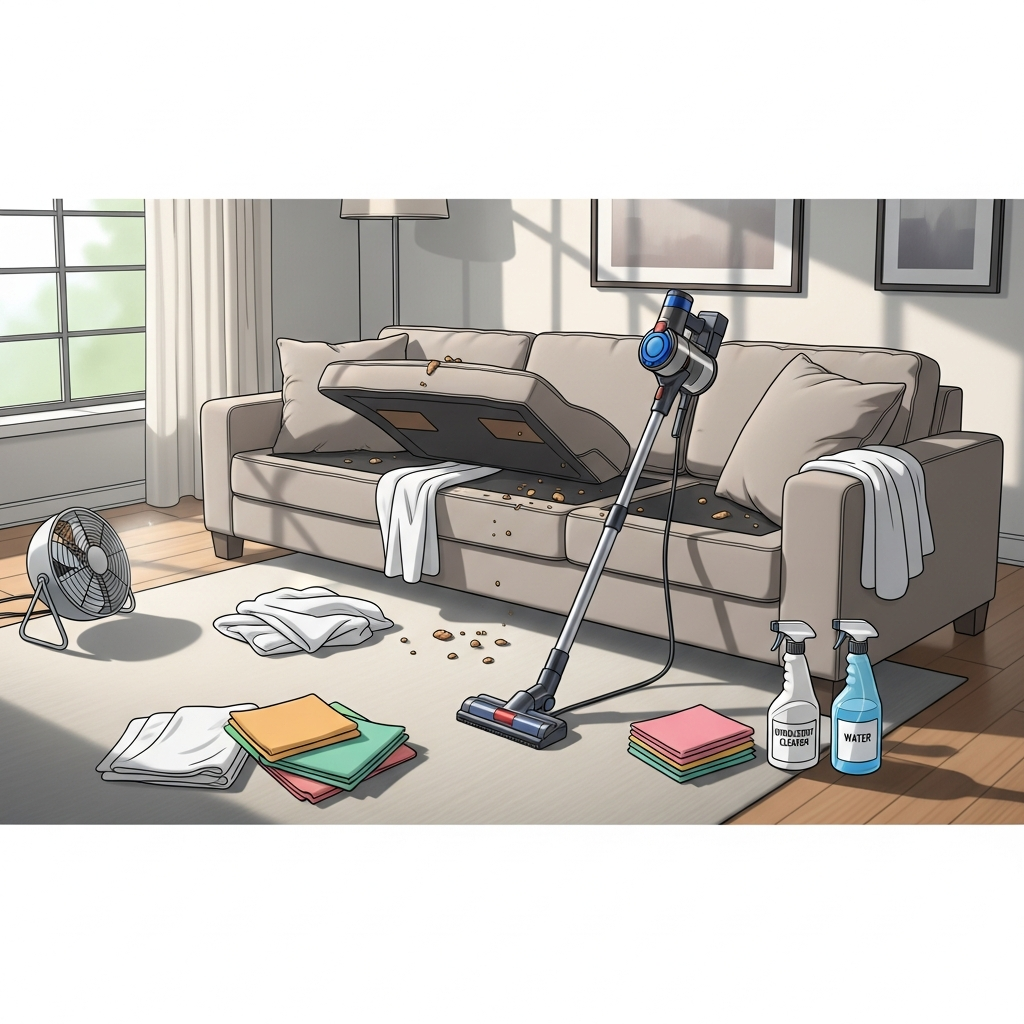
Beginner-Friendly Upholstery Cleaning Checklist
If you are new to caring for sofas, chairs, and sectionals, a clear checklist prevents overwhelm and mistakes. Elizabeth homes see a little of everything—rainy-day moisture, summer humidity, pet traffic, and snack-time stains—so a reliable sequence helps you clean efficiently and safely. Use this beginner checklist as your step-by-step companion, and refer to foundational guides on upholstery cleaning whenever you want more detail or confidence.
Gather Your Tools
- Upholstery-safe vacuum with crevice and soft-brush attachments
- White cotton towels and microfiber cloths
- Mild upholstery cleaner and a neutralizing rinse
- Solvent-safe spotter for S-coded fabrics
- Soft upholstery brush and rubber pet-hair brush
- Spray bottles labeled “Cleaner,” “Rinse,” and “Spotter”
- Small fan for drying and a gentle fabric protector (optional)
Pre-Clean Checks
- Find the cleaning code tag (W, S, W/S, or X).
- Identify fabric type (natural, synthetic, or blend) and weave.
- Inspect for loose seams, buttons, or delicate trim.
- Note soil patterns: armrests, cushion fronts, headrests, and seams.
- Plan ventilation and airflow to ensure fast drying.
Colorfastness Testing
- Test cleaner on a hidden area with a white towel.
- Press 10–15 seconds; check for dye transfer or distortion.
- Adjust plan to gentler chemistry if needed.
Dry Soil Removal
- Vacuum top to bottom, inside to outside.
- Use crevice tools at seams and zippers.
- Lift pet hair with a rubber brush, then vacuum again.
Preconditioning
- Mist an upholstery cleaner suitable for the code (W, S, W/S).
- Allow 3–7 minutes dwell time.
- Agitate lightly with a soft brush or towel; avoid overwetting.
Spot Treatment
- Protein stains: Enzyme spotter, short dwell, blot.
- Tannins: Mild acidic spotter, rinse.
- Grease and cosmetics: Solvent spotter on a towel, dab gently.
- Ink and dye: Specialty remover, brief contact, blot only.
Rinse and Extraction
- For W fabrics, perform low-moisture rinse-extraction with an acidic rinse.
- For S fabrics, apply solvent to a towel and blot; avoid saturation.
- Use small, overlapping passes; prioritize control over speed.
Drying and Grooming
- Elevate cushions, run a fan across surfaces, and use HVAC for airflow.
- Groom pile fabrics in one direction to avoid shading.
- Open zippers on removable cushions to vent moisture.
Protection and Reset
- After full dry, apply a light, even coat of upholstery protector if desired.
- Rotate and flip cushions to balance wear.
- Document what worked for next time.
Elizabeth, NJ Considerations
Humidity off the bay can slow drying; plan your session when you can run fans or a dehumidifier. Keep a basic schedule: quick vacuum twice weekly for high-use seats, spot treat immediately, and perform a light overall clean quarterly. During winter, address salt and grit tracked in from sidewalks to prevent abrasion on cushion fronts.
Beginner Mistakes to Avoid
- Skipping the vacuum step before wet cleaning.
- Overwetting delicate fibers like cotton, rayon, or silk.
- Using hot water on tannin stains such as coffee and tea.
- Scrubbing aggressively, which can distort texture and nap.
- Ignoring pH neutralization, leading to sticky residues and resoiling.
Mid-Project Confidence Check
If you feel unsure about a test result or a stain seems to spread, stop and reassess. Compare your steps with a trusted primer on upholstery cleaning, then continue with the safest method you have confirmed.
Frequently Asked Questions
Q: What should I do first when I see a spill?
A: Blot immediately with a white towel to capture liquid before it penetrates. This alone can remove most of the problem.
Q: How do I know if my fabric can handle water?
A: Look for W or W/S codes, then perform a colorfastness test. If the test shows dye movement or distortion, switch to a drier method.
Q: Why is neutralizing rinse important?
A: It resets fabric pH after cleaners and spotters, reducing sticky residues and future soiling.
Q: Can I use one product for all stains?
A: No. Match chemistry to stain type—enzymes for proteins, acidic for tannins, solvents for oils, and specialty removers for ink.
Q: How fast should upholstery dry?
A: Within a few hours is ideal. Use fans, airflow, and dehumidification in humid weather to keep dry times short.
Q: What if my cushion covers have zippers?
A: Zippers allow you to vent moisture and access seams for vacuuming. Only remove covers if the manufacturer explicitly permits washing.
Q: Is microfiber beginner-friendly?
A: Yes, microfiber often cleans well with minimal moisture and gentle agitation, but avoid hard scrubbing that can mat fibers.
Q: How do I prevent recurring stains?
A: Control moisture, avoid over-application of cleaner, extract or blot thoroughly, and dry quickly to prevent wick-back.
Q: Should I use a protector?
A: A light application after thorough cleaning can make future spot removal easier, particularly on high-use areas.
Q: When should I call a professional?
A: For dye bleed, cellulosic browning, severe pet contamination, or antique textiles, specialized equipment and chemistry are advisable.
Make Your First Clean a Win
With a simple checklist and steady habits, you can keep your furniture fresh without stress. Follow the sequence, test carefully, work with minimal moisture, and dry fast. If you want extra assurance before your first big clean, review procedures and options for upholstery cleaning and enjoy a confident start in your Elizabeth home.