
Keeping Your Area Rugs Fresh and Lasting Longer in Elizabeth, NJ
Area rugs do more than cover floors—they soften noise, anchor furniture, add warmth, and showcase your personal style. In busy Elizabeth, New Jersey households, where seasons are pronounced and foot traffic can be constant, a well-cared-for rug also protects the underlying flooring. Adopting best practices for routine care and periodic deep cleaning helps you maintain color, texture, and structural integrity for years. Whether you own a wool Kazak in the living room or a synthetic runner in the hallway, understanding what to do—and what not to do—will make all the difference. If you want an expert safety net, professional rug cleaning can complement smart at-home habits.
This guide gathers proven, fiber-safe techniques used by rug care professionals and adapts them for Elizabeth homeowners. You will learn daily and weekly maintenance, emergency spill response, deep-cleaning intervals, and local considerations such as humidity, road salt, and urban dust. You will also see how to protect fringes, minimize shedding, and keep edges from curling.
Know Your Rug: Fiber, Construction, and Dyes
Before cleaning, get familiar with your rug’s fiber and construction. Fibers respond differently to moisture, chemistry, and agitation:
- Wool: Naturally resilient, excellent soil-hiding, loves gentle water baths with controlled pH. Avoid high alkalinity and high heat.
- Silk: Luxurious but delicate; reacts poorly to strong detergents and aggressive brushing. Requires very low agitation and careful drying.
- Cotton: Absorbent; tends to brown or yellow if over-wet and under-rinsed. Neutralize and dry thoroughly.
- Viscose/Rayon/Art Silk: Cellulose-based and easily distorted by moisture; limit water, use fast drying, and avoid scrubbing.
- Synthetics (Polypropylene, Nylon, Polyester): Durable and stain-resistant; tolerate more aggressive cleaning, but protect against heat distortion and color loss.
Construction also matters:
- Hand-knotted/Hand-woven: More breathable and repairable; treat carefully to avoid dye migration and distortion.
- Tufted: Often has a latex or adhesive backing and a fabric scrim; limit saturation to prolong adhesive life.
- Machine-made: Stable and consistent; can often handle more rinsing, but test for dye stability.
Test for colorfastness in a hidden area. Blot a white cloth dampened with cool water on each color. If dye transfers, avoid high-moisture methods and use low-moisture cleaning or call a professional.
Daily and Weekly Maintenance That Pays Off
Regular maintenance is the single biggest factor in rug longevity. Small habits prevent gritty soil from cutting fibers and dulling colors.
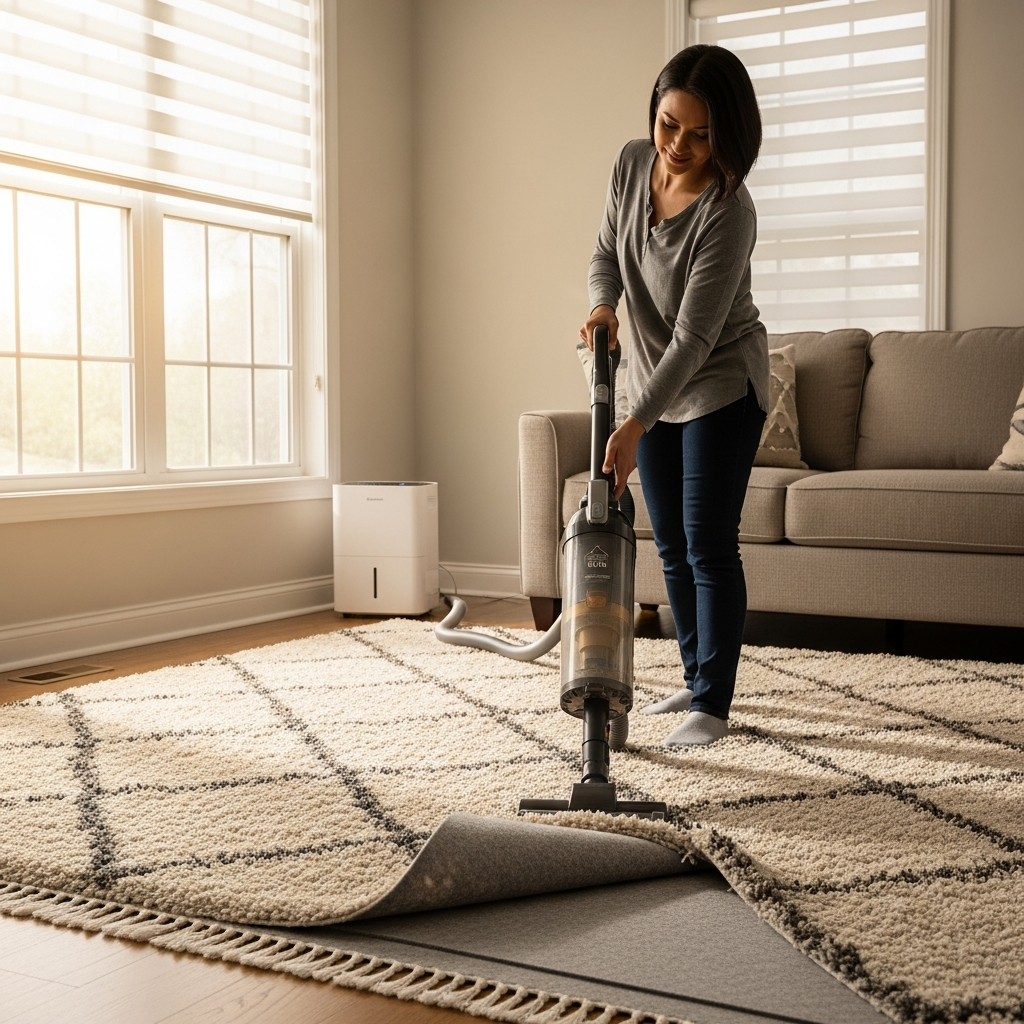
- Vacuum smarter: Use a suction-only tool for delicate rugs and fringes. For sturdier rugs, use a beater bar on a gentle setting. Vacuum with the nap and then against it to lift trapped grit.
- Rotate quarterly: Sun exposure and foot traffic are rarely even. Rotating 180 degrees every three months balances wear and fading.
- Use rug pads: High-quality pads reduce slipping, cushion footfalls, and reduce stress on fibers. Choose felt or felt-rubber blends for hardwoods.
- Manage sunlight: Close shades during peak hours or rearrange furniture occasionally to limit UV fading.
Smart Spill and Spot Response
Spills happen. The right first aid can prevent permanent stains:
- Act fast: Blot—not rub—using clean, white cotton towels. Work from outside the spill inward.
- Cold water first: For many fresh spills, a small amount of cool water helps dilute. Blot thoroughly between applications.
- Protein-based stains: For milk, egg, or pet accidents, use an enzyme-based spotter approved for wool and silk. Test first.
- Tannin stains: Coffee, tea, and wine often respond to mild, pH-balanced spotters. Avoid high alkalinity.
- Oily spots: Sprinkle baking soda or corn starch to absorb oil. After 15–20 minutes, vacuum and reassess before using a gentle solvent-based spotter suitable for rugs.
- Do not over-wet: Saturation without rapid extraction leads to browning, dye movement, and odor.
- Avoid heat: Heat can set protein and dye stains permanently.
Dry Soil Removal: The Foundation of Clean
Up to 80% of soil in rugs is dry, gritty particulate that lodges deep in the pile. Removing this soil before wet cleaning makes everything easier and safer.
- Beat and dust: If possible, take the rug outdoors, hang it, and gently beat the back to shake out grit. Use a rug beater or the palm of your hand; avoid broom handles that can break warps or wefts.
- Vacuum both sides: Start with the rug’s back to loosen soil upward, then vacuum the face, repeating until the canister shows less debris.
- Edge attention: Run a crevice tool along binding and fringe bases where sand tends to accumulate.
Moisture and pH: The Safety Rules
Many rug problems stem from aggressive pH or too much water. Follow these guidelines:
- Use pH-balanced solutions: For wool and natural dyes, stay near pH 5.0–7.0 when possible.
- Control moisture: Tufted and viscose rugs hate saturation. For these, stick to low-moisture techniques and fast drying.
- Rinse thoroughly: Residual detergents attract soil and stiffen fibers. Rinse until water runs clear.
- Speed-dry: Use fans and airflow. Elevate the rug with clean blocks or a drying rack to allow air on both sides.
Fringe, Edges, and Shape Retention
Fringes and edges frame your rug and are often the first to show wear. Handle them with care:
- Vacuum fringes with suction-only; never a rotating brush.
- Clean fringes last so soil does not wick back.
- Use minimal moisture on cotton fringes to reduce browning. Blot and speed-dry.
- Block and square: After a wet clean, gently align edges and corners. Use light weights and a flat surface while drying to maintain shape.
Best Practices for DIY Cleaning
For durable synthetics or stable wool rugs, a careful DIY approach can work between professional washes:
- Pre-test: Check colorfastness and stability in a hidden corner.
- Dry dusting: Thoroughly vacuum and beat out soil first.
- Pre-treat spots: Use the correct spotter for the soil type, applying sparingly.
- Clean in sections: Mist a diluted, pH-appropriate solution and gently agitate with a soft brush following the nap.
- Rinse and extract: Blot repeatedly with damp towels, then dry towels, replacing as needed. Avoid leaving residues.
- Elevate to dry: Circulate air and flip periodically until completely dry.
When in doubt—especially with silk, viscose, antique, or bleeding dyes—defer to a specialist rather than risk permanent damage.
Professional-Level Techniques Homeowners Should Know
Understanding what pros do helps you evaluate results at home and decide when to call in reinforcements:
- Woven rug dusting: Professional dusting equipment vibrates and lifts pounds of embedded soil without harming fibers.
- Dye stability tests: A simple wet-blot test guides the choice between immersion, low-moisture, or dry-clean alternatives.
- Immersion washing: True bath cleaning, when safe for the rug, removes soils fully and restores hand and luster.
- Centrifuge extraction: Rapid water removal prevents browning and speeds drying, reducing risk of odor or dye movement.
- Blocking and grooming: Final steps restore proper dimensions, nap lay, and fringe alignment.
Elizabeth, NJ Considerations: Weather, Grit, and Urban Living
Elizabeth’s coastal climate and regional lifestyle mix present unique rug-care challenges:
- Winter grit and salt: Road sand and de-icers track indoors. Increase vacuum frequency during winter and early spring.
- Humidity swings: Summer humidity can slow drying; use dehumidifiers and fans after any wet cleaning.
- Historic homes and hardwoods: Use breathable pads that protect floors and prevent dye transfer. Avoid rubber-only pads on delicate finishes.
- Apartment living: If outdoor beating is impractical, perform extra back-side vacuuming and consider periodic professional dusting.
Common Mistakes to Avoid
- Scrubbing stains: Aggression blooms fibers and sets stains. Blot and treat patiently instead.
- Skipping the rinse: Detergent residues become dirt magnets.
- Over-wetting viscose or tufted rugs: Leads to ripples, delamination, and fiber distortion.
- Using oxygen bleach on protein fibers: Can weaken wool and silk and strip color.
- Neglecting pads: Pads prevent sliding, reduce wear, and protect floors.
Setting a Maintenance Schedule
A smart schedule pays dividends:
- Daily/Weekly: Spot-check and vacuum as needed based on traffic.
- Quarterly: Rotate the rug; deep-vacuum back and face.
- Annually or Biennially: Arrange a full professional wash for wool and hand-made rugs, or more often for entry rugs and homes with pets or kids.
Midway Checkpoint: When to Call a Pro
Consider calling for professional support when you suspect dye instability, encounter persistent odors, notice texture changes, or see pet accidents that have penetrated the backing and pad. In these cases, mid-year or seasonal professional rug cleaning can address contamination you cannot access at home and reset fibers safely.
Pet Owners: Special Care for Accidents
Elizabeth residents love their pets, and pets love our rugs. For best results:
- Respond immediately to accidents; blot, apply enzyme spotter, and blot again. Avoid steam which can set odors.
- Check underside for penetration; clean both sides if needed.
- Use UV light to locate old contamination and address lingering odors.
- Schedule periodic professional odor treatments when home remedies fall short.
Storage, Moving, and Seasonal Transitions
When storing rugs between seasons or during renovation:
- Clean first: Moths and mold thrive in soiled textiles.
- Roll, do not fold: Folding can crack foundations. Roll with the pile inward and wrap in breathable material.
- Avoid damp basements: Choose climate-controlled areas. Elevate off the floor and check quarterly.
Frequently Asked Questions
How often should I deep clean an area rug? Most rugs benefit from a professional wash every 12–24 months, depending on traffic, pets, and indoor air quality. Entry and family-room rugs may need it more often.
Can I use my carpet cleaner on rugs? Some machine-made synthetics tolerate it, but many wool, silk, and handmade rugs do not. Always test for dye stability and avoid over-wetting.
What’s the safest way to clean fringes? Vacuum with suction-only, spot clean sparingly, and dry fast. Cotton fringes brown easily if left damp.
Why does my rug smell musty after cleaning? Slow drying traps moisture. Increase airflow, use fans and dehumidifiers, and ensure both sides dry thoroughly.
How do I stop a rug from curling? Reverse-roll gently, use quality pads, and consider professional blocking after a wash to reset shape.
Are pet stains permanent? Not always. Fast action helps. Older stains may need professional odor and stain treatments that reach the foundation.
Will vacuuming damage wool rugs? Not if you choose the right tool. Use suction-only or a gentle beater bar setting and vacuum with the nap to reduce fuzzing.
Do I need a rug pad on carpet? Yes. Pads keep rugs from creeping and minimize ridges, reducing tripping hazards and wear.
Bring New Life to Your Rugs in Elizabeth
When routine care is not enough, choose a trusted local team that understands dyes, fibers, and construction. From thorough dusting to safe washing, blocking, and fast drying, expert help can restore softness, color, and shape while protecting your floors. If you are ready to revitalize your textiles, schedule professional rug cleaning and enjoy a healthier, brighter home in Elizabeth, NJ.