Understanding Deep Rug Cleaning in Elizabeth, NJ: What Affects the Investment and How Long It Takes
When a rug is visibly dingy, smells musty, or feels matted underfoot, routine vacuuming and spot attention will not be enough. Deep rug cleaning is a comprehensive process that removes embedded grit, dissolved soils, and lingering odors while restoring pile and color clarity. For homeowners in Elizabeth, New Jersey, knowing the key drivers that influence the overall investment and the typical timeline helps you plan effectively without surprises. While specific figures vary by rug type and condition, you can evaluate value by focusing on workmanship, safety, and documented results. For added confidence, consider professional rug cleaning performed by specialists who understand fiber science and local needs.
Why Deep Cleaning Is Different from Routine Maintenance
Deep cleaning goes beyond surface appearance. It addresses:
- Compact soil removal: Vibrational dusting dislodges fine grit trapped at the base of fibers.
- pH-balanced washing: Gentle chemistry protects dyes and fibers while removing oily residues.
- Thorough rinsing: Clearing detergents that can cause rapid re-soiling and stiffness.
- Fringe and edge care: Brightening and aligning without over-wetting delicate cottons.
- Shape recovery: Blocking and grooming restore proper dimensions and nap direction.
Key Factors That Influence the Overall Investment
Although it is unwise to generalize, several elements consistently influence the scope of work:
- Rug size and weight: Larger and thicker rugs require more labor, chemistry, and drying time.
- Fiber content: Wool and silk demand lower pH and more skilled handling; viscose requires moisture caution.
- Construction: Hand-knotted and antique pieces need more individualized care than many machine-made synthetics.
- Soil level: Heavy soil loads call for multiple dusting and rinse cycles.
- Pet contamination: Odor and urine salts reaching the foundation require specialized deodorization and full immersion when safe.
- Dye stability: Unstable dyes necessitate retarder treatments and cautious flushing.
- Fringe condition: Tangled, browned, or damaged fringes take extra time and finesse.
- Repairs and stabilization: Securing ends, reattaching bindings, and addressing moth damage add steps.
- Access and logistics: Pickup, delivery, stairwells, elevators, and protective floor coverings influence handling time.
How the Process Unfolds: Step-by-Step Timeline
While every rug and workshop schedule is different, a common timeline in Elizabeth looks like this:
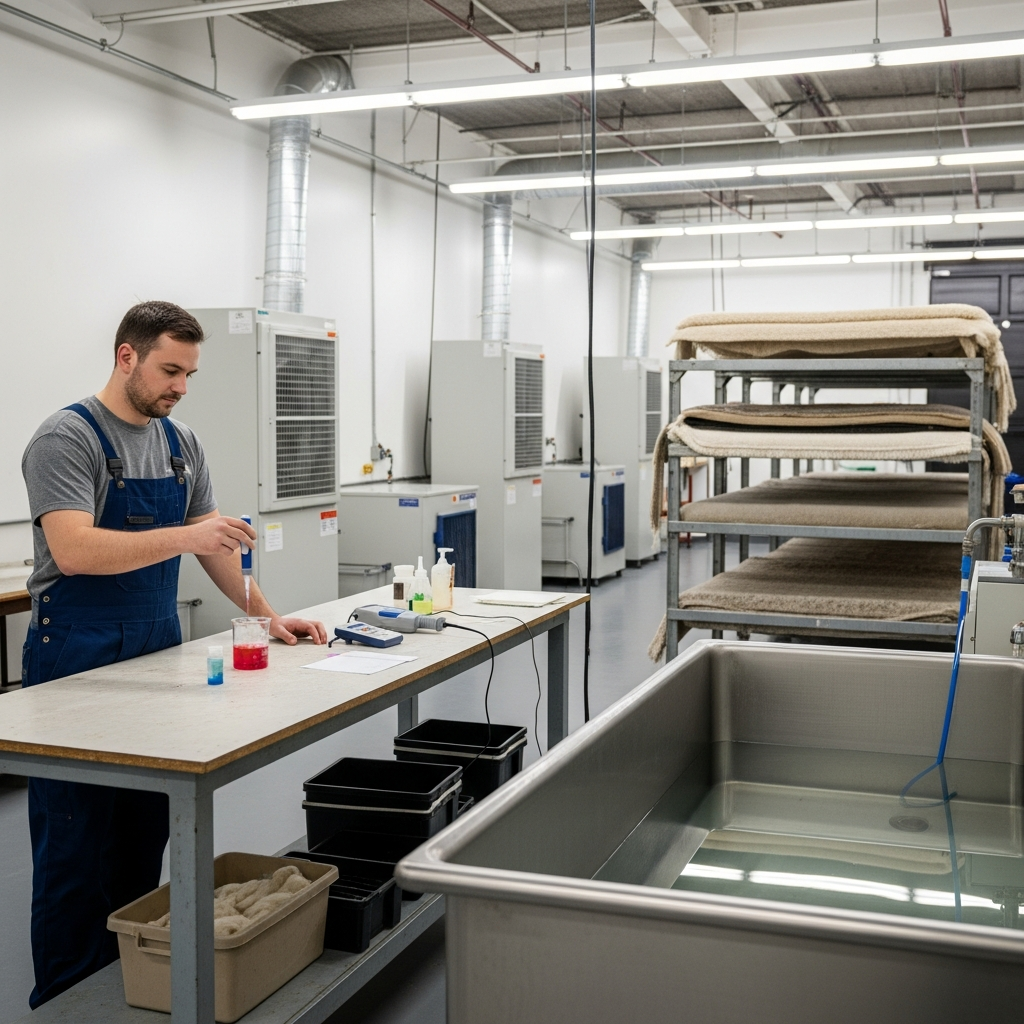
- Intake and inspection (Day 1): Documenting fiber type, construction, photos, preexisting wear, and dyes. Discuss goals and risks.
- Dye and fiber tests (Day 1): Quick-wet and pH sensitivity checks guide the safest method.
- Dry soil removal (Day 1–2): Vacuuming back and face, and mechanical dusting until soil release diminishes.
- Targeted pre-treatments (Day 2): Addressing spots, traffic lanes, and fringes before the main wash.
- Primary wash and rinse (Day 2–3): Immersion or controlled low-moisture cleaning based on tests; extensive flushing and squeegee work for uniform results.
- Water extraction (Immediate): Centrifuge or compression towels reduce moisture swiftly, minimizing risks.
- Controlled drying (Day 2–4): Elevated drying racks, directed airflow, and dehumidifiers bring moisture to safe levels.
- Blocking and grooming (Day 3–5): Squaring edges, aligning fringe, and setting nap.
- Quality assurance (Day 4–6): Rechecking stains, odors, and texture; performing touch-ups as needed.
- Wrapping and return (Day 5–7): Protective wrapping and scheduled delivery or pickup.
Timelines compress or expand based on humidity, rug density, odor treatments, and workshop queue. Summer humidity in Elizabeth can extend drying by a day; winter dehumidified studios often speed things up.
Choosing Methods Based on Risk
The safest method is the one matched to the rug’s fiber, construction, and dye behavior:
- Immersion cleansing: Ideal for sturdy wool rugs with stable dyes and heavy contamination, allowing full flushing.
- Low-moisture washing: Better for tufted, viscose, and unstable-dye rugs. Focus on the face fibers with rapid drying.
- Dry compound and solvent options: Selected for moisture-sensitive fibers and adhesive-backed constructions.
Rug pros combine methods as needed, always following careful testing. The goal is consistent cleanliness and safety—not a one-size-fits-all approach.
Odor and Contamination Considerations
Deep-seated odors typically originate beneath the face yarns. Addressing them requires:
- Foundation access: Full flushing that reaches cotton warps, wefts, and backing.
- Neutralization: Deodorizing solutions that bond with odor molecules without leaving residues.
- Fast drying: Shorter moisture windows reduce the chance of odor rebound and cellulosic browning.
When an accident is fresh, prompt blotting and enzyme spotters help. Old contamination that has dried repeatedly calls for more involved treatment and may extend the overall timeline.
Elizabeth, NJ Realities: Weather, Building Types, and Floors
From winter road grit to summer humidity, local conditions influence deep-cleaning schedules and expectations:
- Winter and spring: Grit and salt accelerate wear and dull colors; increase dusting and vacuuming before scheduled washes.
- Summer humidity: Slows drying. Controlled studio environments keep airflow and dehumidification steady.
- Apartment living: Elevator access, hallway protection, and precise scheduling streamline pickup and delivery.
- Hardwood protection: Breathable pads reduce dye transfer and protect finishes during and after cleaning.
Quality Markers to Look For
Whether you clean at home or contract a specialist, certain markers indicate thorough work:
- Documented inspection with photos and notes on fiber, construction, and risks.
- Visible reduction of dry soil before any water touches the rug.
- Clear rinse water and soft hand feel post-cleaning.
- Even color and nap, with squared edges and aligned fringe.
- Communicated aftercare instructions: ventilation, pad selection, and rotation timing.
Mid-Project Reality Check
If the rug still looks flat after washing, the issue may be pile distortion, not soil. Corrective grooming and blocking can revive texture. Persistent odor after a normal wash signals deeper contamination. This is where professional rug cleaning with foundation-level deodorization earns its keep, ensuring neutralization reaches the deepest layers.
Frequently Asked Questions
How long does deep rug cleaning take from pickup to return? Most projects span about a week, depending on soil load, rug density, odor work, drying conditions, and workshop volume.
Can every rug be safely immersed? No. Tufted, viscose, and unstable dyes do better with controlled low-moisture approaches and fast drying.
Why do some stains return after drying? Wicking pulls dissolved soils from the base to the surface. Extra rinsing, weighted drying, and post-clean touch-ups solve this.
Is it normal for wool rugs to smell like “wet animal” when washed? Briefly, yes. Proper ventilation and rapid drying remove the odor as moisture levels drop.
What if my rug edges ripple after cleaning? Slight rippling can occur as foundation fibers relax. Blocking during drying and gentle stretching usually restore flatness.
Do fringes always become bright white? Not necessarily. Over-brightening risks fiber damage. The goal is clean, aligned fringes that match the rug’s age and character.
Can deep cleaning remove sand from the base? Yes, when paired with thorough dusting. Removing compact grit is a major advantage of professional processes.
How should I prepare my home for rug return? Clear the placement area, ensure pads are clean or replaced, and review post-care tips for ventilation and rotation.
Plan Your Rug’s Fresh Start in Elizabeth
With the right sequence—inspection, dusting, fiber-safe washing, careful rinsing, and controlled drying—deep cleaning restores beauty and hygiene while protecting your floors. If your rug needs more than a routine tidy-up, partner with a local team that documents their methods, tests dyes, and communicates clearly. For results you can see and feel, schedule professional rug cleaning and enjoy a fresh, comfortable home in Elizabeth, NJ.