
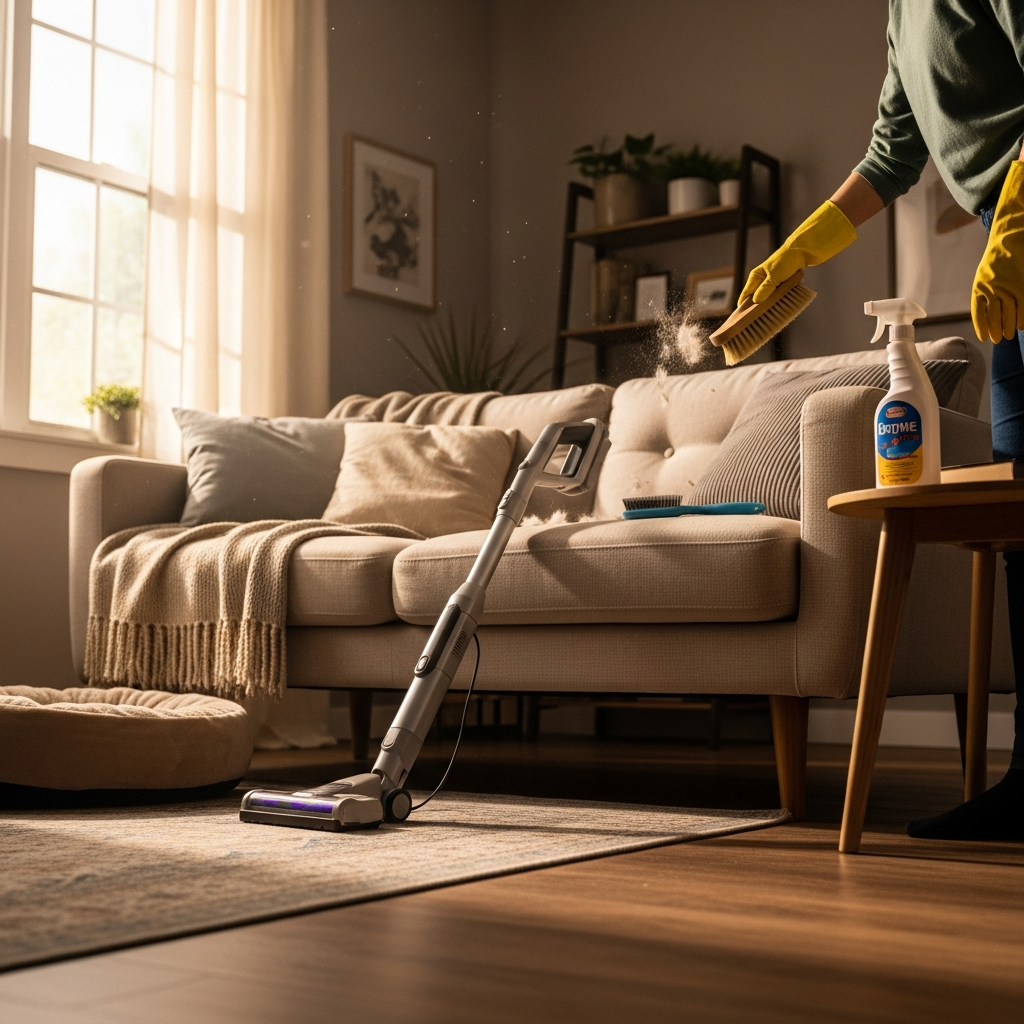
Pets make a house feel like home, but fur, dander, paw prints, and the occasional oops can quickly challenge any sofa. In Elizabeth, New Jersey—where rain, snow, and humid summers add moisture and odors to the mix—smart upholstery care keeps your living space clean, healthy, and inviting for both people and pets. This guide gathers practical strategies you can apply right away to manage shedding, neutralize smells, and remove stains safely without damaging delicate fibers. If you ever want a deeper refresh beyond DIY, you can always consider professional sofa cleaning to restore softness and remove embedded soils that household tools can miss.
Before you start cleaning, take a few minutes to assess your fabric type. The care tag tells you what your upholstery can handle: W (water-based cleaning), S (solvent-only), WS/SW (either water or solvent), and X (vacuum only). If you do not see a tag, test cleaning products on a hidden spot first. Pet-related soils include hair, skin oils, saliva, food residues, and organic accidents, all of which require targeted techniques and minimal moisture to prevent odors from lingering.
Pet-Friendly Tools and Supplies
- Vacuum with upholstery tool and crevice attachment
- Lint brush or rubber grooming glove for hair and dander
- White microfiber towels
- Mild upholstery cleaner suited to your fabric code
- Solvent spotter for S-only fabrics
- Enzyme-based deodorizer for organic odors (follow label and test)
- Distilled water for rinsing water-safe fabrics
- Fans or open windows to improve drying
Daily and Weekly Habits That Make the Difference
Quick, consistent attention outperforms sporadic deep treatments. A fast daily pass with a lint brush or rubber glove keeps hair under control. Weekly vacuuming with overlapping strokes lifts grit and dander that otherwise embed in fibers and dull the fabric. Focus on seams, cushion edges, and the backrest where oils and fur accumulate. Rotate cushions every few weeks to even out wear, and wash throw blankets frequently to act as a protective layer.
Managing Shedding and Dander
Use a rubber glove slightly dampened with clean water to roll hair into clumps that your vacuum can easily capture. For stubborn fibers, a fabric-safe upholstery brush can loosen hair without scratching. Avoid adhesive tape that can leave residue and attract more soil. If your pet has seasonal shedding spikes, increase vacuum frequency and consider a washable throw during peak periods to intercept fur before it reaches the sofa.
Odor Control That Respects Your Fabric
Odors cling to upholstery when organic residues remain in the fibers. After removing dry soil, apply a carefully tested enzyme-based deodorizer. For W or WS fabrics, lightly mist a cloth and blot into the affected area, allowing recommended dwell time before blot-rinsing with distilled water. For S-only fabrics, use a compatible solvent-based deodorizer. Always ventilate the room and avoid oversaturating cushions, which can trap moisture and cause lingering smells.
Spot Treatment for Common Pet Messes
- Fresh accidents: Blot with a white cloth to lift as much liquid as possible. Apply an enzyme cleaner compatible with your fabric, allow dwell time, and blot again. Rinse or solvent-wipe depending on the code.
- Saliva marks: Wipe with a lightly dampened cloth and a mild cleaner for W/WS fabrics; for S fabrics, use a solvent on a cloth and blot.
- Greasy paw prints: Blot gently with a solvent spotter on S fabrics or a mild cleaner on W/WS fabrics. Rinse or dry blot to remove residues.
- Food spills: Remove solids first, then treat the stain with an appropriate cleaner, working from the outside in to prevent spreading.
Allergies and Indoor Air Quality
Pet dander can aggravate allergies and collect alongside household dust. Regular vacuuming with a HEPA-equipped vacuum—if available—reduces particulates. Follow vacuuming with light cleaning to remove residues that bind dust. Keep airflow moving during and after cleaning to dry the fabric quickly, as slower drying can lock in odors and trigger musty smells in humid Elizabeth summers.
Fabric-Specific Pointers for Pet Owners
- Microfiber: Often forgiving for pet owners. Light cleaning with isopropyl alcohol on a cloth can remove spots. After drying, brush to restore texture.
- Cotton or linen blends: Keep moisture low to avoid rings. Blot rather than scrub and dry evenly with fans.
- Velvet and chenille: Vacuum with care and groom the nap after drying to maintain a uniform appearance.
- Leather and faux leather: Use leather-safe cleaners and conditioners; avoid harsh chemicals. Wipe spills promptly and address scratches before they deepen.
Deep Cleaning Without Over-Wetting
When you need more than spot cleaning, divide the sofa into panels and work methodically. For water-safe fabrics, lightly apply a diluted upholstery shampoo to a cloth, wipe in small sections, then blot-rinse with distilled water and immediately follow with a dry towel. For S-only fabrics, use a solvent cleaner on a cloth and ventilate thoroughly. Maintain minimal moisture, especially in padded areas, to prevent odors from returning.
Training and Prevention Tips
- Designate a cozy pet spot with a washable blanket where your companion is most likely to lounge.
- Keep pet paws wiped during rainy or snowy days to reduce soil transfer to the sofa.
- Brush your pet regularly to reduce shedding at the source.
- Address accidents immediately to prevent permanent staining and recurring odors.
When to Call a Pro
If stains reappear, odors linger, or your fabric feels beyond what household products can safely handle, professional technicians can perform fiber testing, targeted preconditioning, controlled agitation, deep extraction or low-moisture encapsulation, and accelerated drying. This multi-step approach removes embedded dander and residues that make scents return. To compare DIY results with specialized help, many pet owners in Elizabeth review options for periodic sofa cleaning that complements their weekly routine.
Frequently Asked Questions
Q: How often should I clean my sofa with pets at home? A: Vacuum weekly and spot clean as needed. Plan a deeper overall cleaning every few months, and seek professional help annually or if odors persist.
Q: What is the best way to remove pet hair from upholstery? A: Start with a thorough vacuum, then use a rubber glove or lint brush to gather stubborn hair. Finish with another quick vacuum pass.
Q: Are enzyme cleaners safe for all sofas? A: Not always. Check your care tag and test on a hidden area first. Enzyme solutions can be great for organic odors but must match your fabric.
Q: How do I avoid water rings after spot cleaning? A: Use minimal moisture, work in small sections, and dry evenly with fans. Blot, don’t rub.
Q: My pet keeps returning to the same spot. What can I do? A: Ensure complete odor removal with an enzyme treatment, improve ventilation during drying, and consider a washable throw to break the habit loop.
Q: Is it okay to use fragrance sprays to mask pet smells? A: Fragrances cover odors temporarily. True odor control removes the residue causing the smell. Prioritize cleaning and deodorizing over masking.
Refresh Your Sofa for You and Your Pets
Life with pets is better on a fresh, comfortable sofa. If your fabric needs careful attention or lingering odors demand a deeper solution, schedule expert sofa cleaning and enjoy a healthier, more welcoming home in Elizabeth, New Jersey.