
Elevating Workplace Interiors in Elizabeth: A Comprehensive Guide for Facility Teams
In Elizabeth, New Jersey, commercial spaces work hard. Offices welcome clients and staff all day, healthcare waiting rooms receive families, hospitality venues turn over seats constantly, and educational spaces cycle through classes and events. Chairs, booths, panels, and lounge pieces absorb this pace, collecting dry soils, body oils, airborne residues, and occasional food and beverage spills. Clean, well-cared-for upholstery supports brand image, health, morale, and the useful life of furnishings. This guide explains how to evaluate needs, schedule effective maintenance, and collaborate with a qualified partner to keep seating and soft surfaces inviting and compliant with cleanliness standards, without disrupting daily operations.
Because every business operates differently, a one-size-fits-all plan rarely works. Foot traffic, fabric types, cleaning codes, ventilation, and even building access influence how a program should be designed. A smart approach blends routine appearance care with periodic restorative cleaning to remove embedded soils that dull colors and hold odors. If you are establishing a new plan for your location—whether a downtown Elizabeth office, a Port District facility, a retail storefront near Jersey Gardens, or a multifamily lobby—align goals with a reliable local resource for upholstery cleaning and you will set clearer expectations for outcomes, timing, and quality assurance.
Understanding Fabric Diversity in Commercial Environments
Commercial settings host a wide range of textiles: solution-dyed acrylics for outdoor areas, crypton-like performance fabrics for healthcare, vinyl and faux leather for food service, wool or polyester blends for conference chairs, and acoustical panels with specialty coverings. Each behaves differently. Some tolerate water-based cleaning, others favor solvent methods, and many benefit from low-moisture techniques that minimize downtime. The key is accurate identification, spot testing, and aligning chemistry with fabric sensitivity. Seams, channels, tufting, and foam density affect both soil retention and drying. A skilled technician will consider these factors before recommending a method for each zone of your facility.
Traffic Patterns and Soiling Profiles
Mapping how people use your space clarifies needs. Reception seating faces chronic body-oil transfer, waiting areas contend with cosmetics and food residues, cafeterias encounter drink spills, and collaborative hubs accumulate dust and lint from textiles and paper. By categorizing zones—high, moderate, and low use—you can tailor frequencies and response protocols. Frequent, light maintenance in high-visibility areas prevents rapid resoiling and keeps colors bright. Less-used conference spaces may only need periodic refreshes and targeted spotting. Tying services to real-world use is the foundation of an efficient program.
Scheduling Without Disruption
Careful scheduling reduces downtime and protects productivity. Evening or early-morning service windows, phased floor-by-floor cleaning, and rotating zones maintain business continuity. In multi-tenant buildings, coordination with property management for elevator access and parking streamlines logistics. Airflow planning, doorstops for ventilation, and temporary signage keep pathways safe while seating dries. For hospitality and healthcare, staggered seating plans ensure enough capacity remains for guests and patients. Transparent scheduling details set realistic expectations and reduce surprises.
Appearance Management Versus Restorative Cleaning
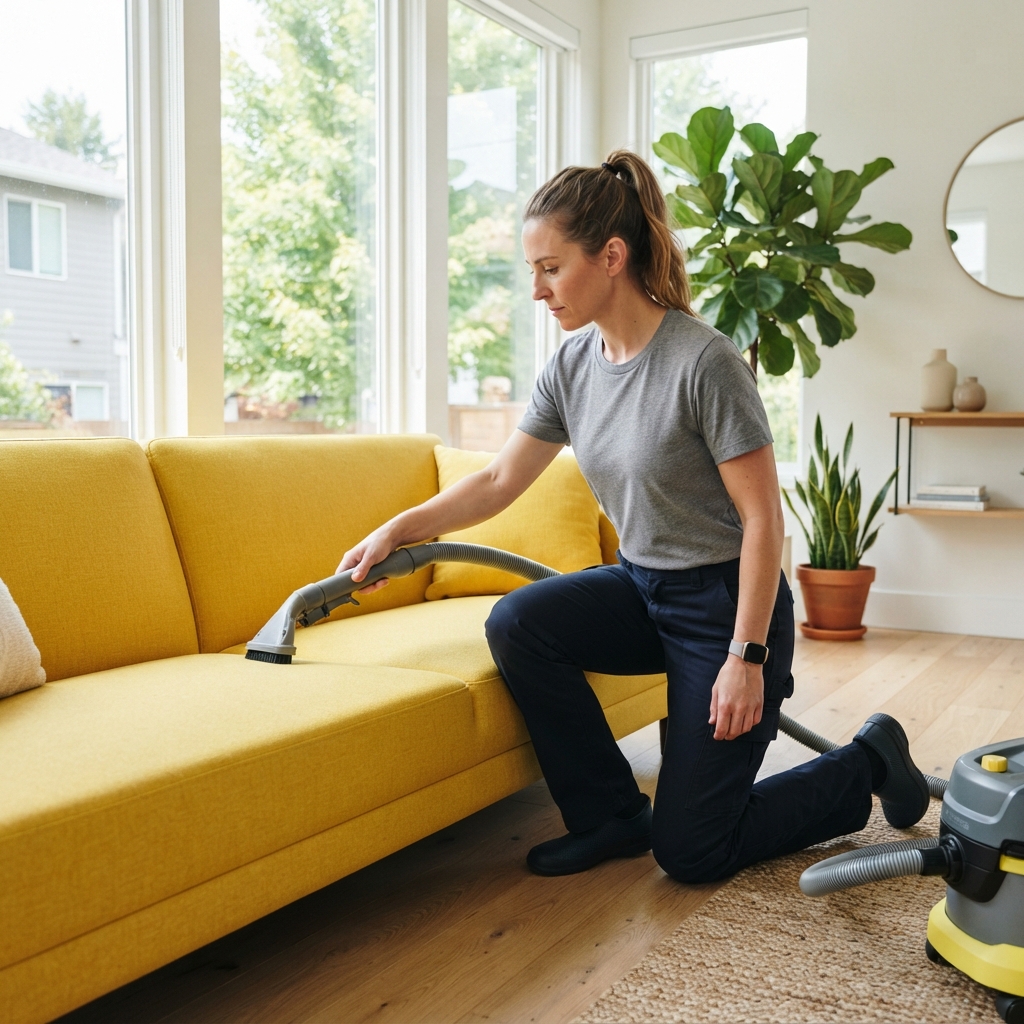
An effective plan distinguishes between routine appearance care and deeper restorative work. Appearance care includes vacuuming, quick-response spotting, and low-moisture touch-ups to hold presentation standards in high-visibility zones. Restorative cleaning uses targeted chemistry, agitation, and rinsing to remove bonded soils, refresh texture, and neutralize odors. The two approaches complement each other. Over-reliance on quick fixes can embed residues, while infrequent deep cleaning allows dulling and odor buildup. A rhythm that fits your traffic profile maintains consistent results over time.
Creating a Maintenance Matrix That Fits Your Facility
Build a simple matrix that lists zones, fabric types, usage intensity, and maintenance frequency. Include responsible parties for daily tidying, point-of-contact details for service coordination, and clear response steps for spills. With a matrix, staff know which seating gets weekly vacuuming, which areas receive monthly touch-ups, and which zones are scheduled for periodic deep cleanings. Clear documentation improves handoffs during staff changes and supports accountability across departments.
Environmental Health and Indoor Air Quality
Soft surfaces contribute to the overall health profile of your building. Dust, dander, and fine particles cling to seating and can become airborne with movement. Regular vacuuming with HEPA-filtered equipment, along with scheduled deep cleaning, reduces particle load and supports better indoor air quality. In spaces where comfort and wellness are part of the brand promise—such as healthcare, fitness, education, or high-end retail—this attention strengthens your value proposition and aligns with expectations for cleanliness and care.
Midway through any maintenance year, it is wise to reassess usage and results. If lobby seating is busier than planned or an area experiences more spills due to new programming, adjust the schedule accordingly. When you need additional support, coordinating a supplemental visit from a trusted provider of upholstery cleaning ensures those changes are met with the right methods and timing, rather than reactive spot fixes that can lead to uneven appearance.
Risk Management, Fabric Protection, and Colorfastness
Commercial upholstery sees frequent contact with clothing dyes, inks, sanitizer spills, and food colorants. Colorfastness testing before any broad application of cleaners prevents unnecessary surprises. Fabric protection, when appropriate for the textile, can slow absorption without changing the feel. Protection is not a cure-all; it simply buys time for faster response. Staff training on blotting techniques, approved spotters, and escalation procedures rounds out your risk management strategy.
Documentation, Compliance, and Vendor Communication
Many facilities benefit from a simple log that records dates, methods used, and any special notes. This record supports internal audits, brand standards, and, in certain environments, compliance documentation. Clear communication with your service provider—sharing fabric codes, previous issues, and schedule constraints—helps them deliver predictable, high-quality results. In multi-site operations, standardized reporting makes it easier to compare conditions across locations and plan maintenance holistically.
Elizabeth-Specific Considerations
Coastal humidity, winter road salts, and dense urban traffic affect commercial interiors in Elizabeth. Entry mats and regular dust control limit soils from infiltrating seating. During rainy seasons, provide umbrella stands and extra towels to reduce moisture on armrests and booth seats. If your business is near high-traffic corridors or industrial zones, consider more frequent vacuuming to address airborne particulates. In historic buildings with limited ventilation, strategic use of fans and dehumidifiers shortens dry times after service. Local awareness turns a generic plan into a resilient one.
Training Frontline Staff for First Response
Even the best plan needs quick action when spills happen. Train staff to blot, not rub; to work from the outside of the spot inward; and to notify the maintenance lead when a stain resists initial treatment. Provide clean, white towels in service closets and simple guidance sheets for common spills: coffee, soda, condiments, cosmetic transfers, and pen marks. Early, consistent response avoids setting and keeps seating guest-ready between scheduled visits.
Measuring Success Beyond Aesthetics
While fresh appearance matters, measure outcomes by more than looks. Track seat availability after service windows, staff feedback about odors, customer comments on cleanliness, and the useful life of furnishings. Over time, a well-run plan contributes to fewer replacements, steadier presentation standards, and stronger brand impressions. Aligning these metrics with leadership priorities helps secure long-term support for the program and fosters a culture of care.
Frequently Asked Questions
How often should commercial seating be cleaned? It depends on traffic and fabric. High-visibility lobbies and waiting areas benefit from frequent appearance care and periodic restorative cleaning, while low-use conference rooms may need only occasional refreshes.
Can you clean after business hours? Yes. Many providers schedule evening or early-morning service and can phase zones to preserve operations during the day.
What about sensitive textiles or acoustical panels? Proper identification, spot testing, and low-moisture techniques protect sensitive materials while still removing soils and improving appearance.
Will cleaning disrupt office work the next day? With planned airflow and low-moisture methods, most seating is serviceable shortly after cleaning. Coordinated scheduling minimizes disruption.
Is fabric protection a good idea? When compatible with the fabric and environment, protection slows absorption and makes spot response more effective. It complements, but does not replace, good maintenance habits.
Partner Confidently with a Local Team
If your facility is ready to strengthen its maintenance program, streamline scheduling, and present consistently fresh seating to employees and guests, consider collaborating with a local expert who understands Elizabeth’s business landscape and building logistics. Start the conversation with a capable partner in upholstery cleaning and build a plan that supports your image, workflow, and long-term furniture performance.