Clean, well-maintained carpets make a powerful first impression on clients and create a healthier work environment for employees. In Elizabeth, New Jersey, office buildings and commercial suites range from historic structures to modern developments, each with unique flooring and traffic patterns. Choosing specialized office-focused carpet cleaning services ensures your workspace looks professional, lasts longer, and supports productivity without disrupting day-to-day operations.
From reception areas and corridors to conference rooms and private offices, commercial carpets collect dry soil, oils from shoes, and fine dust that routine vacuuming cannot fully remove. Over time, these particles dull colors, crush fibers, and contribute to indoor air quality issues. A strategic maintenance plan combines periodic deep cleaning with interim methods, preserving appearance between major services while reducing downtime.
Why Offices in Elizabeth Need Specialized Care
Offices experience concentrated foot traffic in predictable zones—entrances, elevator banks, breakrooms, and copy areas. Winter slush, de-icing materials, and summer humidity compound the challenge, embedding soil and residues that make carpets look tired. Commercial cleaning requires adaptable scheduling, safety awareness, and techniques that balance quick turnaround with thorough results. It is not just about clean floors; it is about seamless service that respects building rules, security, and staff routines.
Reliable providers coordinate with building management, navigate parking and loading logistics, and protect common areas during work. They also address low-pile commercial carpets, modular tiles, and specialized adhesives differently than residential plush pile, adjusting pressure, chemistry, and dry times to suit each surface.
Methods That Work for Busy Workplaces
Commercial environments benefit from a mix of approaches chosen to match traffic levels and scheduling needs:
- Hot water extraction for periodic restorative cleaning that flushes deep soils and refreshes texture.
- Encapsulation for low-moisture interim maintenance, ideal between deep cleanings and for areas needing rapid return to service.
- Bonnet cleaning for appearance lifts on lightly soiled zones before important meetings or events.
- Dry compound options for moisture-sensitive areas where rapid access is essential.
A thoughtful plan alternates methods based on season, use, and upcoming events. For example, restorative cleaning may be scheduled after winter to remove tracked-in residues, while encapsulation keeps hallways and conference rooms presentable month to month.
Planning Around Your Schedule
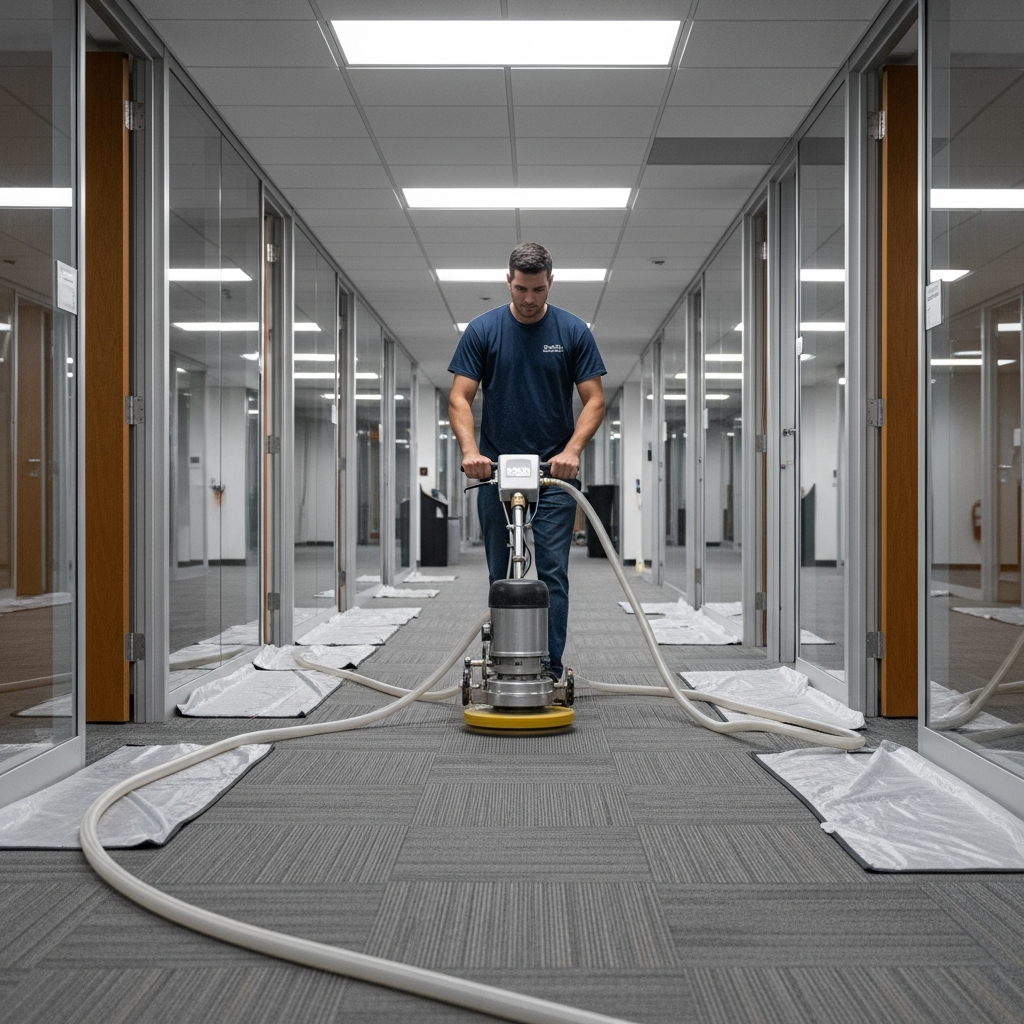
Professional teams understand the need for minimal disruption. After-hours appointments, weekend availability, and phased cleaning strategies allow work to proceed without interrupting staff or client meetings. Clear communication—who will unlock doors, how alarms are handled, and where technicians should park—prevents hiccups and keeps the project on track. In multi-tenant buildings, cleaners often coordinate floor by floor, using quiet equipment and protective runners to maintain a tidy, safe environment.
Dry times are another scheduling factor. Low-moisture techniques allow for faster access while still improving appearance and hygiene. When deeper cleaning is performed, technicians plan airflow and set expectations so that teams know when spaces will be ready for use.
Protecting Your Investment
Commercial carpet represents a significant asset for property managers and business owners. Regular maintenance helps extend usable life, reducing premature replacement and keeping common areas inviting. Effective soil removal protects fibers from abrasion, while targeted spot treatment prevents permanent discoloration. Protective treatments may also be considered for high-traffic lanes, paired with walk-off mats near entrances to intercept dirt and moisture before they spread through corridors.
Consistency is key. A calendar-based plan—quarterly, biannual, or custom—keeps maintenance predictable. Managers appreciate having documentation of completed work, which can support facility audits and demonstrate a commitment to a healthy, professional workplace.
Stain and Odor Management in Office Settings
Office carpets face a unique mix of issues: coffee and tea spills in breakrooms, ink and toner marks near printers, and tracked-in residues from loading docks. Skilled technicians differentiate between tannin, dye, and oil-based stains, selecting appropriate spotters and dwell times. They also address lingering odors that can arise from trapped moisture or food spills, ensuring the solution focuses on the source rather than covering it with fragrance.
For recurring issues, a root-cause approach makes a difference. Adjusting mat placement, encouraging prompt blotting, and scheduling interim maintenance dramatically reduce the frequency and severity of stains. Staff-friendly care guides empower employees to address fresh spills quickly while awaiting professional service.
Health, Safety, and Compliance
Maintaining a healthy workplace involves more than visible cleanliness. Effective soil and allergen removal can support better indoor air quality, especially in sealed office buildings. Trained crews comply with building safety requirements, use caution signage, and route hoses to avoid trip hazards. Communication with on-site security teams ensures that access protocols are followed, alarms are handled correctly, and sensitive areas remain secure throughout the visit.
When cleaning around electronics and office equipment, professionals take extra steps to prevent overspray or moisture exposure. Careful masking and controlled application safeguard workstations and server rooms, giving facility managers confidence that operations will remain unaffected.
Mid-Project Checkpoints and Quality Control
High-quality providers build accountability into their process. Supervisors perform mid-project checks to confirm that traffic lanes are responding as expected, stains receive the right treatment, and drying strategies are on track. If certain areas need a second pass or an alternate approach, changes are made in real time. This proactive mindset keeps outcomes aligned with expectations and prevents surprises at handoff.
Many managers appreciate photographic documentation or simple status updates during multi-phase projects. These records confirm progress, assist with internal communication, and create a reference for future maintenance planning.
Choosing a Partner for the Long Term
The most successful commercial programs in Elizabeth pair facility goals with a cleaner’s technical strengths. Look for a team that provides clear proposals, predictable scheduling, and post-cleaning recommendations to optimize results. Managers should feel they have a true partner—one who listens, adapts, and communicates from the first walkthrough to the final inspection.
When comparing options, consider the provider’s approach to training, equipment upkeep, and product selection. Ask how they match methods to carpet type, how they manage drying, and what steps they take to protect surrounding surfaces. The right answers reveal a culture of care that translates to consistent, high-quality results.
Frequently Asked Questions
Q: How often should office carpets be professionally serviced?
A: Frequency depends on traffic, use of entry mats, and the image goals of your organization. A balanced plan typically includes periodic restorative cleaning with interim maintenance for high-visibility zones to sustain appearance between deep services.
Q: Can cleaning be performed after hours without disrupting our team?
A: Yes. Reputable providers offer evening and weekend appointments, creating phased schedules that minimize downtime. Low-moisture methods can further speed return-to-service for critical areas.
Q: Will moisture affect our low-pile commercial tiles?
A: Skilled technicians adjust moisture levels, pressure, and extraction to suit modular tiles and adhesives. They plan airflow and use appropriate techniques to protect your flooring system while delivering a noticeable refresh.
Q: How do you handle security and access in multi-tenant buildings?
A: Crews coordinate with management for keys, badges, or escort requirements and follow documented procedures. They set up caution signage, manage hoses safely, and maintain clear communication with security throughout.
Q: What is the best way to control recurring coffee stains?
A: Combine prompt blotting guidance for staff, strategically placed mats, and interim spot-cleaning visits. Technicians use targeted spotters for tannin-based stains and train teams on simple steps to prevent wicking.
Q: Can you help us plan a maintenance calendar?
A: Absolutely. A customized schedule considers seasonal impacts, traffic patterns, and budget cycles, aligning services with your goals and occupancy timeline.
Maintain a Professional Look Year-Round
When appearance, health, and durability all matter, partnering with a responsive commercial specialist is the simplest path forward. To keep your Elizabeth offices sharp, consistent, and client-ready, connect with a provider that delivers comprehensive carpet cleaning services, smart scheduling, and dependable results tailored to your building’s needs.