
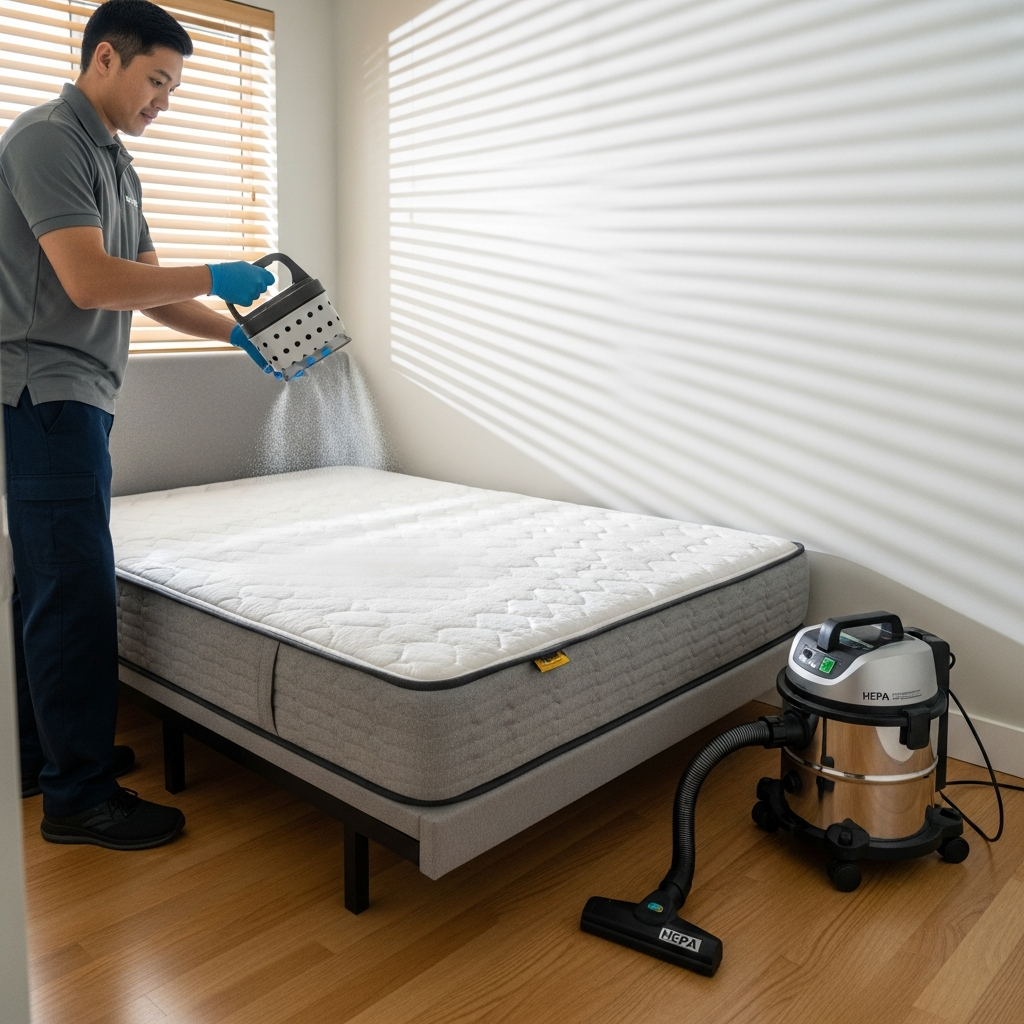
Dry mattress cleaning is popular in Elizabeth, New Jersey because it targets soils and odors with minimal moisture—ideal for busy schedules, multi-unit buildings, and humid summer months when long dry times are inconvenient. But like any method, it has trade-offs. This guide explains what dry cleaning actually means for mattresses, the benefits and limitations, and how to decide when DIY care is enough and when to consider professional mattress cleaning for a deeper or more specialized approach.
What Is Dry Mattress Cleaning?
“Dry” doesn’t always mean zero moisture. Instead, it refers to low-moisture techniques designed to reduce saturation and speed dry times. Common versions include:
- Dry-solvent cleaning: A fabric-safe solvent loosens oils and residues without water saturation.
- Encapsulation: Low-moisture solutions surround soil particles, which are removed during vacuuming after drying.
- Powder absorbents: Specialized powders absorb odors and oils and are vacuumed away once they set.
Pros of Dry Mattress Cleaning
- Fast drying: Mattresses are often ready for bedding the same day.
- Lower risk of musty odors: Less water reduces the chance of slow drying in humid Elizabeth weather.
- Material-friendly: Safer for moisture-sensitive foams and textiles when applied correctly.
- Convenience: Helpful in apartments or condos where airflow is limited.
Cons of Dry Mattress Cleaning
- Limited flushing: Without significant water, some deep residues may not be fully extracted.
- Not a cure-all for heavy biological stains: Enzymes and careful moisture management may still be required.
- Product sensitivity: Some solutions may irritate sensitive sleepers if overapplied; always request gentle options.
Who Benefits Most in Elizabeth, NJ?
Households seeking fast turnaround, those with limited space to air out a mattress, and residents who prefer minimal disruption tend to appreciate dry methods. If you live in a high-rise or have a small bedroom with little cross-ventilation, reducing moisture can make post-clean care easier and more predictable.
DIY Low-Moisture Cleaning at Home
- Vacuum: Use a HEPA-equipped vacuum with an upholstery tool to remove dust and dander.
- Targeted spot treatment: Apply a small amount of enzyme cleaner to biological spots; blot, don’t rub, and avoid oversaturation.
- Deodorize: Lightly sprinkle baking soda and allow it to sit for 45–60 minutes; then vacuum again.
- Encapsulation spray (optional): If your mattress label allows, apply a light, even mist and let it dry fully before a final vacuum.
When Dry Methods Need Backup
Persistent odors, repeated pet accidents, or stubborn, set-in stains may require a hybrid approach with more robust extraction, stronger odor control, or specialized solvents. For example, if a memory foam mattress has absorbed odors over time, careful professional techniques can target deeper layers without saturating the foam. In these cases, it’s worth consulting a local mattress cleaning service that can tailor the process and manage drying effectively.
Comparing Dry vs. Wet Cleaning
- Dry (low moisture): Faster drying, safer for sensitive foams, but less flushing of deep residues.
- Wet (careful extraction): Better rinsing potential, but requires precise moisture control and more drying time.
The best choice depends on your mattress materials, type of soiling, and how quickly you need the bed back in service.
Allergy and Sensitivity Considerations
Dry methods often pair well with HEPA vacuuming to reduce dust mites and allergens. If you or your family members are sensitive to fragrances or solvents, request gentle, low-VOC products and confirm thorough vacuuming after solutions dry.
Local Drying Realities in Elizabeth
Summer humidity off the coast can complicate drying for wet methods, making dry approaches appealing. In winter, heated indoor air can speed drying but may also carry dust; a quick room vacuum and air purifier run can keep resettling to a minimum after cleaning.
Maintenance Between Deep Cleans
- Launder bedding weekly and mattress protectors monthly.
- Vacuum the mattress surface monthly to control dust and allergens.
- Rotate the mattress quarterly to even out wear and exposure.
- Address spills immediately to prevent set-in stains.
Frequently Asked Questions
Q: Is dry mattress cleaning safe for memory foam? A: Generally, yes—when performed with low-moisture products and gentle techniques. Always check the care tag.
Q: Will dry methods remove urine stains and odors completely? A: They can help, but heavy or old biological stains may need targeted enzyme treatments and additional steps.
Q: How long before I can remake the bed after dry cleaning? A: Many dry methods allow same-day use once the surface is fully dry and residue has been vacuumed.
Q: Are dry-solvent products safe? A: Qualified technicians use fabric-safe solutions and ensure proper ventilation. If you are sensitive, request low-VOC options.
Q: How often should I choose dry cleaning over wet extraction? A: For routine refreshes and moisture-sensitive materials, dry methods are often preferred. For deep residue removal, a carefully controlled extraction may be better.
Deciding What’s Best for Your Mattress
If your priority is speed and low risk of over-wetting, dry cleaning is a strong choice. If you need deep flushing of residues, weigh a hybrid plan or a technician-guided extraction. The ideal solution adapts to your mattress and your home environment.
Refresh Your Mattress with Confidence
When you want a quick turnaround and methods matched to your materials, partner with local specialists who understand Elizabeth’s climate and housing. For careful techniques, smart drying strategies, and a smoother experience from start to finish, choose trusted mattress cleaning and enjoy a cleaner, healthier night’s sleep.