Keeping your mattress clean at home in Elizabeth, New Jersey is one of the most effective ways to improve sleep quality, reduce allergens, and extend the life of your bed. Between coastal humidity in summer, salt and slush tracked in during winter, and the everyday realities of kids, pets, and busy schedules, mattresses in Union County can collect dust, sweat, skin cells, and odors more quickly than you might expect. If you want a step-by-step approach that works in our local climate, this comprehensive guide will help you reset your mattress the right way and know when to bring in professional mattress cleaning for deeper results.
Why a Clean Mattress Matters in Elizabeth, NJ
Indoor air quality and allergen control are big concerns for many Elizabeth residents, especially in tightly sealed apartments or homes where traffic and seasonal pollen are part of daily life. A clean mattress supports easier breathing, reduces dust mites, and creates a fresher sleep environment. Beyond health, regular care also protects your mattress materials from premature wear, sagging, or lingering smells.
Supplies You’ll Need
- Upholstery attachment vacuum with HEPA filtration if possible
- Two clean microfiber cloths and a soft-bristle brush
- Mild liquid dish soap or a gentle enzyme cleaner
- Distilled white vinegar for deodorizing solutions
- Baking soda
- 3% hydrogen peroxide for certain stains (spot test first)
- Cold water in a spray bottle
- Mattress protector for after-care
Before You Start: Prep the Space
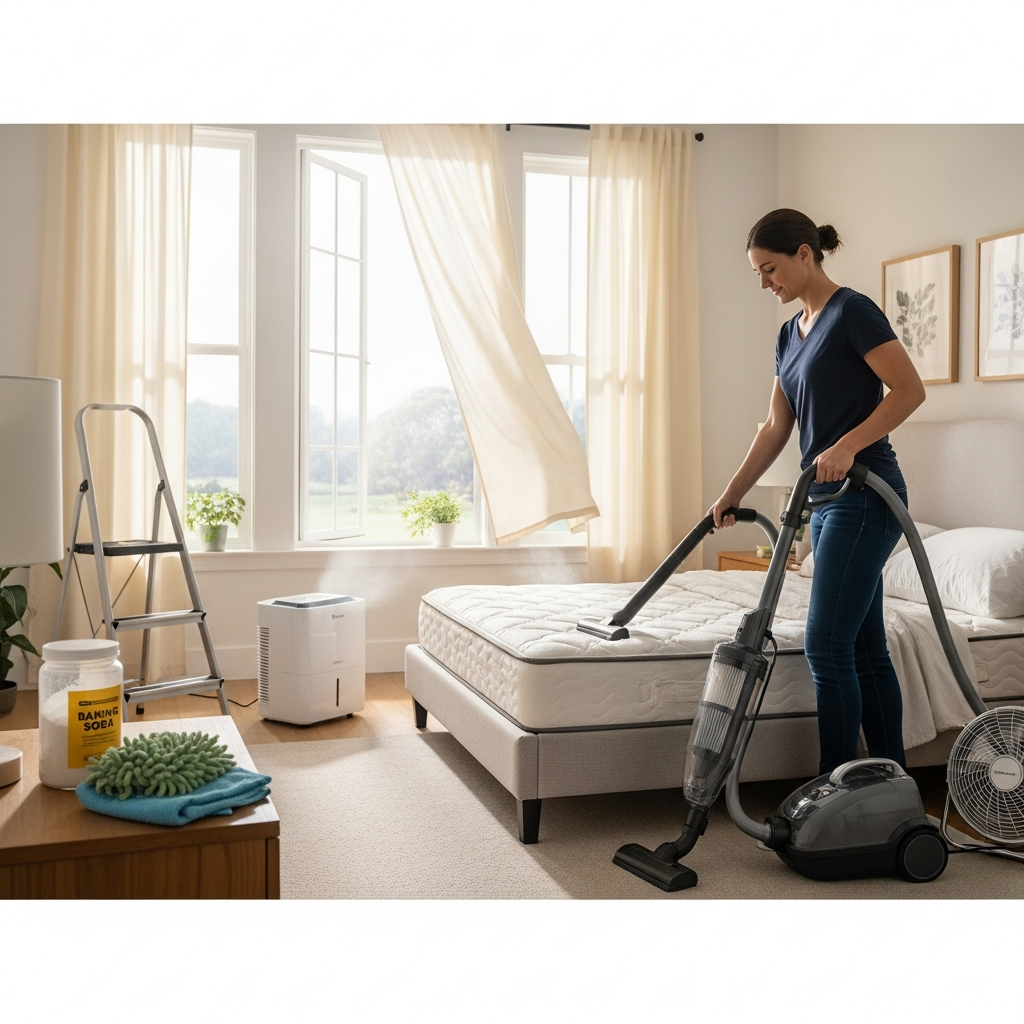
Choose a dry, well-ventilated day in Elizabeth for optimal results. Open windows if pollen counts are low, or run a fan and a dehumidifier to help speed drying. Strip all bedding and launder sheets, pillowcases, and protectors on the warmest safe setting. If you have washable toppers, clean those as well.
Step 1: Thorough Vacuuming
Use the upholstery attachment and slow, overlapping passes on the top, sides, and seams. Pay special attention to quilting and tufting where dust can accumulate. Vacuuming removes surface debris and prepares the mattress for wet cleaning steps with less risk of pushing grime deeper into the fabric.
Step 2: Spot Treat Stains Correctly
Identify the type of stain before choosing a method:
- Fresh spills: Blot, don’t rub. Use a clean cloth to absorb as much liquid as possible.
- Food and beverage: Mix a few drops of mild dish soap with cold water. Dab lightly and blot dry.
- Biological stains (sweat, urine): An enzyme cleaner can help break down proteins. Follow label directions and blot thoroughly.
- Tough, set-in marks: A small amount of 3% hydrogen peroxide can help, but always spot test in an inconspicuous area first, and apply carefully with a cotton swab to avoid bleaching.
Work in small sections and use minimal moisture. Excess liquid can soak into foam layers and slow drying.
Step 3: Deodorize with Baking Soda
Lightly sprinkle baking soda over the entire surface. For deeper deodorizing, add a teaspoon of baking soda at a time into a bowl, crush any clumps, and distribute evenly across the mattress. Let it sit for at least 45–60 minutes. For stronger odors that can happen with summer humidity in Elizabeth, leave it on for a few hours.
Step 4: Second Vacuum Pass
Vacuum thoroughly again to remove the baking soda and any lingering particles it absorbed. Move slowly to capture fine powder from seams and edges.
Step 5: Light Surface Refresh
If needed, mist a solution of one part distilled white vinegar to three parts cold water very lightly over the fabric and immediately blot with a clean cloth. This can help with mild odors. Avoid soaking—spot dampness is acceptable, but the mattress should never become wet to the touch.
Step 6: Drying and Airing
Airflow is your friend. Use fans and a dehumidifier to speed evaporation. In cooler months around Elizabeth, indoor heating can help, but avoid placing the mattress too close to heat sources. Do not remake the bed until the surface is fully dry.
Advanced Tips for Elizabeth Homes
- Humidity management: Summer humidity can prolong drying. Run a dehumidifier during and after cleaning.
- Allergy season timing: Deep clean before peak pollen counts or as soon as the season eases to reduce irritants.
- Rotation routine: Rotate your mattress head-to-foot every three months for even wear and easier access for cleaning.
Common Stain Scenarios and Solutions
- Sweat and body oils: Enzyme cleaner applied sparingly, followed by blotting, then baking soda.
- Pet accidents: Blot immediately, apply an enzyme formula, and repeat as necessary with light applications to avoid saturation.
- Makeup or lotion: A small amount of dish soap solution dabbed with a cloth; avoid vigorous scrubbing.
When DIY Isn’t Enough
Mattresses with deep odors, heavy staining, or persistent allergens may need a deeper process than DIY can offer. In those cases, consider scheduling a midweek appointment when household foot traffic is lighter. If you prefer eco-conscious methods or need a fast-drying process in a busy Elizabeth apartment, a trusted local provider can tailor the approach. To explore expert options and techniques that go beyond vacuuming and spot treatment, look into a reputable mattress cleaning service that knows how to care for different foams, hybrids, and textiles safely.
Protect Your Freshly Cleaned Mattress
- Use a zippered, breathable protector to guard against spills and dust mites.
- Wash bedding weekly and the protector monthly or as needed.
- Keep indoor humidity between 40–50% if possible.
- Don’t eat or drink in bed to reduce the risk of sticky stains.
Step-by-Step Quick Reference
- Strip and launder bedding.
- Vacuum the entire surface, sides, and seams.
- Spot treat stains with minimal moisture and proper solutions.
- Deodorize with baking soda; let it sit.
- Vacuum again thoroughly.
- Lightly mist and blot for odor control if needed.
- Air dry completely and reassemble with a protector.
Frequently Asked Questions
Q: Can I use a steam cleaner on my mattress at home in Elizabeth? A: Some mattresses can tolerate low-moisture steam, but many memory foam and hybrid models are sensitive to heat and moisture. Check your care tag and manufacturer guidelines before using steam.
Q: How often should I deep clean? A: Light maintenance every month and a deeper clean every three to six months works for most households. Allergy sufferers, pet parents, and families with young children may prefer more frequent care.
Q: Will vinegar leave a smell? A: The scent dissipates as it dries. Use a diluted mixture and ensure good airflow to avoid lingering odor.
Q: What if stains keep returning? A: Wicking can draw residue back to the surface if the area was very wet. Apply smaller amounts of cleaner, blot well, and allow longer drying. Consider professional help for recurring or deep stains.
Q: Are there risks to using hydrogen peroxide? A: Yes. It can lighten fabrics. Always spot test 3% peroxide on a hidden seam and apply sparingly.
Q: Can I flip my mattress? A: Many modern mattresses are one-sided and should only be rotated, not flipped. Check your label.
Q: How do I reduce dust mites? A: Use a zippered protector, launder bedding hot, vacuum regularly, and maintain moderate humidity.
Local Considerations in Elizabeth, NJ
Between winter heating and summer humidity, Elizabeth homes face shifting indoor conditions. Plan deeper cleans in drier weather, or control the room climate on cleaning day with fans and a dehumidifier. In multi-unit buildings, coordinate with roommates or family so the mattress can air out without interruption.
Ready for a Fresher Mattress in Elizabeth, NJ?
If your mattress needs a deeper refresh than DIY can deliver, schedule a convenient appointment with local specialists who understand different materials, allergy needs, and fast-drying methods. For responsive care and a healthier night’s sleep, consider trusted mattress cleaning and enjoy coming home to a cleaner, calmer bedroom.