
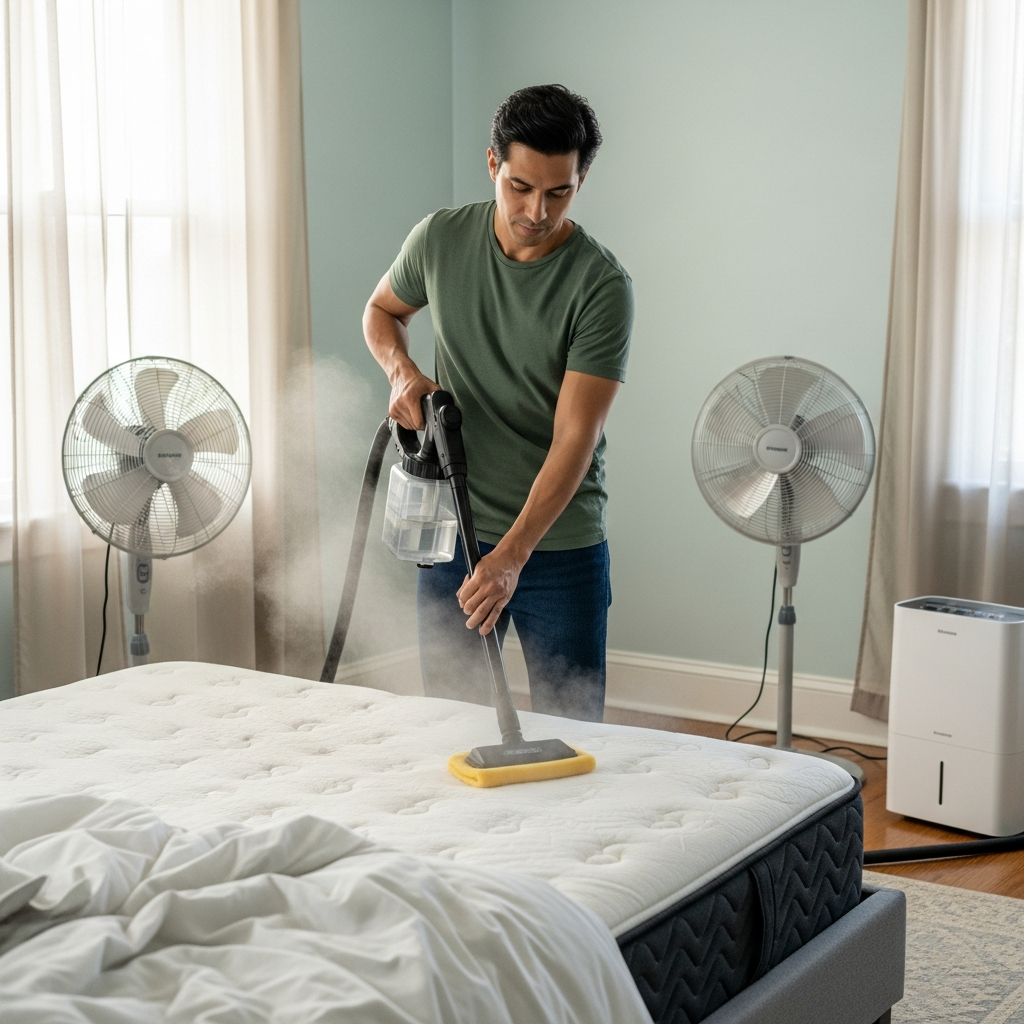
Steam cleaning can be an effective way to refresh a mattress in Elizabeth, New Jersey, but only when done carefully and with an understanding of your mattress materials and local conditions. Steam uses heat and moisture to loosen grime and neutralize certain odors, yet over-wetting or using too high a temperature can damage foams and fabrics or slow drying in our humid summers. This guide explains the safest approach, the tools you need, and when to rely on professional mattress cleaning for deeper or delicate jobs.
Check Your Mattress Label and Materials
Before you touch a steam cleaner, identify your mattress type:
- Memory foam: Generally sensitive to heat and moisture; steam is often discouraged.
- Latex foam: More resilient, but still requires low-moisture and careful technique.
- Hybrid (coils + foam): Fabric and foam layers may be vulnerable to high heat or saturation.
- Innerspring with pillow top: Surface fabrics can handle light moisture; avoid soaking.
Manufacturer guidance overrides generic advice. If the tag says “No steam,” do not steam. Consider alternative low-moisture methods or a professional assessment.
Tools and Setup
- Steam cleaner with adjustable temperature and low-moisture output
- Upholstery tool and clean microfiber pads
- Vacuum with upholstery attachment
- Enzyme cleaner for biological stains
- Distilled water for the steamer
- Fans and a dehumidifier for faster drying in Elizabeth’s humid months
Pre-Clean: Vacuum and Spot Treat
Start with a thorough vacuum to remove dust and debris from the surface, sides, and seams. Address stains before steaming, because heat can set certain marks:
- Fresh spills: Blot with a clean cloth.
- Food/drink: Mild dish soap and cold water; blot, don’t scrub.
- Biological stains: Apply an enzyme cleaner sparingly and allow time to work; blot dry.
Choose the Right Steam Settings
Use the lowest effective temperature and the lightest moisture setting. The goal is a quick pass that slightly warms and loosens residues, not soaking. Attach a clean upholstery pad to distribute heat evenly and protect the fabric.
Steam Technique: Slow, Light, and Even
- Work in small sections, starting at the top and moving down.
- Hold the tool just above the surface or make the lightest contact possible; avoid pressing steam deep into the mattress.
- Move at a steady pace; do not hover in one spot.
- Immediately follow with a dry microfiber cloth to absorb surface moisture.
If the pad becomes damp, change it. Wet pads can redeposit moisture and slow drying.
Drying Strategy for Elizabeth Homes
Open windows on dry, breezy days. During humid spells, run a dehumidifier and two fans—one directed across the mattress and another angled upward to move room air. Do not put bedding back on until the mattress feels dry to the touch and returns to room temperature.
When Steam Isn’t the Best Choice
Some mattresses are better served with low-moisture cleaning methods. For example, dense memory foam can trap steam, leaving it damp for too long. If you notice persistent moisture, musty odor, or fabric puckering, stop and allow more drying time. For delicate textiles, deep-set odors, or heavy soiling, it’s smart to consult a local expert. In cases where you need advanced equipment or faster turnaround for a guest arrival or a move within Elizabeth, a seasoned mattress cleaning service can help you avoid risks and achieve a thorough, quick-drying result.
Extra Tips for Success
- Distilled water prevents mineral buildup in the steamer and spotting on fabrics.
- Test on a small, hidden area first to check for colorfastness and fabric response.
- Avoid fragrances and heavy additives that can irritate sensitive sleepers.
- Rotate the mattress after cleaning to promote even wear and ventilation.
Troubleshooting Common Issues
- Lingering odors: Air longer, use a dehumidifier, or apply a light baking soda treatment after steam and re-vacuum.
- Water rings: These can result from uneven moisture. Blot the area, then lightly steam the surrounding fabric and blot again for a blended finish.
- Raised or wavy fabric: Reduce heat, increase movement speed, and avoid pressing down.
Maintenance After Steam Cleaning
- Use a breathable, zippered protector to block sweat and spills.
- Launder bedding weekly and the protector monthly.
- Vacuum the mattress lightly each month to control dust mites and debris.
Frequently Asked Questions
Q: Is steam safe for all mattresses? A: No. Always check the label. Many memory foam and hybrid mattresses should not be steamed.
Q: How often should I steam clean? A: If your mattress is steam-safe, limit full steam sessions to once or twice a year, with lighter maintenance in between.
Q: Will steam kill dust mites? A: Heat can reduce some allergens, but success depends on contact time and temperature. Combine steam with regular vacuuming, washing bedding hot, and using protectors.
Q: What if my mattress smells musty after steam? A: It may not be fully dry. Increase airflow and dehumidification. If odor persists, consider a professional evaluation.
Q: Can I steam both sides? A: Only if your mattress is double-sided and labeled for flipping. Most modern mattresses are one-sided.
Q: What about winter in Elizabeth? A: Indoor heating can help drying, but keep the room ventilated and avoid placing the mattress too close to heat sources.
Local Considerations in Elizabeth, NJ
Coastal humidity and seasonal temperature swings mean timing matters. Choose a dry day for steam, or rely on robust indoor airflow. In apartment settings, plan ahead so the mattress can air without being used for several hours.
Sleep Better, Sooner
If your mattress isn’t labeled for steam or you want a deeper clean with precise moisture control, book local experts who understand foam densities, textiles, and fast-dry techniques. For reliable results and a fresher bedroom, turn to proven mattress cleaning and rest easy knowing your bed is truly refreshed.