In Elizabeth, New Jersey, clean rugs do more than look good—they protect floors, reduce slip hazards, dampen noise, and support a healthy environment for employees and shoppers. Office lobbies near Broad Street, retail aisles in Midtown, and medical offices across Union County all face high foot traffic, New Jersey winters, and humid summers. This guide presents a practical, facility-friendly program that balances daily appearance care with long-term fiber preservation. The same principles used by professional rug cleaning teams apply here: remove dry soil first, use controlled chemistry, manage moisture, and dry quickly to return spaces to service.
Map your space and traffic patterns
Walk the facility and note:
- Entrances: Primary entry rugs take the brunt of soil and moisture. Double up with exterior scraper mats and interior absorbent rugs.
- Traffic lanes: Aisles, printer stations, coffee points, and cashier lines need more frequent service.
- Spill zones: Break rooms, water coolers, demo tables, and cosmetics counters are stain hot spots.
- Sun exposure: South-facing windows can fade dyes; rotate rugs or shift placement periodically.
Daily and weekly appearance care
- Daily: Vacuum visible lanes with a commercial unit. Spot clean fresh spills immediately using fiber-appropriate spotters.
- 2–3x weekly: Detail vacuum entire rugs, including edges and under fixtures where dust accumulates.
- Weekly: Flip smaller rugs to vacuum the back; this dislodges fine grit that abrades fibers.
Safe chemistry for mixed-fiber environments
Offices and retailers often use a mix of synthetics for durability and wool for premium feel. Stock two core cleaners:
- Neutral-detergent cleaner for synthetics (nylon/olefin/polyester)
- Wool-safe cleaner (pH near neutral and free of optical brighteners)
Keep enzyme spotter for food and urine incidents, plus an oxygenated spotter for coffee, tea, and cosmetics pigments. Train staff to read labels, dilute correctly, and test unseen corners for dye stability.
Low-disruption cleaning workflow
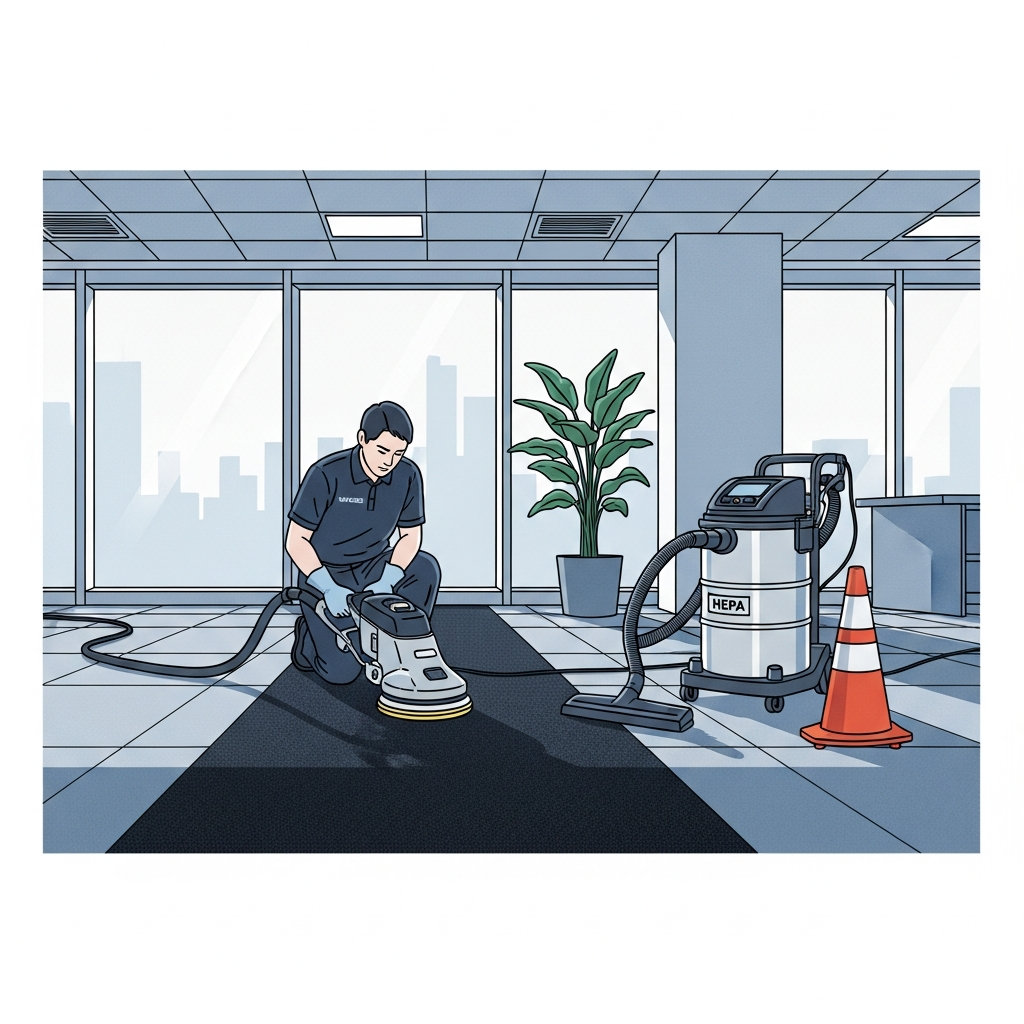
- Dust control: Thorough vacuuming with slow passes. Use HEPA filtration if possible for better indoor air quality.
- Pre-spot and protect: Treat visible spills, place plastic under rugs on finished floors, and cordon off small zones to prevent foot traffic during damp stages.
- Pre-spray: Lightly mist the appropriate cleaner; keep solutions cool for wool and patterned rugs.
- Gentle agitation: Use a soft brush or bonnet towel for larger pieces. Avoid aggressive scrubbing that can fuzz pile.
- Dwell: 5–10 minutes to loosen soils without letting areas dry out unevenly.
- Rinse and recover: Mist with cool water (acidified for wool), then bonnet or towel-extract, prioritizing multiple dry passes over heavy wetting.
- Groom and dry: Align pile, elevate edges where possible, and run fans. Deploy a dehumidifier during humid days so rugs return to use before opening hours.
Moisture control for New Jersey seasons
In winter, slush and road brine move indoors quickly. Use longer entry runs and increase daily vacuuming. After storms, schedule a short after-hours refresh to prevent browning and salt lines. In summer humidity, pair airflow with dehumidification so drying is predictable and fast.
Appearance standards and documentation
- Set target levels: Define acceptable appearance grades for high-visibility zones like lobbies.
- Log incidents: Note spills and pet accidents (service animals) so you can follow up if wicking occurs.
- Photo records: Before-and-after images help track performance and justify rotation or replacement.
Training quick hits for staff
- Blot, don’t scrub. Most pile distortion comes from aggressive scrubbing.
- Use white towels for spotting to monitor transfer.
- Measure concentrates. Overly strong solutions leave residue and attract soil faster.
- Test dyes. Press a damp white towel for 10 seconds on bright colors.
Service frequency planning
- Daily: Spots and traffic lanes at entry and cashier lines.
- Weekly: Full vacuuming and edge detailing.
- Monthly: Flip where possible, detail the back, and refresh runners.
- Quarterly: Low-moisture overall cleaning for high-traffic areas.
- Semiannual/Annual: Thorough cleaning for all rugs, scheduled during slow periods.
Special cases in commercial settings
- Tufted display rugs with latex backings: Keep moisture low to avoid delamination and odor traps.
- Patterned wool rugs in executive suites: Cool solutions, gentle agitation, acidified rinse, patient drying.
- Cosmetics or dye-based stains: Use oxygenated spotter and cool rinse; stop if you see color movement.
- Food courts and coffee stations: Enzyme pre-spot, then low-moisture bonnet extraction with frequent towel changes.
Slip, trip, and hygiene considerations
- Secure edges with rug pads designed for commercial floors.
- Post wet-floor signage during any damp process and remove promptly once dry.
- Ensure rugs dry fully before opening hours to minimize risk.
When to bring in outside help
Large-format rugs, recurring odors after summer humidity, or complex fibers benefit from specialized handling. A professional team can stabilize dyes, perform controlled flushing, and dry with industrial airflow overnight. Partnering with reliable rug cleaning services allows your staff to focus on core tasks while protecting assets and brand image.
Frequently Asked Questions
Q: How fast can rugs return to service?
A: With low-moisture methods, many rugs are ready within hours, especially with fans and dehumidifiers. Plan after-hours work for wet processes so everything is dry by opening.
Q: Are bonnet methods safe for wool?
A: With a wool-safe cleaner, cool solutions, and gentle pressure, bonneting can be safe for maintenance. Reserve deep restorative work for professionals to prevent over-wetting or pile distortion.
Q: How do we prevent wicking in high-spill zones?
A: Treat quickly, limit moisture, and follow with strong airflow. For recurring issues, increase pad quality, improve entry matting, and schedule more frequent maintenance.
Q: What’s the best way to handle salt lines in winter?
A: Apply a mild acidic rinse after a neutral cleaner, then perform multiple dry passes. Address lines within 24 hours to prevent permanent discoloration.
Q: Can we standardize products for all rugs?
A: Keep at least two: a neutral cleaner for synthetics and a wool-safe cleaner. Train staff to test dyes first and select the right product by fiber.
Q: How often should we rotate rugs?
A: Quarterly for lobbies and aisles, semiannually for offices. Rotation evens wear and sun exposure.
Q: Do we need HEPA vacuums?
A: HEPA is ideal for indoor air quality and for capturing fine particulate common in urban environments like Elizabeth.
Action plan your team can follow
Create a one-page checklist: daily vacuum and spot response, weekly detailing, monthly back-dusting, quarterly low-moisture cleaning, and annual deep cleaning. Schedule around weather events and sales peaks so rugs look their best when it matters most. When odor, dye risk, or time pressure exceeds in-house capacity, coordinate with trusted rug cleaning partners for restorative service that keeps your facility safe, clean, and welcoming.
Next steps to keep your facility spotless
Map traffic, train staff on simple, safe methods, and document results. By controlling dry soil and moisture, you’ll preserve color, reduce risks, and extend rug life. For complex fibers, large formats, or after-event turnarounds, bring in a specialist who can deliver overnight results and consistent quality. Book dependable rug cleaning support and keep your Elizabeth office or retail space looking its best every day.