
Introduction: Conserving Handmade Rugs with Expert Care
Handmade rugs are crafted with intentional techniques and materials that require thoughtful care. In Elizabeth, New Jersey, homeowners with hand-knotted, hand-tufted, or woven rugs often seek specialized cleaning and conservation services to preserve the artistry and structural integrity of these pieces. If you want professional guidance and handling designed for handcrafted textiles, it is wise to consult experienced specialists such as professional rug cleaning services who understand fibers, dyes, and conservation methods for handmade rugs.
This resource explains best practices for cleaning handmade rugs, from initial assessment and testing through gentle cleaning methods, repair options, and post-cleaning protective measures. It includes recommendations for routine maintenance and a comprehensive FAQ to address typical concerns related to preserving handmade textiles.
What Makes Handmade Rugs Different?
Handmade rugs differ from machine-made counterparts in their construction, materials, and often in the variability of dyes and weave. Natural fibers—wool, silk, cotton, and occasionally natural plant fibers—are common, and dyes may be natural or hand-applied. The hand knotting or weaving process produces slight irregularities that contribute to a rug’s character but also create sensitivities during cleaning. Handmade rugs may have loose fringes or unique finishing techniques that necessitate careful handling to avoid unintentional damage.
When treating handmade rugs, technicians consider knot density, foundation stability, and any historical or cultural significance that might influence conservation choices. Many handmade rugs are family heirlooms or collectible items; this cultural and monetary value often dictates a more conservative cleaning approach to protect original materials.
Inspection and Documentation
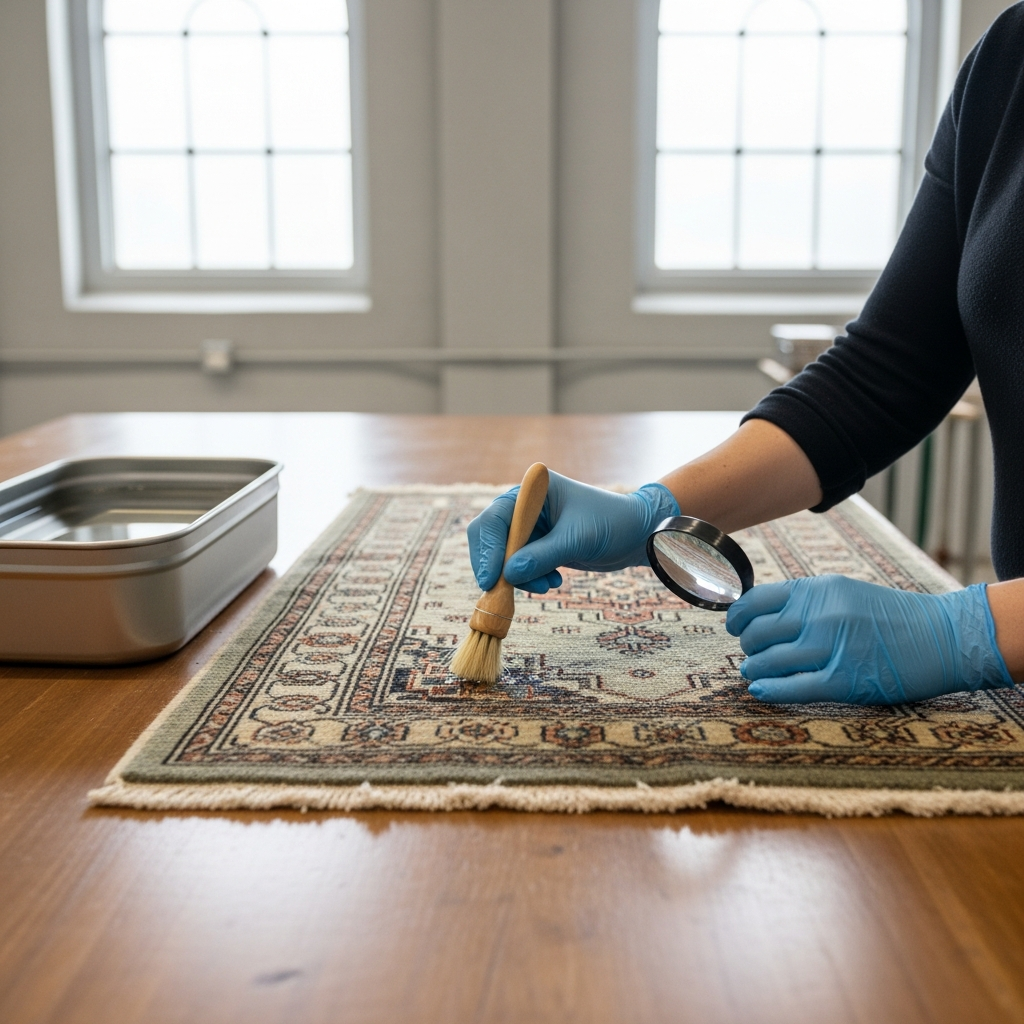
Prior to cleaning, a thorough inspection records the rug’s condition and identifies weak spots, repairs, pests, stains, and dye stability. Professionals photograph both sides and the fringe and make notes about any unusual odors or residues. For handmade rugs, a conservator or trained technician should perform colorfastness testing in unobtrusive areas to determine the safest cleaning solution. Documentation protects both you and the cleaner by clarifying pre-existing issues and forming a baseline for any restoration work.
If your rug has provenance or valuation documents, provide these to the cleaner. They can influence transportation, cleaning choices, and whether to involve a textile conservator for preservation-sensitive work.
Gentle Cleaning Techniques for Handmade Rugs
Hand washing with low-sudsing, pH-balanced detergents and careful rinsing is often the preferred method for handmade rugs. Technicians use hand-operated troughs or wash boards to control agitation and water temperature, minimizing stress on knots and foundations. In some cases, low-moisture cleaning systems and conservation-grade solvents are selected for antique or highly sensitive pieces.
Rinsing is especially important because detergent residues can attract dirt and stiffen fibers. After cleaning, controlled drying in a climate-regulated room prevents shrinkage and ensures dyes do not migrate. Skilled technicians monitor drying progress and adjust airflow and humidity to protect delicate fibers during this critical phase.
Stain Treatment and Odor Removal Without Aggression
For stains, professionals prefer targeted, minimally invasive treatments. Enzymatic cleaners are used judiciously for organic stains, while solvent-based options are reserved for oil-based soils. The technician will always perform a test in a hidden area to observe any adverse reactions before treating the visible stain. For odors, especially pet-related or musty smells, a combination of deep cleaning, enzymatic neutralization, and controlled drying typically resolves most issues without resorting to harsh chemicals or masking agents.
If a stain is particularly old or set, the cleaner may offer restorative options but will explain the risks and limitations. Conservators and expert cleaners aim to balance stain removal with color and pile preservation rather than attempting complete stain eradication with potentially destructive methods.
Repair, Reweaving, and Fringe Conservation
Repairing handmade rugs is specialized work that can include reweaving, fringe replacement, and foundation reinforcement. Fringe conservation is delicate because the fringe is often integral to the structure of a hand-knotted rug. Technicians may tidy and secure fringes, reweave edges, or perform subtle stabilization to prevent further unraveling. For more extensive damage, referral to a textile conservator or an artisan skilled in traditional weaving techniques is recommended.
When seeking repair, request samples of prior work and inquire about materials used to ensure they match original fibers and colors closely. Skilled repairs maintain the visual and structural integrity of the rug and avoid modern materials that could cause future problems.
Storage and Long-Term Protection
If you need to store a handmade rug, clean it thoroughly first and ensure it is fully dry. Roll the rug with the pile inward, wrap in breathable cotton or muslin, and avoid plastic that traps moisture. Store in a cool, dry, and pest-free environment. Lift the rug off the floor if possible, and check periodically to ensure no pests or humidity issues have developed. For very valuable rugs, consider climate-controlled storage or professional archival storage services.
Regularly rotate handmade rugs exposed to sunlight or high traffic and use high-quality rug pads for cushioning and to reduce abrasion. Pads also help prevent slippage and reduce stress on corners and edges.
Frequently Asked Questions
Q: How often should handmade rugs be professionally cleaned? A: Frequency depends on use and exposure. Lightly used rugs in low-traffic areas may need cleaning every few years, while high-traffic pieces benefit from more frequent professional attention.
Q: Can all handmade rugs be washed with water? A: Not always. Some antique rugs with unstable dyes or fragile foundations require dry or low-moisture conservation methods. A conservator’s assessment is best when dealing with antiques.
Q: Will cleaning damage the natural dyes? A: Skilled cleaners perform colorfastness tests and select appropriate solutions to minimize dye loss. Aggressive cleaning without testing is what causes color issues, which is why professional evaluation is important.
Q: Should I repair a handmade rug before or after cleaning? A: Minor repairs are often done after cleaning so the technician can better assess the structure and plan stable repairs. However, if structural instability risks further damage during cleaning, preparatory stabilization may be performed first.
Conclusion and Next Steps for Handmade Rug Care
Preserving the beauty of handmade rugs in Elizabeth, New Jersey requires specialized knowledge, gentle techniques, and careful attention to repair and storage. If you are uncertain about your rug’s best course of action, consult a qualified provider who specializes in handmade textiles. For professional evaluation and tailored cleaning and repair services, connect with experienced teams such as professional rug cleaning services who can guide you through each step of care and preservation. With the right handling and routine maintenance, handmade rugs can remain vibrant and structurally sound for generations.