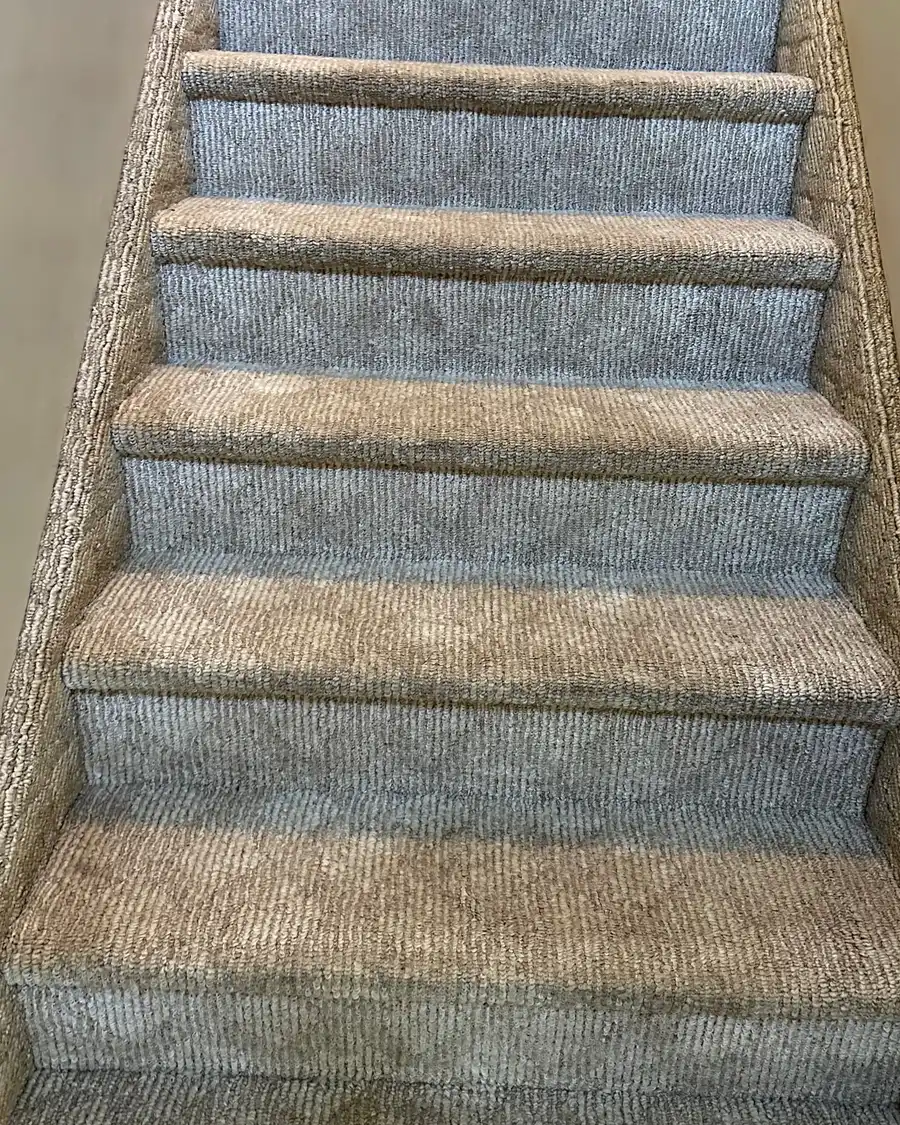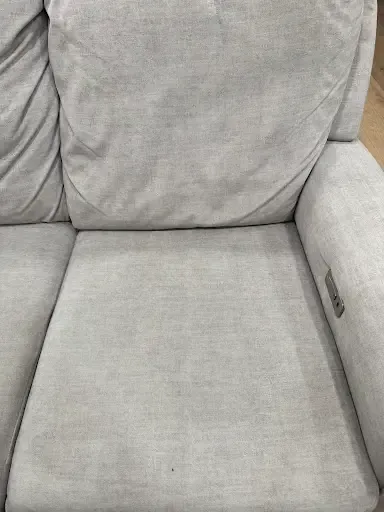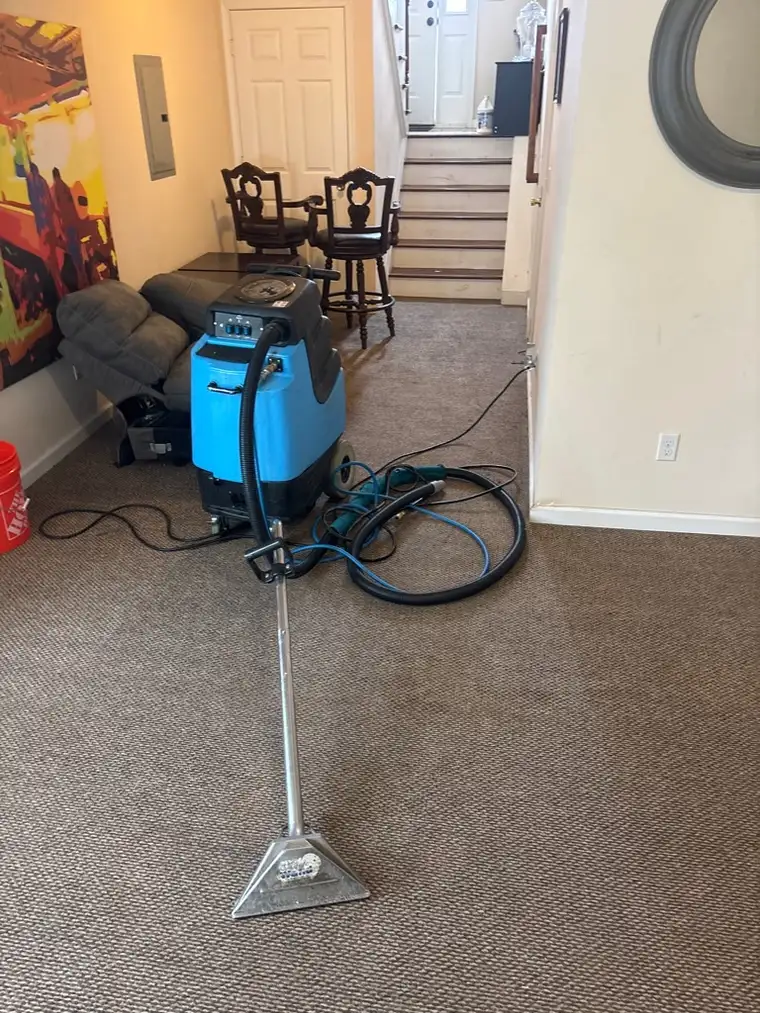
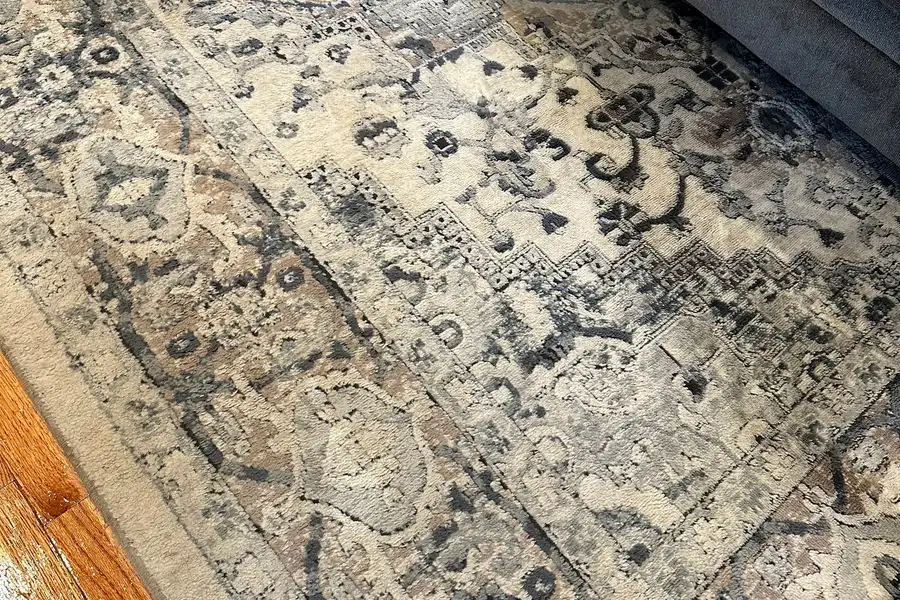
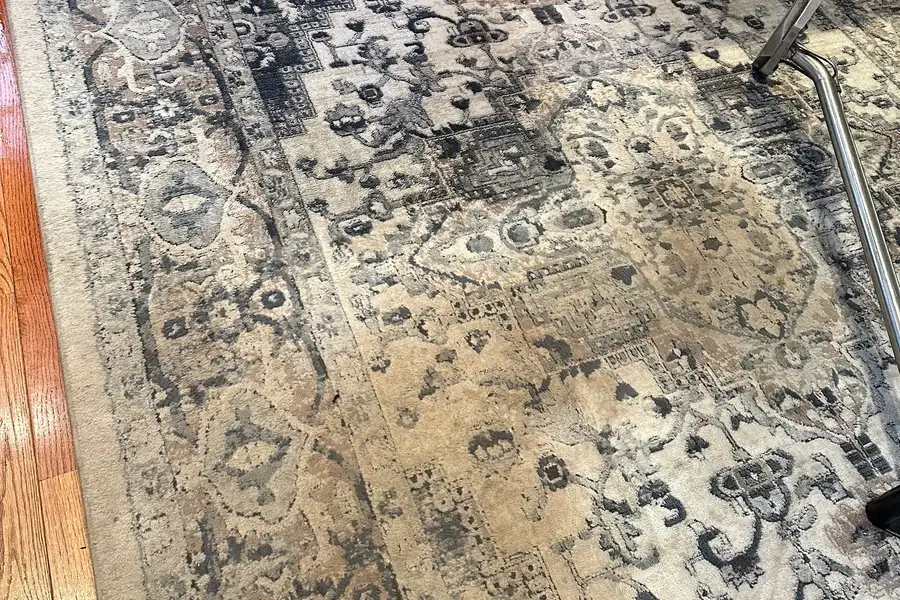
The left frame was taken partway through the job. The extraction wand is still in shot and a clean stripe runs across the pile where it has already passed. On one side of that stripe the rug is as we found it. On the other side it is the same rug with the dust off it.
What we can and cannot tell you about this rug
Our job record lists this as a wool rug with a pattern, and the description we wrote at the time calls it grey and cream with an oriental pattern. That is what the record says, and it is as far as we will take it.
We will not tell you where the rug was woven, whether it was knotted by hand or made on a machine, how old it is or what it is worth. Two photographs answer none of that. We are not claiming a stain came out either, because the frames do not show one.
Why the color reads differently in the second frame
A dyed wool fiber shows color because light goes into it, the dye absorbs most of the wavelengths, and what comes back out is the color you see. That only works when the light reaches the fiber.
Dust gets in the way. It is fine mineral grit, grey or tan, millions of separate particles sitting on the fibers and packed into the gaps between them. Light hits those first and scatters, so part of what reaches your eye never touched the dye and comes back as a pale wash. Mix a pale wash into any color and the color moves toward grey. The dark outline and the lighter ground lose their contrast, and the pattern loses its edges. Take the dust off and people say the color came back. It never went anywhere, which is why bringing the color back describes dust removal and not dye.
What we did
- Looked at the back and the pile first. Everything after that depends on what you find.
- Dye tested a hidden corner. That is the standard step before we wet clean any rug: a little solution on a white cloth, pressed into the pile where nobody looks. If color moves onto the cloth, the method changes to less moisture and faster extraction. We are describing the step, not reporting a result for this rug.
- Took the dry soil out before any water went on. Vacuum both sides where the rug can be lifted, then work the pile. Skip this and you turn dust into mud at the base of the fibers.
- Hot water extraction at settings wool will take. Wool is a protein fiber and wants mild, near neutral chemistry, not the alkaline products that are fine on synthetic carpet.
- Overlapping passes across the whole face. The stripe in the left frame is where the wand had already been.
- Cleaned the floor underneath, then set the rug up to dry.
What you should know
- Nothing was added. No dye, no color, no coating. The pattern in the second frame was under the dust in the first one.
- A vacuum reaches the top of the pile. The dust that dulls the color has worked down between the fibers, below where the suction pulls from.
- Grit at the base of the pile is hard and angular, and every step drags the fibers across it. That wear is in the fiber, so cleaning does not undo it. Every 6 to 12 months suits a rug in use.
- Cleaning does not reverse what the sun, bleach or an old urine deposit did to a dye. When a rug has one of those, we say so at the estimate rather than after the work.
- This rug was cleaned in place, on the floor where you see it. We have no storefront and no drop off point, so nothing had to leave the house.
When to call us
Call if your rug looks dull and you are not sure whether it is dirty or faded, or if the base of the pile feels gritty under your fingers. We clean area and oriental rugs in the house, dye test before anything gets wet, and clean the floor under the rug while it dries. You get a written estimate before the work starts. We cover eight North Jersey counties, including Bergen County and Essex County. Phone (908) 545-9387, by appointment 24 hours a day.