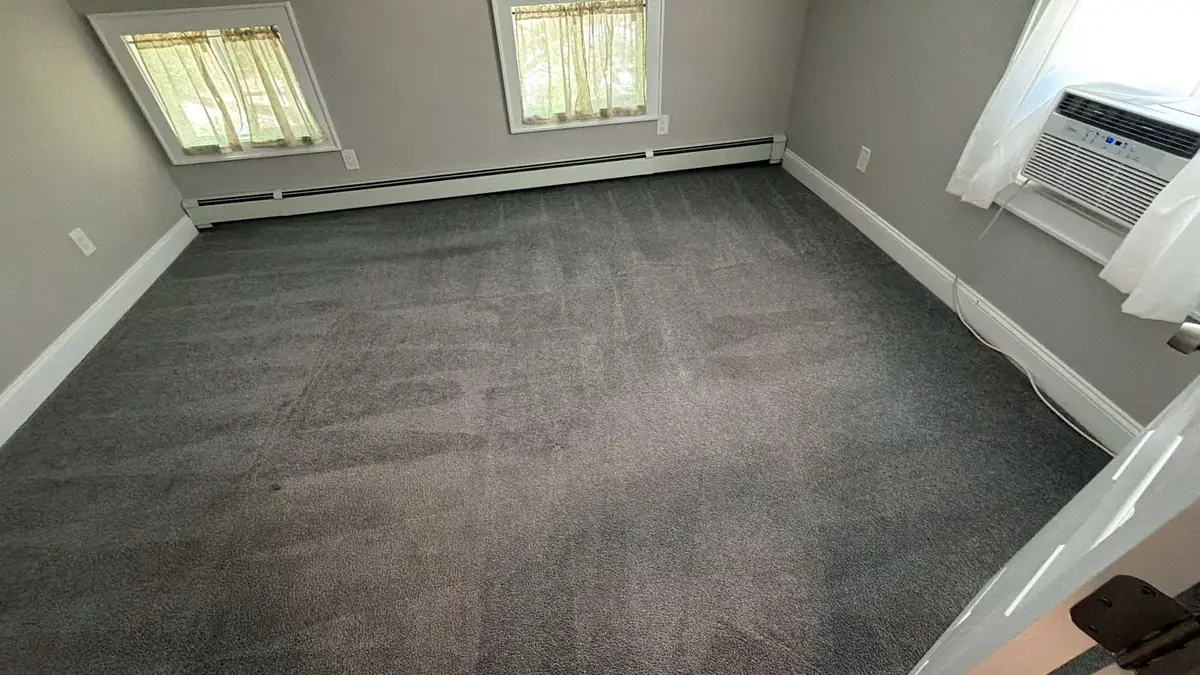
What actually happens when we clean a carpet
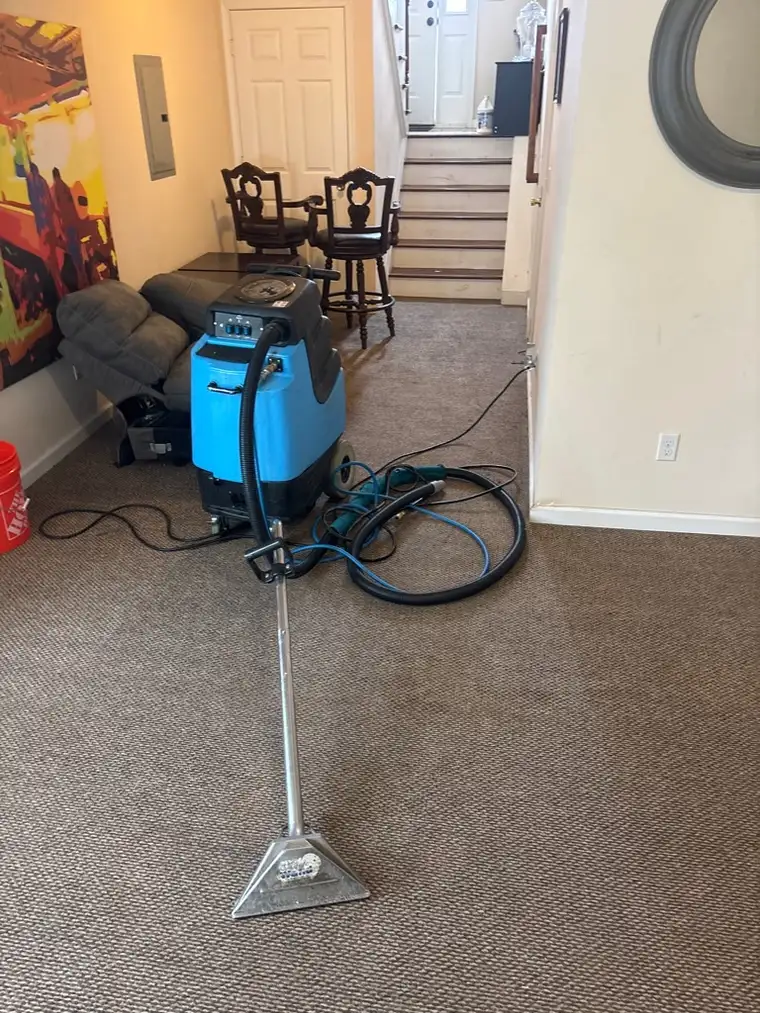
The machine does two things at once. It pushes heated cleaning solution into the pile under pressure, and half a second later it pulls that solution back out through the same head, carrying the soil with it. That is hot-water extraction, and the reason it is the method most carpet manufacturers ask for is simple: whatever goes into the carpet has to come out of it again.
A vacuum works on what sits loose on top. It cannot touch the film of grit, skin, pollen and street dirt that has worked its way down to where the fibers meet the backing, and that is exactly where the color change in a traffic lane comes from. The carpet is not worn out in that strip; it is loaded.
Before any of that, the room gets vacuumed properly and the edges and stairs get worked by hand, because that is where the machine head cannot sit flat. Stains get pre-treated and given time to break down before extraction rather than being scrubbed at, which is how carpet fiber gets fuzzed and permanently distorted.
Stairs are the job most people underestimate
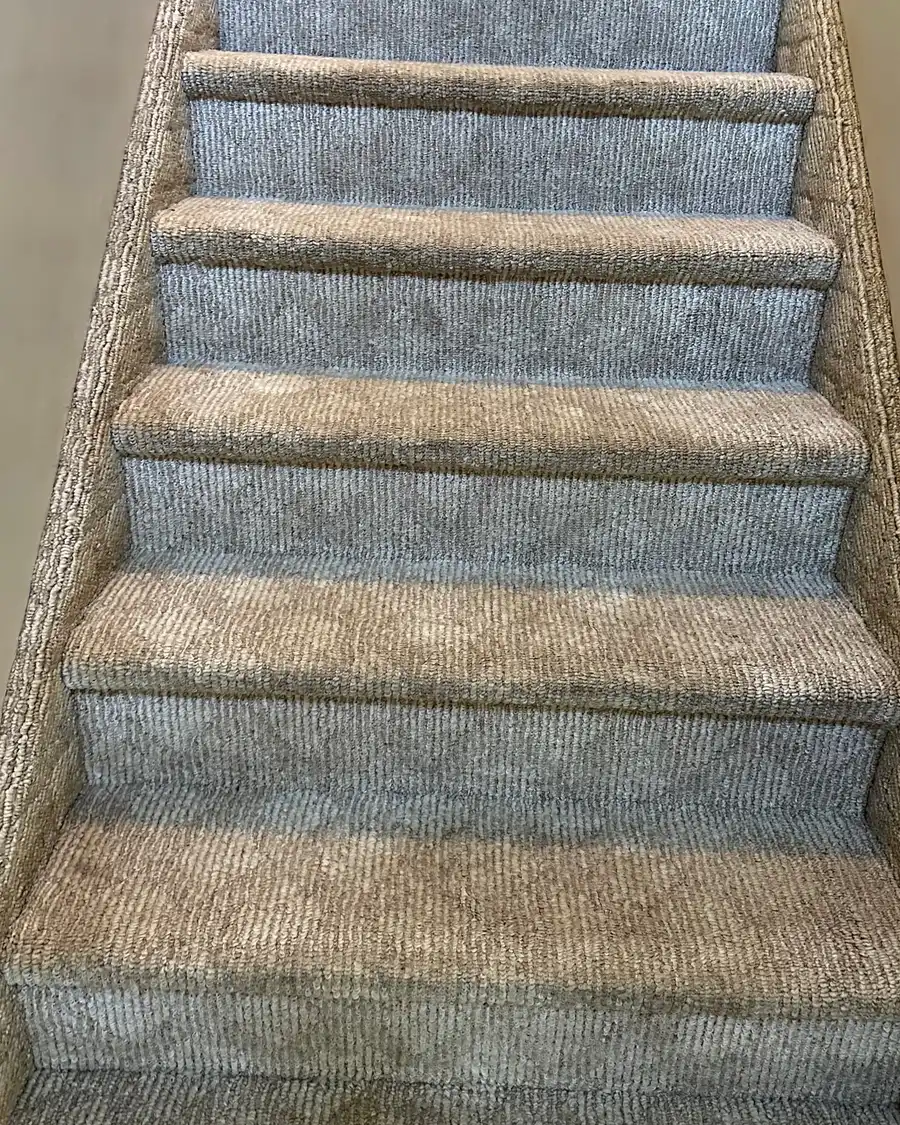
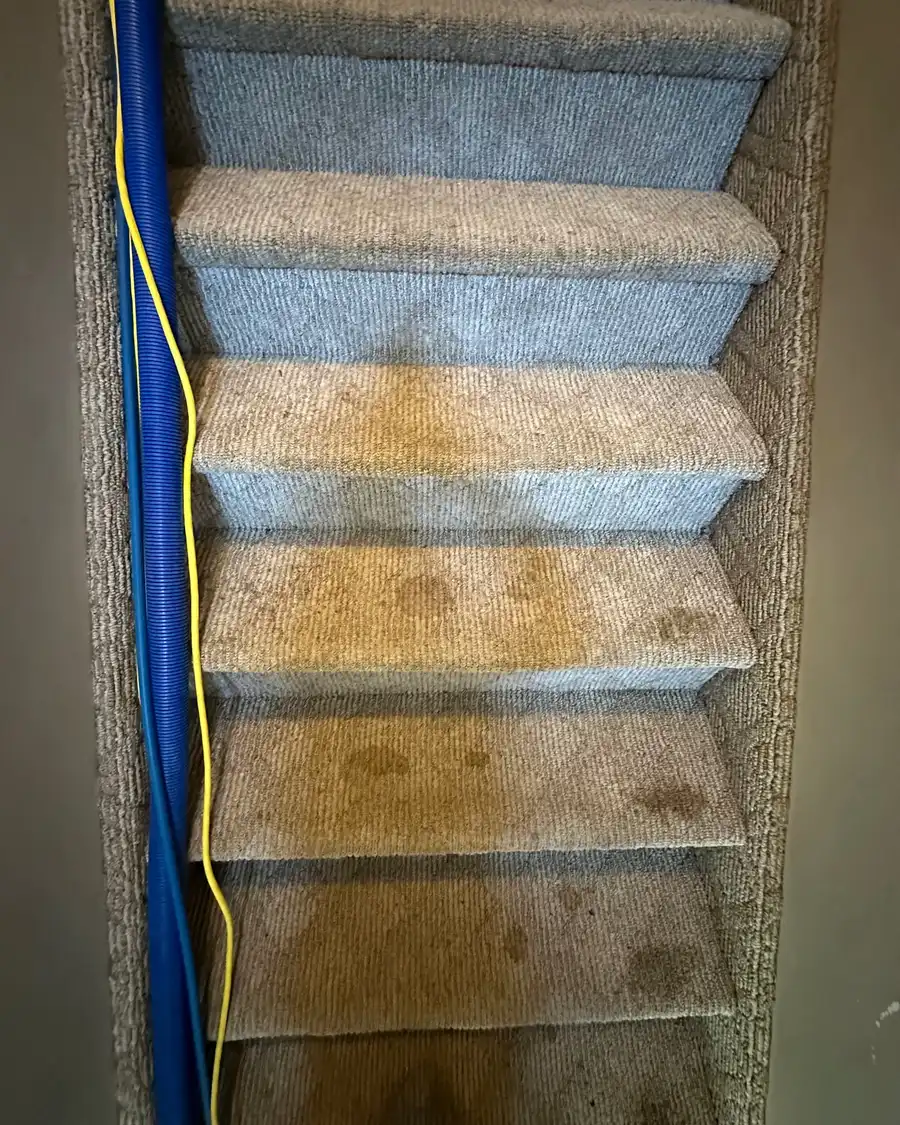
A staircase has three surfaces per step, the tread you walk on, the riser your toe hits, and the carpeted stringer at each side, and every one of them takes soil differently. Treads collect ground-in traffic soil. Risers collect scuffs. The stringer collects whatever the vacuum has been flinging at it for years.
Stairs cannot be done with the machine head alone; they need a hand tool and somebody kneeling on every step. It is the slowest part of most jobs and the one where the difference is most obvious afterwards, because a staircase is the only carpet in a house you look at from directly above, at eye level, in good light.
Pet stains are a padding problem
When a dog or a cat has an accident, the liquid does not stop at the carpet. It goes through to the pad underneath and often to the subfloor below that. Clean only the surface and the carpet looks fine for about a week, then the smell comes back, or a yellow-brown ring rises up through the pile as the padding dries. That is wicking, and it is why the same stain seems to return.
The fix is to treat the contamination where it is rather than where you can see it. Odor removal and pet stain removal are the two topics Google’s own review tags surface most often on our listing after the general ones, which tells you what most of these calls are actually about.
What we use, and what it smells like
Non-toxic, biodegradable products, safe around family and pets. Nothing needs a room aired out afterwards and nothing needs the dog kept elsewhere for the day. The comment we get most often is some version of the same thing, that the house smelled fresh rather than smelling of cleaning.
Booking, and what we need from you
Clear what you can from the floor: toys, shoes, laundry baskets, anything light. We move furniture that two people can safely lift and put it back. Tell us up front about pets, about any stain you already know is stubborn, and about whether a room has to be usable again by a particular time, all three change how we plan the visit.
We work across Essex, Union, Bergen, Passaic, Hudson, Morris, Somerset and Middlesex counties, and we answer the phone at any hour to book. Send a photo of the worst patch with your inquiry if you can. It is the fastest way to get a straight answer about what will come out.