Identify the fiber before touching the rug
Everything about a rug clean follows from what it is made of, and you cannot tell by looking at the front. The tell is on the back: hand-knotted rugs show the pattern in the knots, machine-made rugs show a uniform grid, and tufted rugs show a fabric backing glued on. Wool feels different from viscose between finger and thumb, and both feel different from polypropylene.
That matters because the four things you control while cleaning, how much water, what pH, how much heat and how much agitation, all have to change with the fiber. Wool is a protein and hates alkaline solutions. Viscose loses strength the moment it gets wet. Polypropylene will take almost anything but holds oily soil stubbornly. One recipe for all of them is how rugs get ruined.
The dye test
In a hidden corner, under where the sofa sits, or on the fringe end, a small amount of the solution goes onto a white cloth pressed against the pile. If color comes off on the cloth, the dyes are not stable and the method changes: less moisture, faster extraction, sometimes a different product entirely.
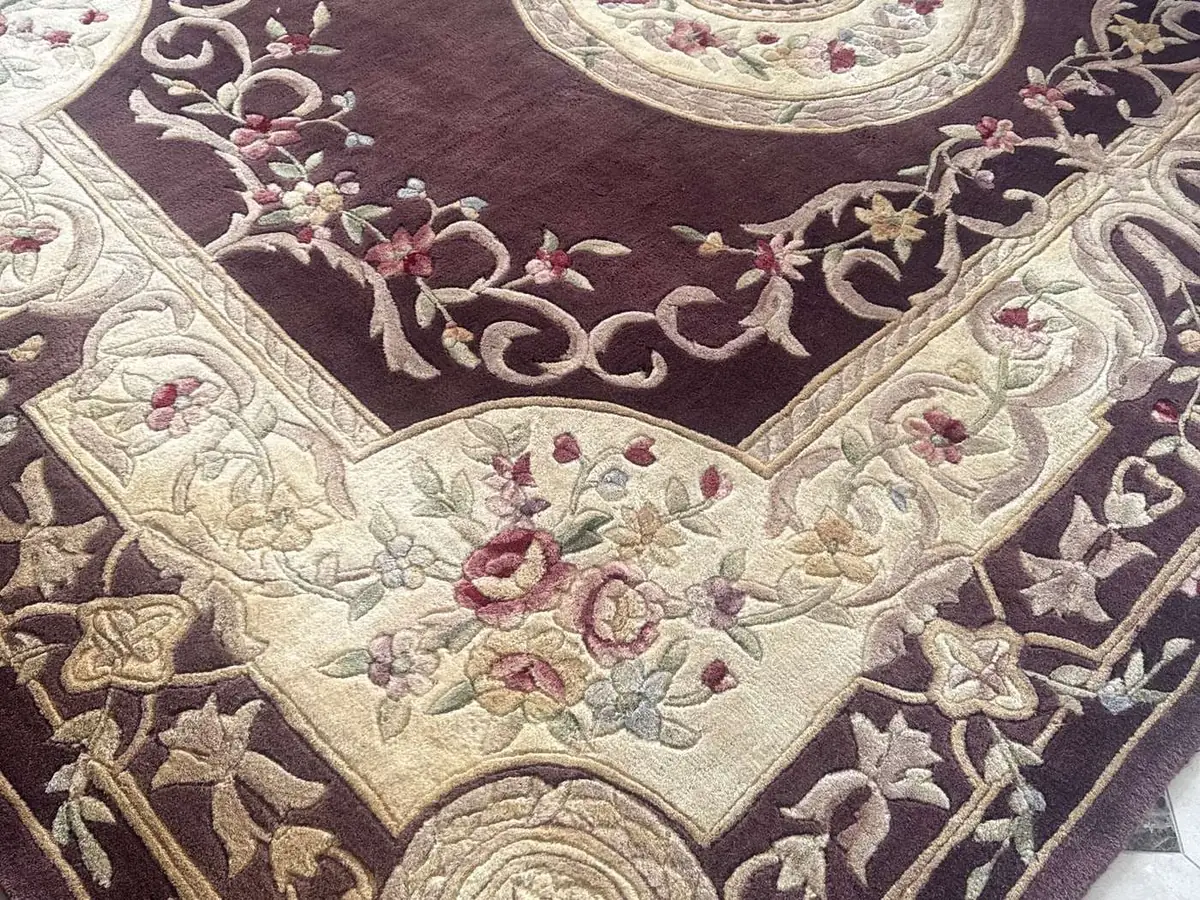
Red and indigo next to cream are the classic risk. So are older rugs that have been cleaned badly before, because a previous bleed leaves the dye more mobile than it started.
Most “faded” rugs are dusty, not faded
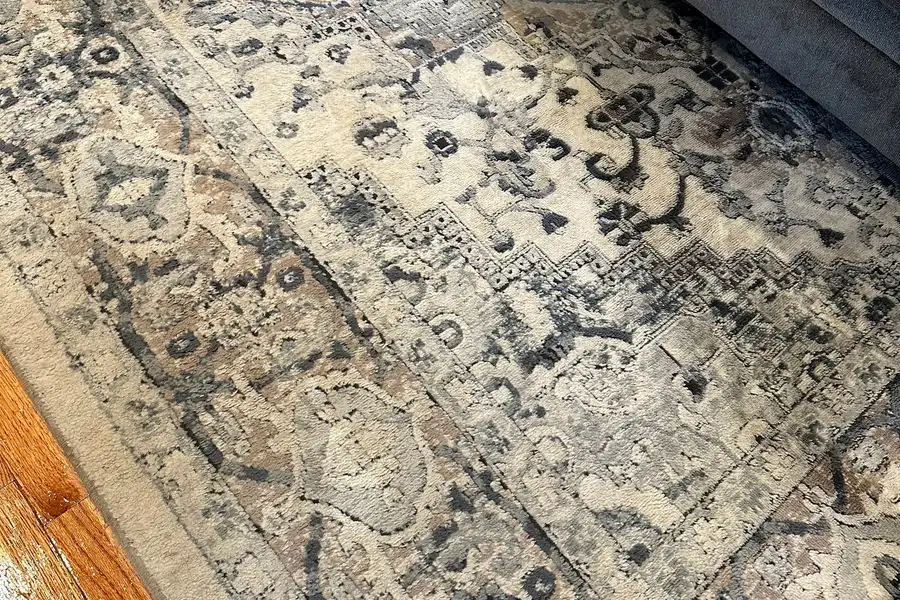
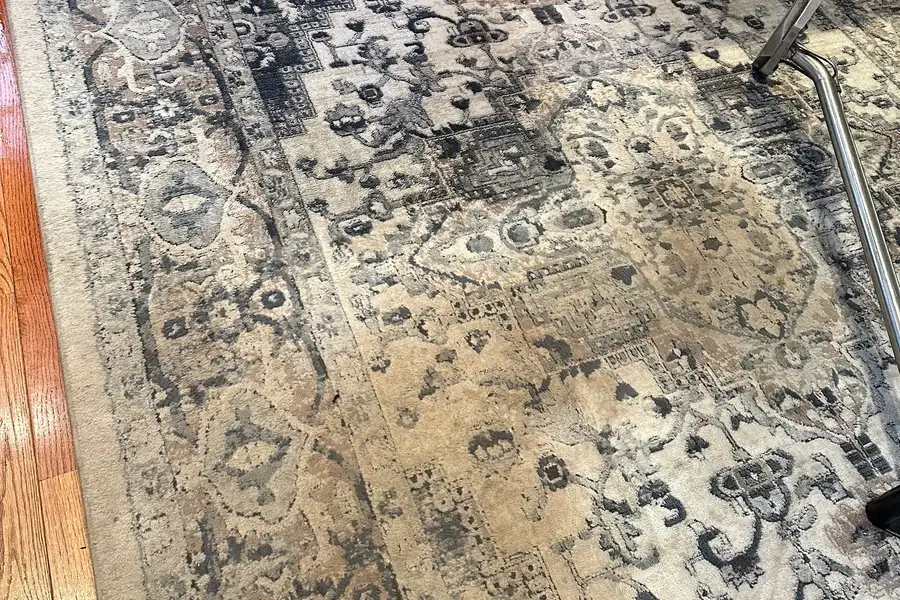
A rug held vertically and struck will produce a cloud of dust that surprises the owner every time. That dust is not sitting on top; it has worked down between the fibers, and it is the reason a rug that was vivid when it arrived now looks muted and slightly grey.
Light hitting a dusty pile scatters instead of reflecting off the dyed fiber, so every color reads a shade duller and the contrast in the pattern drops. Remove the dust and the pattern comes back sharply enough that people assume something was added. Nothing was, the color was under there the whole time.
This is also why rugs benefit from cleaning on a schedule rather than when they look bad. By the time a rug looks dirty, the grit has been grinding at the base of the fibers every time somebody walks on it.
Fringes, edges and the parts that show wear first
Fringes are usually cotton even when the rug is wool, which means they soil faster, hold that soil differently and go grey while the rug still looks fine. They are cleaned separately and by hand.
Edges are where the vacuum never quite reaches and where a rug against a wall collects a dark line. It is worth pointing these out when we arrive so nothing is missed.
And the floor underneath
Every rug visit includes the floor under the rug. Grit that has worked through the pile sits on the hardwood and gets ground into the finish underfoot, so the board under a hallway runner is often duller than the boards on either side. Cleaning the rug and putting it straight back down on that is a waste of the visit. The floor gets cleaned while the rug dries.