Speed is the whole service
Almost every other page on this site describes a job that can wait until Thursday. This one cannot. Once water is in a floor, three things are running at the same time: the water is spreading outward through the carpet, soaking downward into the padding and the subfloor, and creating exactly the conditions mold needs.
Caught quickly, most of that is reversible. Left for several days, the same room becomes a removal job, carpet out, padding out, sometimes the bottom of the drywall out too. The physical damage did not change in those few days. What changed is what the water had time to reach.
That is why the phone is answered at any hour. For every other service, being available around the clock is a convenience. For this one it is the service.
What we do, in order
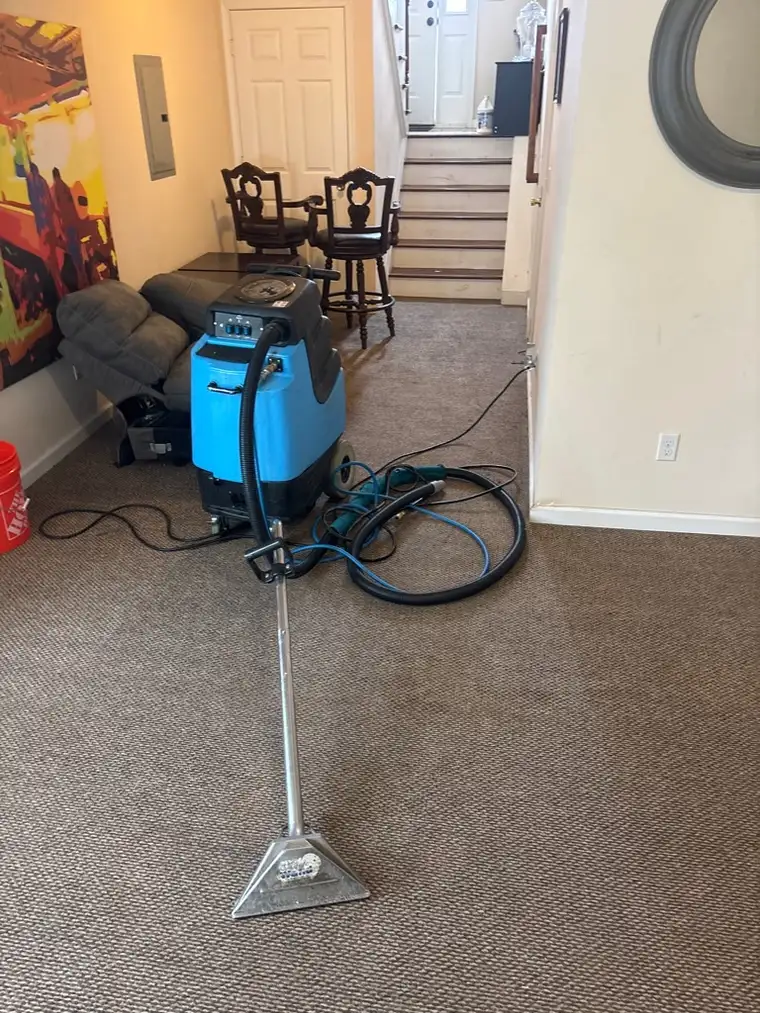
Stop it spreading. Standing water gets extracted first, starting at the furthest edge of the wet area and working back, so the wet perimeter stops growing while we work.
Find the real edge. Wet carpet does not announce itself. The visible dark patch is smaller than the actual wet area, because water wicks along the backing faster than it shows on the surface. Finding the true boundary is the difference between drying the room and drying part of it.
Lift and assess the padding. Padding is the sponge in the system. It holds more water than the carpet above it and gives it up far more slowly. Sometimes it can be dried in place; often it is the one component that has to be replaced. That call gets made on what we find, not on a rule.
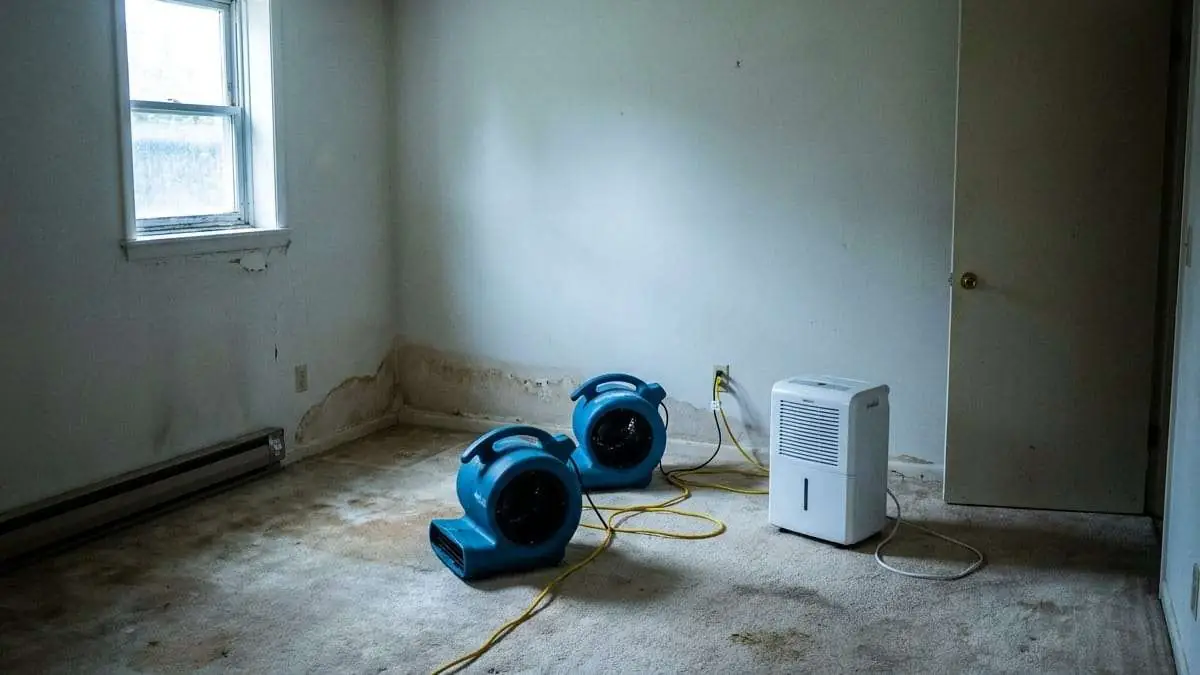
Dry, then keep drying. Air movers to move water from the material into the air, dehumidifiers to take it out of the air rather than moving it to the next room. This runs for days, not hours.
Why “it feels dry” is the trap
Put your hand on carpet three days after a leak and it will very often feel dry. The surface fibers give up moisture first and they are the only part you can touch. Underneath, the padding and the top layer of the subfloor can still be holding a great deal of water, and they are the parts that are enclosed, warm and dark.
That is where the classic sequence comes from: a leak that seemed handled, a room that seemed fine, and then a smell three weeks later that will not go away. The smell is not the problem arriving; it is the problem announcing that it has been there since the beginning.
Drying stops when the materials read dry. That sometimes means leaving equipment running for another day when the room already looks finished, which is an awkward conversation and the right answer.
When we will tell you to stop spending money
Not every wet floor should be saved, and it is worth being direct about it. Water that has come up through a foundation or backed up from a sewer line carries contamination that cleaning does not resolve, and the responsible answer is removal and replacement rather than a drying bill followed by a replacement bill.
Carpet that has been standing wet for a week is usually in the same category. We will tell you at the door. It is a shorter conversation than the alternative, and it is the same reason we tell people which stains will not come out, the value of being told the truth about a floor is that you can believe the rest of what we say about it.