The tile is fine, it is the joint that is failing
Glazed ceramic and porcelain are effectively non-porous. Nothing sticks to them for long and a damp cloth takes almost anything off. Which raises the obvious question: if the tile cleans that easily, why does the floor look dirty?
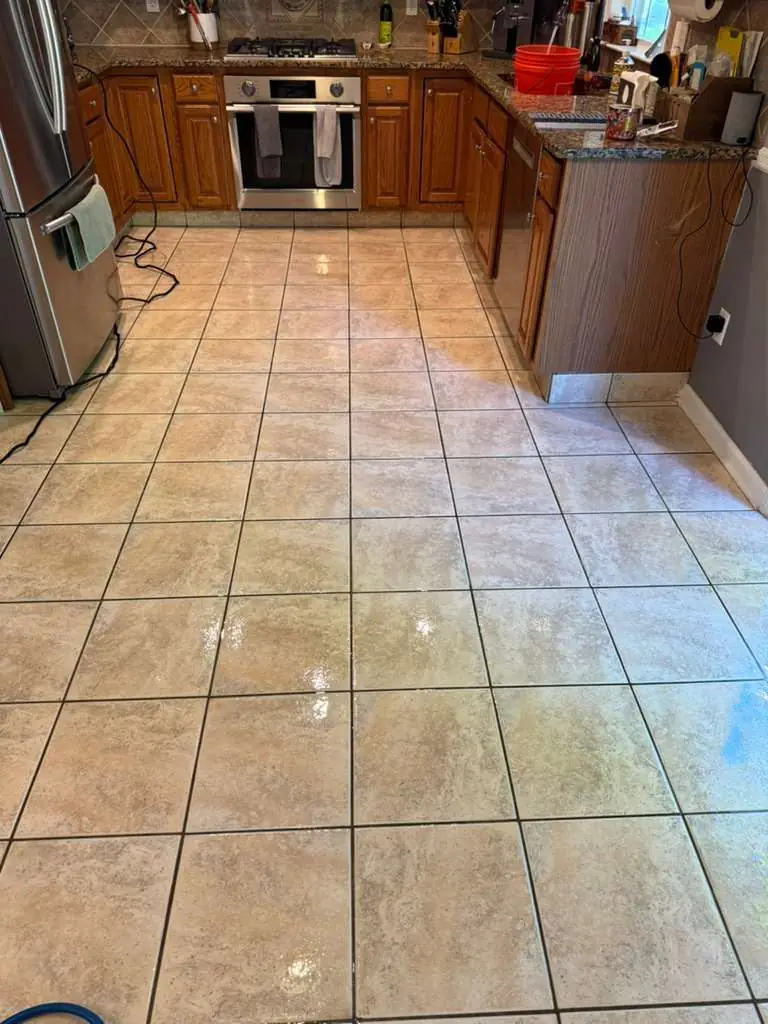
Because you are not looking at the tile. You are looking at the three or four millimetres of grout between every piece, and cement-based grout is a sponge with a rough surface, set slightly below the tile so that everything drains into it. Coffee, cooking grease, mud off boots, and above all the water off your own mop.
That last one is the part people find hardest to accept. Mopping is not neutral here. The mop lifts soil off the tile, suspends it in the bucket water, and then redistributes that water across the floor, where it settles into the lowest point, the joint. Do that weekly for five years and you have deliberately, if unknowingly, filled every grout line with a concentrated version of everything that has been on the floor.
What the clean actually does
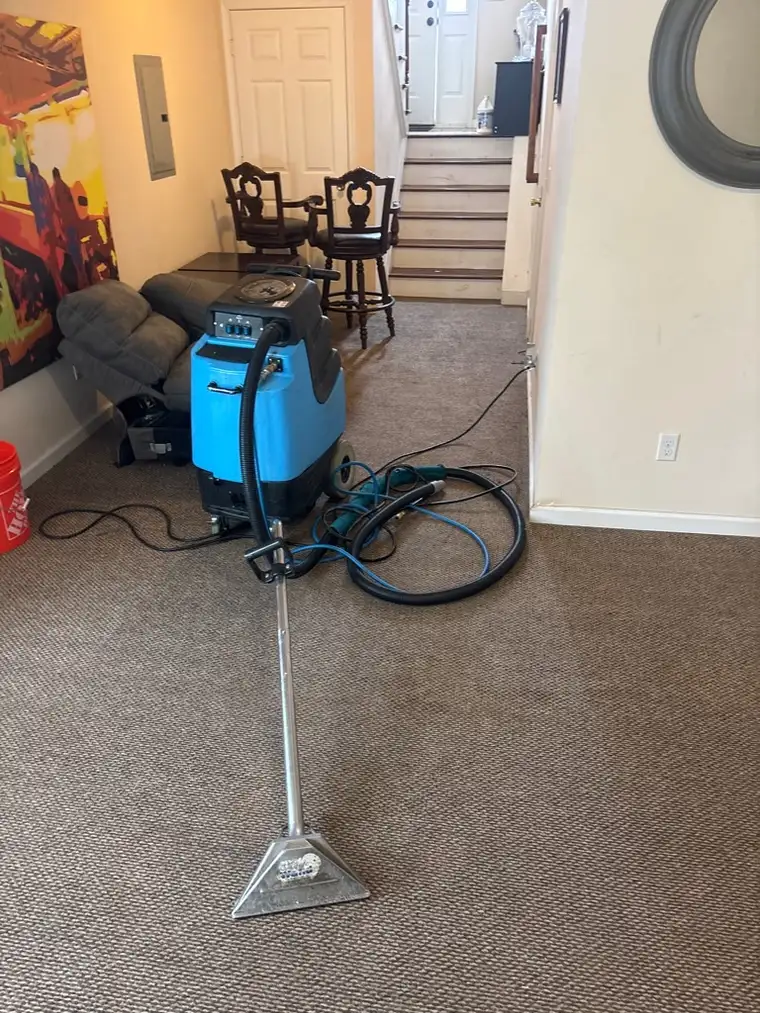
Heat and pressure into the joint to break the bond between the soil and the cement, then immediate extraction so the released soil is captured rather than running into the next joint along. That second half is the part a scrubbing brush and a bucket cannot do, brushing lifts the dirt out of the pores and then the rinse water carries it two tiles over and drops it again.
Corners, edges and the line where the tile meets a cabinet kick-plate get done by hand, because that is where the machine head cannot sit flat and it is also where the darkest grout in the room usually is.
Soiled versus stained
Worth understanding before you decide whether this is worth doing:
Soiled grout is clean cement with dirt in its pores. It comes back, often dramatically, and the result surprises people who had stopped noticing how dark the floor had become.
Stained grout is cement whose color has been changed, rust from a metal table leg, red wine that sat overnight, dye from a cheap mat that got wet. The pigment is in the material now. Cleaning removes everything around it and the stain stays.
Most floors are mostly the first with a few patches of the second. We will point out the patches so you are not surprised by them afterwards.
The bathroom is its own conversation
Bathroom grout goes dark for a different reason: soap scum, body oil and mold in a room that stays humid. It cleans well, but there is a distinction worth knowing. Surface mold on grout comes off. Discoloration that keeps coming back in the same spot, particularly low on a shower wall or along the base of a tub, can mean water is getting behind the tile. That is a repair, and cleaning it every few months is money spent on a symptom.
If we see it, we will tell you. It is a shorter conversation than the alternative.