Grout is cement. It is porous, it sits below the face of the tile, and it is the lowest point on the floor. Everything that lands on that floor drains into it. That is the whole reason a kitchen can be mopped every week for years and still look dirty.
The tile is fine. The joint is not.
Glazed ceramic and porcelain are effectively non porous. Very little sticks to them, and a damp cloth takes off what does. So when a tiled floor looks tired, you are not looking at the tile. You are looking at the narrow line of cement between every piece.
Cement based grout has a rough, open surface and it is set slightly lower than the tile around it. Coffee, cooking grease, mud off boots and the water off your own mop all end up in the same channel, because that channel is where everything drains.
Weekly mopping is part of how it got dark
This is the part people find hardest to accept. A mop lifts soil off the tile, holds it in the bucket water, then spreads that water back across the floor. The tile dries clean. The water that ran into the joint dries there and leaves the soil behind.
Do that once a week for five years and every grout line in the room holds a concentrated version of everything that has been on the floor. It happens slowly enough that most people stop seeing it, which is why a grout clean surprises them more than a carpet clean does.
What a professional grout clean does
Three things happen, in that order, and the order matters more than the products do.
- Heated cleaning solution goes into the joint under pressure. Pressure is what carries it down into the pores instead of leaving it sitting on top of them.
- The solution breaks the bond between the soil and the cement. That needs dwell time, so a floor gets worked in sections rather than sprayed wall to wall at once.
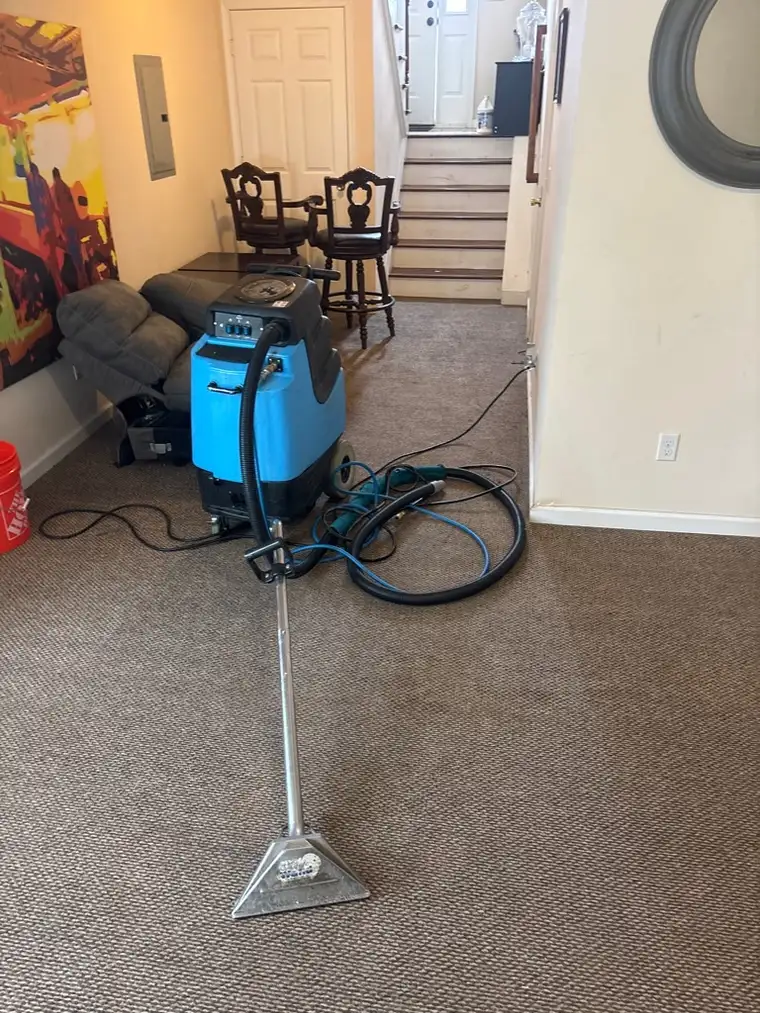
- The loosened soil is extracted in the same pass, into the machine and out to the van. It never gets the chance to travel.
That third step is the one a brush and a bucket cannot do. Scrubbing genuinely does lift dirt out of the pores. Then the rinse water carries it two tiles over and drops it into a joint you already cleaned. The floor looks better for an afternoon and the soil never left the room.
Corners, edges and the line where the tile meets a cabinet kick plate get done by hand. A machine head cannot sit flat in those places, and that strip is usually the darkest grout in the room.
Soiled grout comes back. Stained grout stays.
Worth understanding before you decide whether the job is worth booking. Two floors that look the same from standing height can behave completely differently once the solution goes down.
| Soiled grout | Stained grout | |
|---|---|---|
| What is in the joint | Dirt sitting in the pores of cement that is otherwise unchanged | Pigment that has altered the color of the cement itself |
| Where it comes from | Mop water, cooking grease, foot traffic, dust | Rust off a metal table leg, red wine left overnight, dye out of a cheap mat that got wet |
| What cleaning does | Flushes the pores and takes the soil out with the water | Removes everything around the stain and leaves the stain sitting there |
| What you get | It comes back a long way, often further than people expect | It stays, and no cleaning process changes that |
Most floors are mostly the first with a few patches of the second. We point out the patches at the door, before anything is booked. That is a better conversation to have before the work than after it.
The shower is its own problem
Bathroom grout goes dark for different reasons than a kitchen floor does. Soap scum, body oil and mold in a room that stays humid do not behave like ground in traffic soil, so they take different products and more dwell time.
Most of it cleans well, and surface mold on grout comes off. There is one pattern worth knowing about. Discoloration that keeps returning in the same spot, particularly low on a shower wall or along the base of a tub, can mean water is getting behind the tile. That is a repair, not a cleaning job.
Renting a machine, and the question to ask first
Rental counters do carry hard surface equipment, and on a small bathroom floor a rental can be reasonable. One question decides whether it will help you: does the tool extract at the same moment it sprays?
If it does not, you are running a brush and a rinse. The rinse water has to go somewhere, and on a tiled floor it goes into the next joint along. You will also be doing the corners and the cabinet edges by hand either way, and on most kitchens that is where the worst of it is.
Check what the floor is made of before you put anything on it. Natural stone needs different chemistry from ceramic and porcelain, and the wrong product on stone can damage the surface in a way that does not clean off. If you are not sure what you have, that is worth a phone call before it is worth a rental fee.
Sealing, the honest version
Sealer fills the pores so grout takes longer to soil again. That is all it does. It is not permanent, it does nothing for grout that is already dark, and sealing dirty grout locks the dirt in where it is.
So it is a question for after the clean rather than before it. If the grout came back well and the floor is one that gets mopped often, ask about it then.
How long the floor is out of use
Tile dries quickly, because almost nothing goes into the tile itself and the joints are extracted rather than left wet. You are usually back on the floor the same day. The longer part of the visit is the hand work at the edges, not the drying.
If a floor has carpet running off it, or a runner laid over the tile, the carpet is the slower half. Most carpet is walkable in about two hours and dry the same day. There is more on that in our note on how long carpet takes to dry.
When to call us
Call when the grout has gone a shade that mopping no longer touches, when a bathroom needs more than a surface wipe, or when you want to know which of your dark lines are soil and which are stain before you spend anything. Send a photo if that is easier and we will tell you honestly what we think it is.
We work in houses and apartments across eight North Jersey counties, including Union County and Essex County. There is no shop and nothing gets taken away, the van comes to the house. You get a written estimate before any work starts, the products are non toxic and biodegradable and safe around family and pets, and the business is veteran and Latino owned. Booking is by appointment, 24 hours a day.