Three things get sold as mattress cleaning: a HEPA vacuum, a UV light, and steam. They are not three versions of one job. Each reaches a different depth, only one of them takes material out of the room, and one of them can leave a bed worse than it started.
Start with the one thing a mattress cannot do
A mattress is a sealed block of foam or springs inside a quilted cover, and air does not move through the middle of it. Carpet dries because air passes around every fiber and a fan speeds that up. A mattress has no equivalent. You cannot open it, you cannot get air to the core, and you cannot check whether the middle is still damp.
Moisture that gets past the quilted layer stays where it landed. So the test for any method is short: does it take soil out, and does it leave the interior dry.
HEPA vacuuming: the only step that removes material without adding any
A vacuum pass with a sealed HEPA path lifts the loose layer: shed skin, dust, grit, pet hair, and the dried allergen sitting on and just under the ticking. Nothing goes in, and what comes off leaves the bedroom inside the machine.
Where it earns its keep is the edges. Seams, piping and the shaded side of a button tuft hold far more than the flat faces do, because anything that falls into a crease stays in the crease. We work the tool along every seam, into the piping, around each tuft and down both sides, then do the other face where the mattress is turnable.
The filter is not a detail. A vacuum without a sealed path pushes a share of the fine material back into the air of the room you sleep in, which works against the reason you are vacuuming the bed.
What vacuuming will not do is anything about a bond. Suction moves what is already loose. It does not touch sweat that dried in the quilting, body oil, the yellowing on an older mattress, urine, or a spilled drink. That is why the vacuum pass is our first stage and not the whole clean.
UV light: what it reaches, and what it leaves behind
We do not use UV, so we will not publish kill figures for it. Those numbers move with lamp output, distance and dwell time. What can be said plainly is what the light reaches.
UV works by line of sight. Whatever it does not strike directly is unaffected. On a mattress that means the outer face of the ticking, and only the part under the lamp for as long as the lamp is over it. Everything on this list stays in shadow.
- Inside the seams and under the piping, where most of the loose material collects
- The shaded side of a button tuft
- The quilted layer beneath the ticking, where sweat and body oil sit
- The foam or spring core, and the underside until the mattress is turned
The second limit matters more. Light removes nothing. Whatever was in the mattress before the lamp went over it is still there afterward, and dust mite allergen is a residue rather than a living thing. If somebody wakes up congested, the material has to come out. That makes UV a surface treatment sitting on top of a clean rather than a replacement for one, and it is not something we sell.
Steam: the word covers two different jobs
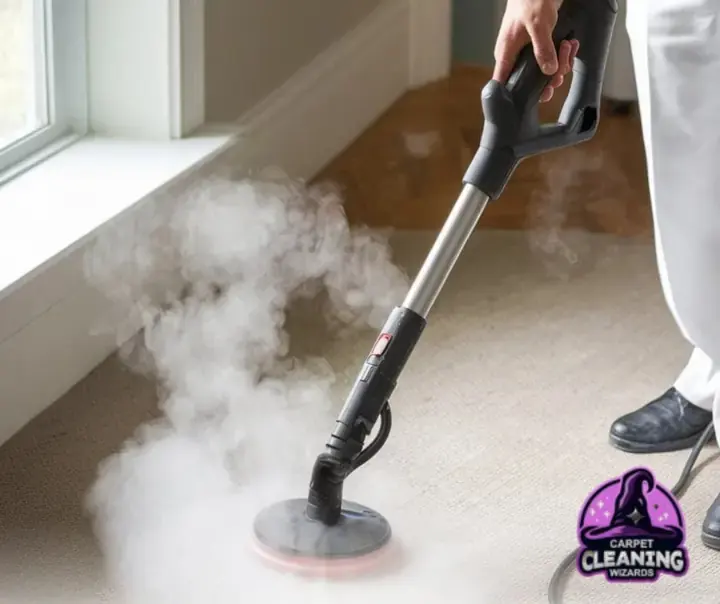
A handheld steamer applies hot moisture and has no way to take it back. On a hard floor that is fine, because the moisture sits on top and evaporates in minutes. On a mattress the steam passes through the ticking into the quilted layer and goes where it wants. The soil is loosened and left in place, slightly deeper than it was, and the bed feels dry to the hand within the hour while the inside is not.
Hot water extraction is a different machine doing a different thing. Solution goes down and the same head pulls it straight back out under vacuum with the soil it just released, both actions on one pass, inches apart. That is the method we use, kept deliberately low moisture on a bed.
So whether steam cleaning a mattress is a good idea depends on whether there is recovery attached. With extraction it is the only stage that takes bonded soil out. Without it you are adding water to a thing that cannot dry.
The methods side by side
| Method | How deep it reaches | Removes anything | Where it falls short |
|---|---|---|---|
| HEPA vacuum | Surface, the loose layer under it, seams and piping | Yes, into the machine | Nothing bonded to the fiber |
| UV light | Only surface the light strikes directly | No | Seams, tufts, quilting and core are never in the light |
| Steam with no recovery | Ticking and quilted layer | No, and it adds moisture | The interior cannot dry and the soil ends up deeper |
| Low moisture extraction | Ticking and quilted layer, moisture pulled back out | Yes, loose and bonded | Does not sterilize or reverse a changed fabric |
What we do when we strip a bed
- A HEPA pass over both faces and every seam. It goes first so that nothing loose is still sitting there when the solution goes down.
- Targeted treatment. Sweat yellowing, spills, urine and body oil each get the right product and time to work. Odor is treated at the source, because a masked mattress smells like a mattress again in a couple of weeks.
- Low moisture extraction. Solution down, straight back out under vacuum on the same pass. The quilted layer gets cleaned and the core stays dry.
Then we check the drying edge and say whether the bed is ready for tonight. It normally is. You get a written estimate before the work starts.
Doing it yourself versus booking a visit
Vacuum with a sealed HEPA machine every time you strip the bed. It takes two minutes while the sheets are off anyway. Wash bedding hot and weekly. Use a zipped barrier cover, which costs less than a clean. Throw the duvet back for half an hour before you make the bed, so overnight moisture leaves instead of being trapped.
What we would not do at home is put liquid on a mattress. A spray bottle, a bowl of solution or a handheld steamer all end the same way, with moisture in a layer you cannot reach and cannot dry. Scrubbing a fresh mark is the other one, because it pushes the spill sideways and down and often changes the fiber. Blot rather than rub.
The part that needs the truck is extraction with recovery and the treatments that go with it. That is the whole difference between a professional clean and a thorough vacuum.
What none of the three methods do
- None of them sterilize a mattress. Nothing you can safely do to a bed you sleep on that night kills everything in it.
- None of them cure an allergy. Cleaning removes the reservoir where the exposure concentrates, which is the part you can act on.
- None of them keep dust mites away for good. Removing the food supply sets the population back, which is why once a year suits most homes.
- None of them reverse a stain that has changed the fabric, especially an old mark that was scrubbed when it was fresh.
Send a photo before you book and we will tell you which of those you are looking at.
When to call us
If the bed needs more than a vacuum, that is our mattress cleaning service. We clean it in place, on the bed, with non toxic products. There is no storefront and nothing to take away, so the van comes to the house, anywhere across the eight North Jersey counties we cover, including Bergen County and Essex County. Booking is by appointment, 24 hours a day, on (908) 545-9387.