The one soft surface nobody washes
Run through a bedroom. The sheets go in the machine weekly. The duvet cover goes in with them. Curtains get done occasionally, the carpet gets cleaned once a year or so, and the pillows get replaced eventually.
The mattress gets turned, if that.
It is also the surface with the longest and closest contact with a person in the entire house, seven or eight hours a night, skin against it through a thin sheet, face inches from the surface.
What is in there
Skin. An adult sheds continuously, and a meaningful proportion of that ends up in the bed. It passes through a sheet without difficulty.
Sweat. Everybody loses moisture overnight, more in summer, more with a heavy duvet. Some evaporates and some goes into the mattress, which is where the yellowing on an old mattress comes from.
Dust mites. Microscopic, present in essentially every home, and not harmful in themselves. What causes symptoms is the allergen in their waste, which is light enough to become airborne when the bed is disturbed. They eat skin and they need humidity, which is why a bed is close to an ideal habitat.
Whatever else has happened. Spills, a sick child, a pet who sleeps up there, a nosebleed. All of it goes further in than the mark suggests.
The symptom pattern worth noticing
Allergy symptoms that are at their worst on waking and ease through the morning point at the bedroom rather than at the season. Pollen does the opposite, worse outdoors, worse during the day, better at night with the windows shut.
If somebody in the house wakes congested, sneezing or with itchy eyes and then improves by mid-morning, the bedroom is worth ruling out. Cleaning a mattress does not cure an allergy. Removing the reservoir where the exposure concentrates is simply the part you can actually act on, alongside hot-washing bedding and using a barrier cover.
What a clean does
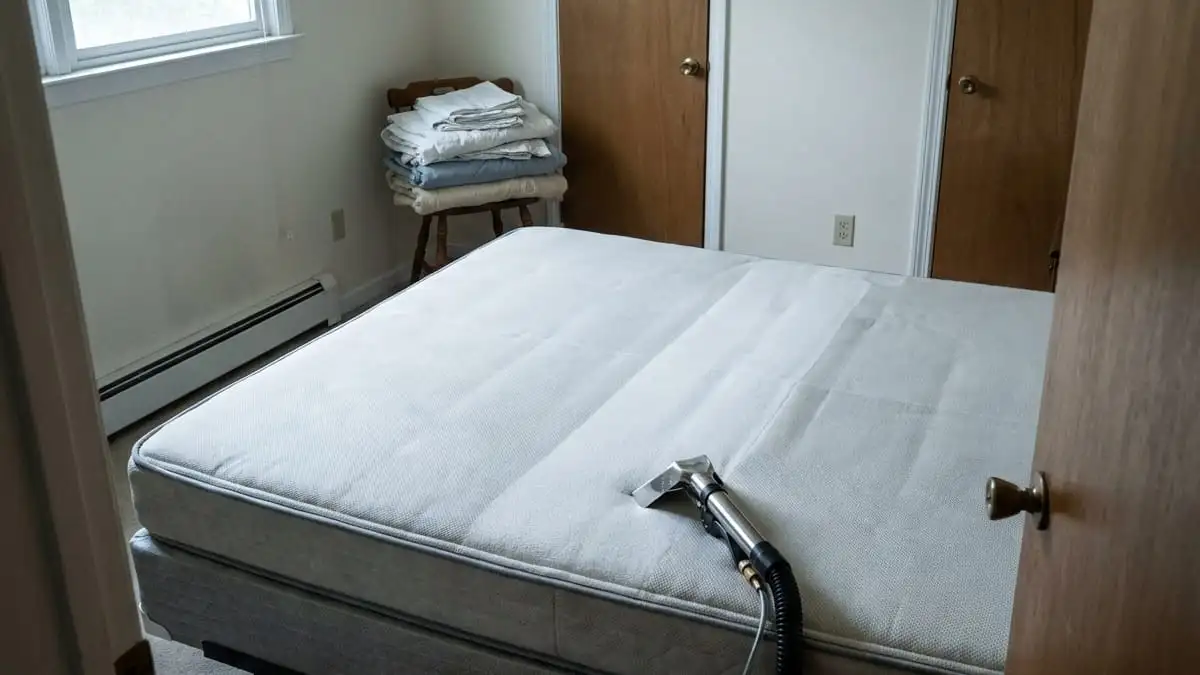
Lifts what is loose. A HEPA-filtered pass over the whole surface, into the piping and along the seams, the seams collect far more than the flat faces, because everything that falls into a crease stays there.
Treats what is stuck. Sweat yellowing, spills and accidents each get their own treatment and time to work. Odor gets handled at the source, because a mattress that smells masked smells like a mattress again in a fortnight.
Extracts. Enough moisture to release the soil, taken straight back out. Nothing gets driven deeper, and nothing is left wet.
What a clean does not do
It does not sterilise. Nothing you can safely do to a bed you are going to sleep on that night eliminates every organism in it, and any process that claimed to would be one you should ask hard questions about.
It does not eliminate dust mites permanently. It removes the food supply and most of the population near the surface. They come back, more slowly, which is why once a year suits most households.
It does not remove every stain. Old, deep, set marks, particularly ones that were scrubbed at when fresh, have often changed the fabric rather than sitting on it. We will tell you what to expect from a photograph before you book.
It is not a substitute for washing the bedding. The mattress and the bedding are one system and cleaning half of it is half a job.
Why the method has to be low-moisture
Carpet dries because air moves through and around it. A mattress cannot: it is a sealed block of foam or springs inside a quilted cover, and there is no way to get air to the middle of it.
Water that gets past the surface layer stays there, and a mattress that is damp internally is a considerably worse problem than the one you were trying to solve. So the process is deliberately restrained, surface and near-surface soil comes out, the interior never gets wet, and the bed is normally usable the same night.
Anybody proposing to soak a mattress has not thought about how it would dry.
What to do between cleans
Wash bedding hot and often. Weekly, at the highest temperature the fabric allows. This is the highest-value habit in the room.
Use a washable barrier cover. A zipped, tightly woven encasement stops skin reaching the mattress and stops allergen coming back out. It is the single most effective thing available and it costs less than a clean.
Let the bed air. Throwing the duvet back for half an hour in the morning before making the bed lets overnight moisture escape rather than trapping it. Making a bed immediately on rising traps humidity in exactly the place mites want it.
Keep the room cooler and drier. Mites need humidity. A bedroom that runs dry is a worse habitat.
Vacuum the mattress when you strip it. Not a replacement for a proper clean, but it takes the loose layer off and takes two minutes while the sheets are off anyway.
When to book one
Once a year suits most households. More often where there are allergies, pets on the bed, or young children.
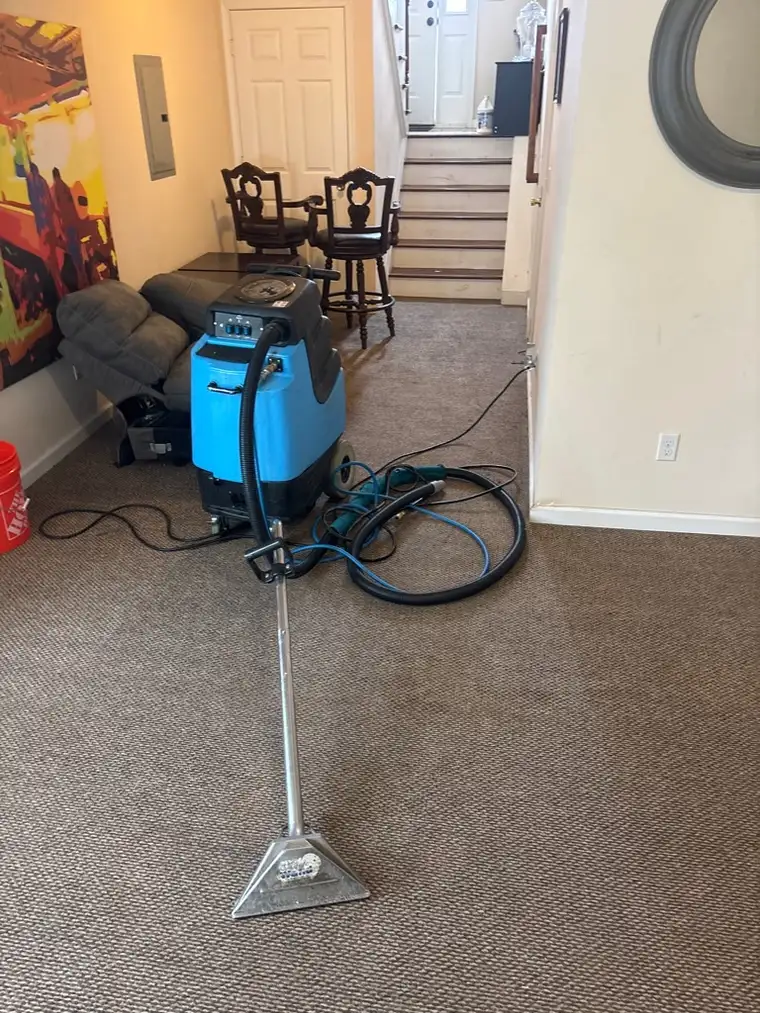
It sits naturally alongside a carpet clean in the same visit, since we are already in the bedroom with the equipment, and doing the floor while the bed is stripped is the efficient order. If a child’s mattress is on the list, mention it when booking, it does not change the products, which are non-toxic and biodegradable either way, but it usually changes the order we work in so the room that has to be ready by bedtime is done first.