Most of what people ask before booking is about the visit rather than the cleaning. How much water goes into the floor, whether the furniture has to move, whether anyone has to leave the house. The answers come easiest in the order the work happens.
It starts with a photo of the worst patch
Before we book anything, send a photograph of the area you are most worried about. A hallway lane, the third step from the bottom, the patch by the dog bed. It is the fastest way to get a straight answer about what will lift and what will not.
Ground in traffic soil comes out, because extraction reaches the base of the pile where it lives. Bleach spots, sun fade along a south facing window and old pet urine that has changed the color of the fiber do not, because there is no dye left in the filament to recover. We would rather tell you that on the phone than at the door.
A written estimate before anything gets wet
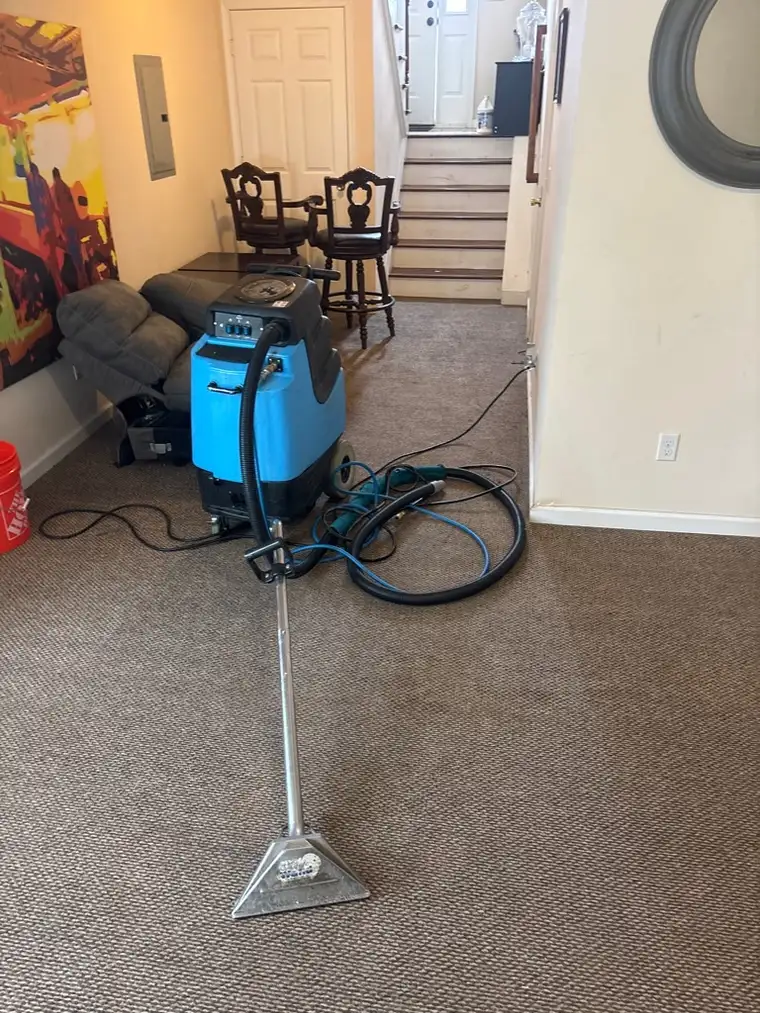
There is no shop and no drop off point. The van comes to the house, and the first few minutes go on walking the rooms with you rather than unrolling hose. We look at the fiber, the number of stairs, where the stains sit, whether a rug needs a dye test before it can be wet cleaned, and which furniture two people can safely move.
Then you get the estimate in writing, and the work starts after you have it. Three things you tell us at that point change the plan: pets in the house, any stain you know is stubborn, and whether a room has to be usable again by a set time that day.
The dry vacuum pass comes first
Nothing gets wet until the floor has been vacuumed properly. Dry soil is grit, sand, hair and dust sitting loose in the pile, the easiest material in the room to remove while it is still dry. Add water to it first and it turns to mud that has to be pulled back out again.
A vacuum only takes the top layer. It cannot reach the film of street dirt and skin down where the fibers meet the backing, and that lower layer is what makes a hallway a shade darker than the rooms beside it. The carpet there is not worn out. It is loaded. Vacuuming first means the hot water gets spent on that layer instead of the easy one.
Pre treatment, and the minutes it has to sit
Traffic lanes and spots get a pre treatment sprayed on, and then they get left alone. The product has to sit on bonded soil long enough to break it loose before anything rinses it away. That waiting period is the part a home attempt skips, and it moves the result more than the strength of the product does.
We do not scrub. Carpet fiber is twisted, and that twist is what makes a pile stand up and catch light evenly. Grinding a brush into a wet spot frays the filaments in one small area, and fuzzed fiber keeps looking different from the carpet around it long after the spill is gone. The product does the work while we set up, and the extraction takes it away.
The wand pass
The machine does two things in one movement. It pushes heated cleaning solution into the pile under pressure, and about half a second later it pulls that same solution back out through the head, carrying the soil it just released. That is hot water extraction, and it is the method carpet manufacturers commonly specify in their warranty terms.
The half second is the point of the method. Water that goes in and does not come straight back out leaves the carpet damp for days and leaves detergent sitting in the pile, and detergent stays tacky and pulls in new soil. That is where the idea that cleaning makes carpet dirty faster comes from. It is residue, not the method.
Passes overlap, and we work backward toward the door so nobody has to walk across a section that has just been cleaned. The products are non toxic and biodegradable and safe around family and pets, and the house does not need airing out afterwards.
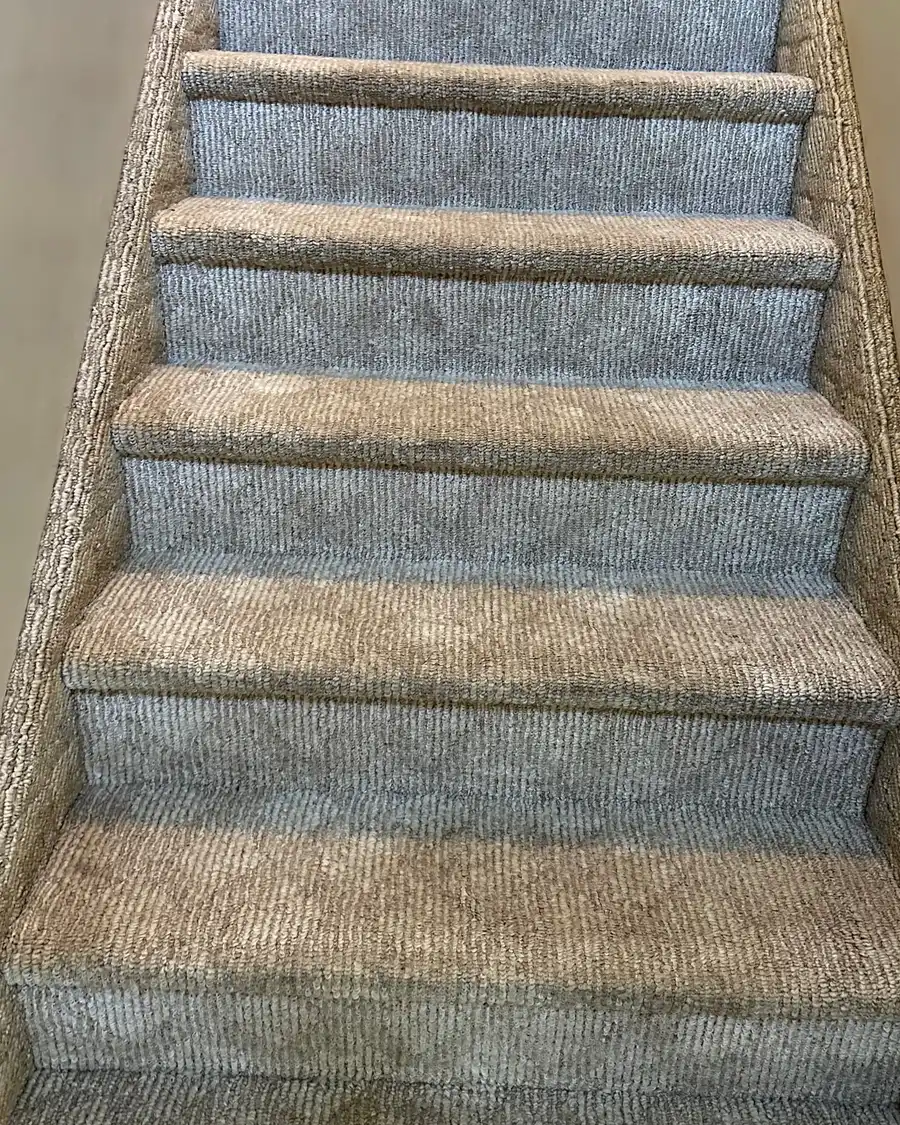
Stairs and edges are done by hand
No machine head sits flat on a stair tread. A staircase has to be cleaned with a hand tool, by somebody kneeling on every step, and it is normally the slowest part of the visit.
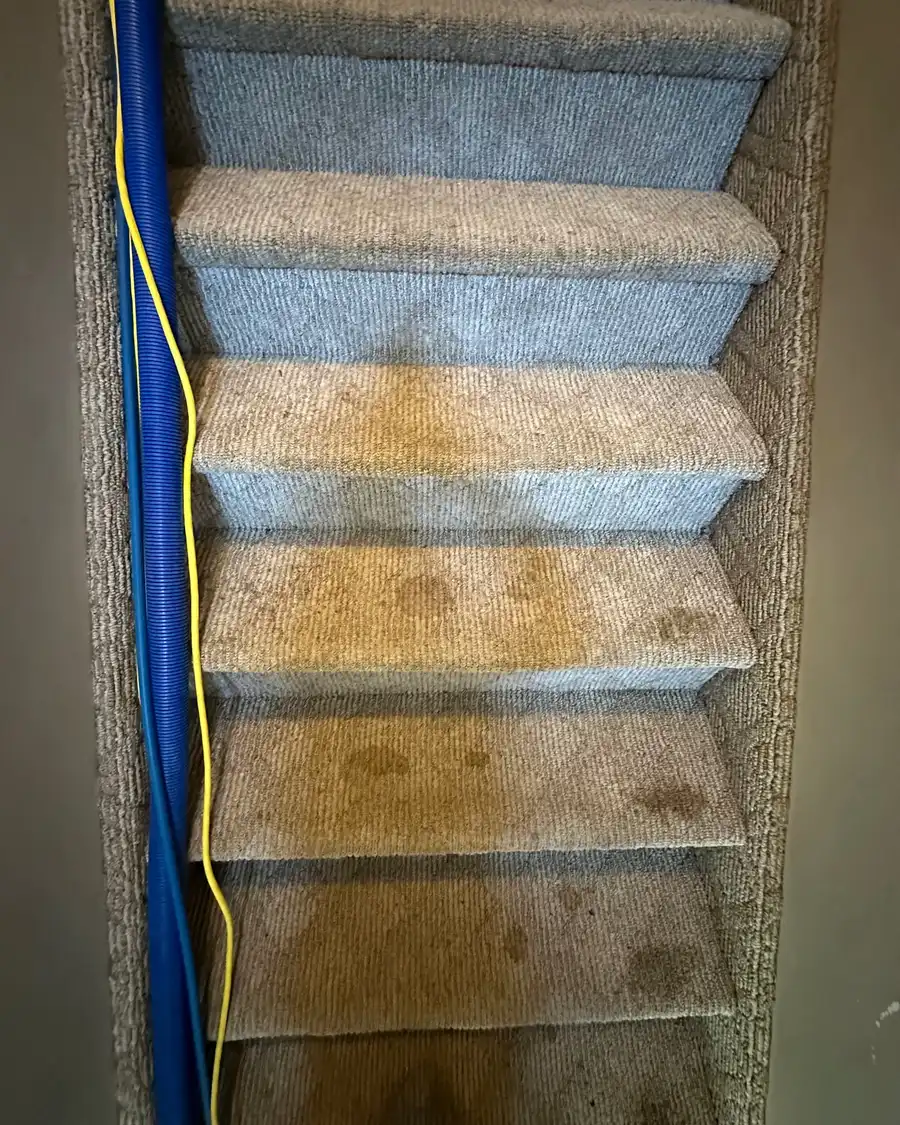
There are three faces on every step and each one takes soil differently.
- The tread, the part you walk on, which collects ground in traffic soil the same way a hallway does.
- The riser, the vertical face your toe hits, which collects scuffs and marks rather than soil.
- The carpeted stringer at each side, which collects whatever the vacuum has been throwing at it for years.
We start at the bottom step and work up. Water runs downhill, so anything that comes off a step lands on one still waiting to be cleaned rather than one already finished. Room edges get the same hand work, since the machine head cannot reach into a corner or sit tight against a baseboard.
Air movers when a room has to be back in use
Most carpet is walkable within about two hours and dry the same day. Thick pile, cold weather and a closed up room all slow that down, and we tell you before we pack which rooms to stay off and for how long.
When a room has to be back in service faster, say so when you book and we bring air movers. Rental turnovers and a room that has people in it that evening are the reasons we hear most. Fabric upholstery runs on a different clock, four to eight hours, and leather is quicker because the cleaning never soaks in. There is more on drying at How long carpet really takes to dry after a professional clean.
Before and after, shown at the door
The last step is walking the rooms with you again before the van is packed. If a spot came up short, you hear it then, standing over it, rather than reading it later. Usually it is the same spot we flagged from your photo, which is the reason for asking.
The visit in order
- You send a photo of the worst patch and we tell you what will lift and what will not.
- The van comes to the house and we walk the rooms with you.
- You get a written estimate, and the work starts after that.
- Furniture that two people can safely lift gets moved, and goes back afterwards.
- The carpet gets vacuumed dry.
- Traffic lanes and spots get pre treated and left to sit.
- The wand pass puts heated solution in and pulls it back out, working toward the door.
- Stairs and edges get cleaned by hand, bottom step upward.
- Air movers go down in any room that has to be usable quickly.
- We walk the rooms with you again before packing up.
When to call us
Call when the hallway has gone a shade darker than the rooms on either side of it, when the stairs look grey from the landing, when a pet accident keeps coming back, or when a lease is ending and the floor has to pass an inspection. Most homes we clean are on a six to twelve month cycle, and a house with a dog and children in it sits at the short end.
The full method, what it covers and what it does not, is on Carpet cleaning. We work across eight North Jersey counties, including Essex County and Bergen County, in houses and apartments, and we book by appointment at any hour. Clearing the light things off the floor before we arrive saves time, and the short list is at What to move before the cleaner arrives: a ten-minute list.