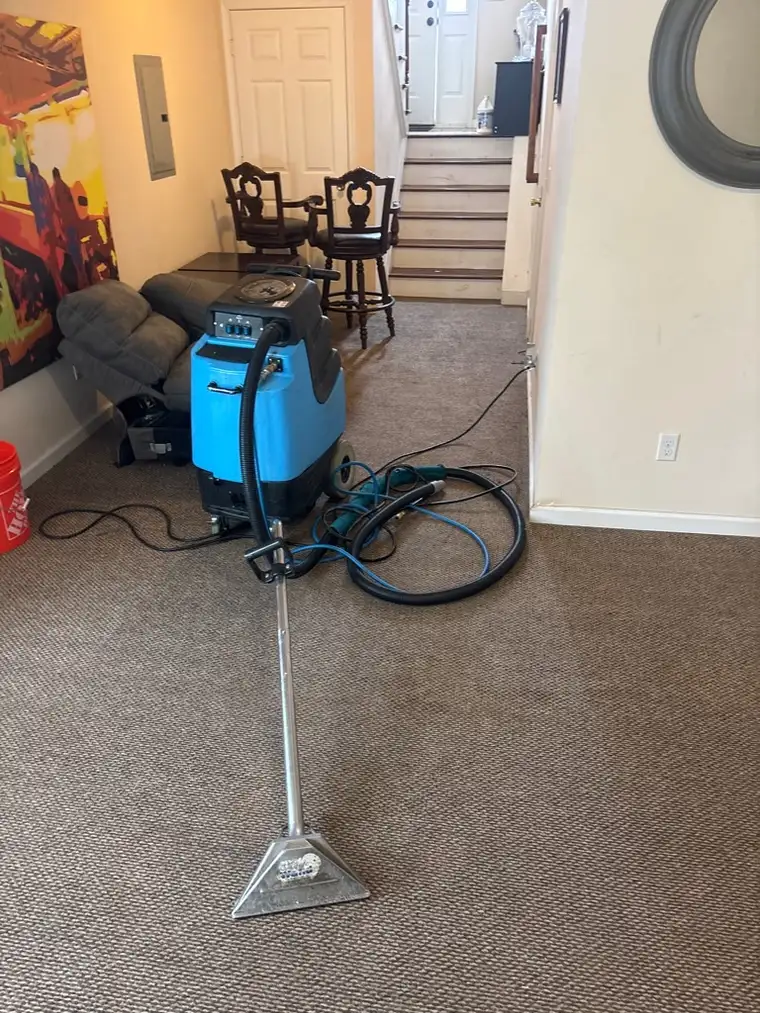
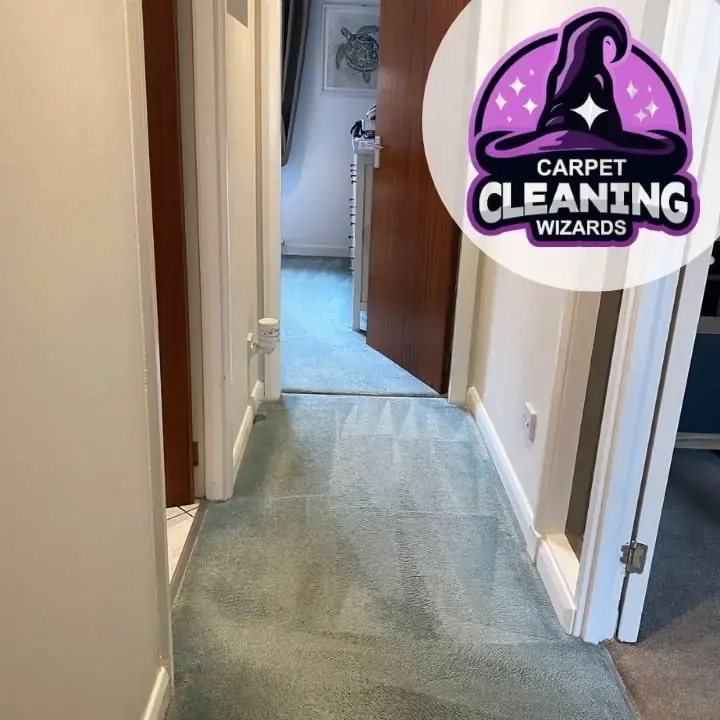
People ask the same question two ways at the door. Will it come out, and have you seen worse. The answer depends on which of three things is on the floor.
Soil, stain, or fiber damage
Every mark falls into one of three groups, and the group decides the outcome more than the product does.
Soil is loose material sitting in the pile. Traffic lanes, mud from a driveway, the grey strip between the front door and the kitchen. None of it has bonded. Hot water extraction drives heated solution to the base of the pile and pulls it back out with the grit, so soil comes out. Most stain calls are really this. The hallway is not worn, it is loaded.
A stain is pigment bonded to the fiber. Coffee, red wine, ink, food dye. The color sits in the filament rather than floating in the pile, so it has to be broken loose chemically before it can be extracted. That takes the right pre treatment and enough dwell time, the minutes a product sits and works before anything gets rinsed. Some stains go completely, some end nearly invisible, and age matters more than size.
Fiber damage is not a stain. Bleach, drain cleaner, acne cream with benzoyl peroxide, years of sun through a south facing window and old pet urine all strip or alter the dye in the fiber. There is no color left to lift, so cleaning only makes the carpet around the spot cleaner and the damage more obvious. Patching, dyeing or living with it are the options.
Blot, do not scrub
The most expensive mistake happens in the first minute, and it is almost always scrubbing.
Carpet fiber is twisted, and that twist is what makes a pile stand up and reflect light evenly. Grinding a cloth or a brush into a wet spot frays thousands of filaments in one small area, and fuzzed fiber scatters light differently from the carpet around it. We have cleaned spots where the spill came out and the mark stayed, because what was left was roughed up fiber rather than color.
Scrubbing also drives liquid sideways and down. The wet area ends up wider than the spill was, and the part pushed into the padding is the part that comes back later.
- Lift solids with a spoon or a dull knife, working from the outside in.
- Press a thick white towel straight down and stand on it. Fold to a dry section and repeat until it stops taking color.
- Rinse with a little cold water and blot again. Cold, not hot, for anything with protein or dye in it.
- Work from the edge inward so you are not walking the ring outward.
- Point a fan at the spot for a few hours, because drying it fast stops the mark spreading.
Use white towels only. A patterned kitchen towel can release its own dye into wet carpet.
The first ten minutes, spill by spill
This is close to what we say on the phone. The outcome column is what usually happens, not a promise, since how long a spill sat changes the answer.
| Spill | First ten minutes | Honest outcome |
|---|---|---|
| Coffee or tea | Blot, rinse with cold water, blot again until the towel comes up clean. | Usually comes out. Tannin dried in for days can leave a faint yellow cast. |
| Red wine | Blot hard and fast, rinse cold, keep blotting. Skip the salt and the white wine. | Fresh wine on synthetic usually comes out. Dried into wool or a pale plush, often nearly invisible rather than gone. |
| Grease, butter or cooking oil | Blot the surface and do not add water, which pushes oil deeper. | Comes out with a solvent pre treatment before extraction. Old oil on olefin is the stubborn version. |
| Mud | Let it dry completely, break it up, vacuum. Wet mud spreads. | Comes out. Mud is soil rather than stain, the easiest thing here. |
| Blood | Cold water only, blot repeatedly. Heat cooks protein into the fiber. | Fresh and cold, usually comes out. Anything already hit with hot water is much harder. |
| Ballpoint ink | Blot straight down, do not spread it, then leave it for the visit. | Mixed. Some inks release, some are dye based and act like permanent color. Alcohol and hairspray at home spread it wider. |
| Makeup, foundation or lipstick | Lift the solids off with the edge of a card, then blot. | Usually improves. Waxes and oils release with a solvent step, but strong pigment in a pale carpet can leave a shadow. |
Why dwell time changes the answer
The difference between a home attempt and a professional result on a real stain is rarely a stronger chemical. It is dwell time and rinsing.
A pre treatment has to sit on bonded pigment long enough to break it loose. Spray it, scrub it and blot it inside thirty seconds and it never got the minutes it needed. We put the product on, leave it while we work another room, then come back and extract.
Rinsing is the other half. Whatever goes into a carpet has to come back out, because detergent left behind stays tacky and pulls in soil. That is why a spot treated at home can darken again a month later, showing new dirt stuck to leftover product.
Rugs do not behave like carpet
Same spill, different rules. Wall to wall synthetic carpet takes a lot of water. A hand knotted wool rug, a viscose rug or an older oriental does not. The dyes in a deep red or an indigo next to a cream ground move once they are wet, so blotting a wine spill can pull the rug's own color into the pale ground.
On a rug, blot with a dry white towel and stop there. We identify the fiber and test the dyes in a hidden corner before any wet cleaning. More on wool at Why wool and oriental rugs are not cleaned like carpet and the method at Area and oriental rug cleaning.
When the smell is the real stain
Some marks are a surface problem with an odor attached. Pet urine is the other kind, an odor problem with a small mark on top, and treating it as a stain is why it keeps coming back. Different job, different method, written up on its own at Pet odor in carpet: what removes it, what only masks it.
Do not put anything containing ammonia on a cat accident. Cats read ammonia as urine and go back to the same spot.
Send a photo of the worst patch
Before we book a stain job we ask for one photo of the worst area in daylight, from standing height and again from close up.
- It tells us which of the three categories we are looking at, which decides whether the answer is yes, probably or no.
- It shows the fiber and pile height, which change the method and the amount of water.
- It shows whether the mark has an outline. A hard edge means a spill. Soft grey shading means traffic soil, which is good news.
- It lets us say no before you take time off work.
We would rather tell you at the photo stage that a bleach spot is not coming back than explain it in your hallway.
When to call us
If the spill is still wet, blot it now and call after. If it is old and you already tried something on it, tell us what you used, because that changes what we can safely use next.
We come to the house and there is no storefront. You get a written estimate before any work starts, and carpet is normally walkable in about two hours. We book by appointment 24 hours a day at (908) 545-9387.
The full method is on Carpet cleaning. We are veteran and Latino owned, 5.0 from 340 Google reviews, and we cover 228 towns across eight counties including Union County and Essex County.