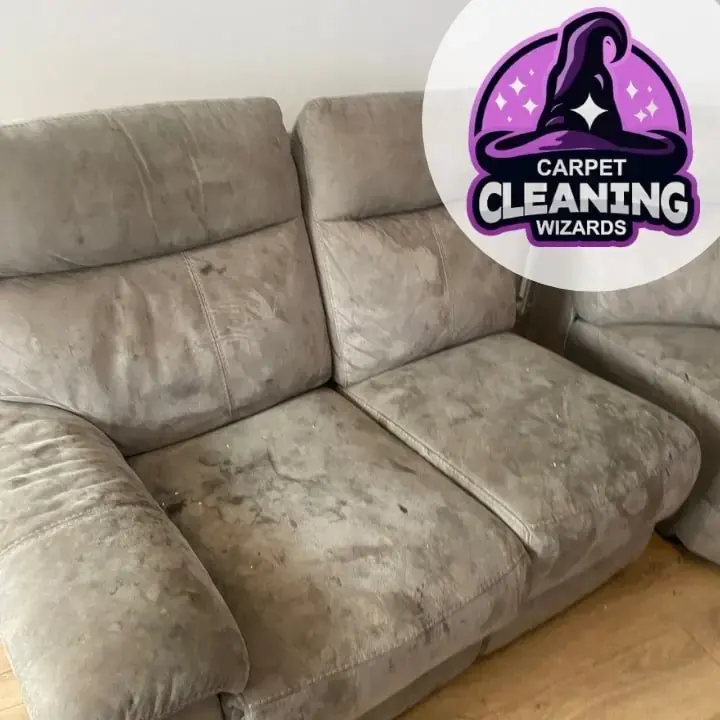
Sofa work is a steady part of what the van does, and pets drive a good share of those calls. The couch has been vacuumed, sprayed, wiped and aired out, and it still smells like the dog.
The fabric is not where the smell is
A dog sleeps on the same cushion every night for years. Skin oil, saliva and dander work through the weave in hours, not weeks. An accident goes through faster than that. Upholstery fabric is thin and open because it is built to breathe, so liquid crosses it in seconds and keeps going.
By the time anyone notices a smell, the fabric is carrying the least contamination of anything on the couch. Wiping or spraying the surface changes the room for a day or two and then stops.
Foam behaves the opposite way. Open cell foam is mostly air, and every pocket of it can take on liquid and then keep what that liquid leaves behind once it dries. A seat cushion holds many times what the cover wrapped around it holds.
Why soaking a cushion makes it worse
There is no way to dry the middle of a block of foam. Carpet lies flat with air moving over it, which is why most carpet is walkable in about two hours. A seat cushion is several inches thick and wrapped in fabric on every side, so carpet volumes of water leave the core damp for days.
Damp foam is the condition the smell needs. Bacteria break urine down and produce the ammonia note, and that process needs moisture to run. Let it dry and it nearly stops. Wet it again and it restarts. That is how a couch ends up smelling worse three days after a cleaning than it did the week before.
Over wetting does two other things to upholstery. The wooden frame under the deck can mark the fabric from below once it gets wet, and a ring forms where the wet area met the dry area. The same movement of moisture is what brings a pet stain back to the surface of a carpet, which we covered in our post on pet odor in carpet at Pet odor in carpet: what removes it, what only masks it.
What happens before anyone touches a cushion face
On a pet job the order of operations matters more than the product does.
- The cushions come off and the deck underneath gets cleared. Coins, crumbs, dry food and most of the pet hair are down there, not on the faces.
- Hair and seams get vacuumed dry. Pet hair binds to fabric and wet cleaning does not lift it, so it has to be off the couch before anything is damp.
- A test patch goes on hidden fabric, under the skirt or on a back panel. Some fabrics release dye and some mark with plain water. Finding that out on a back panel costs nothing.
- The cushions the family actually uses, and the arm where the remote lives, get pre treated on their own. Body oil is a different soil than pet contamination.
- Then the clean itself, low moisture, extracted as it goes, working the cushion from the face rather than through it.
If a fabric fails the test we say so and stop. That is a better outcome than a cleaned couch you no longer want in the room.
Steam cleaning or shampooing a couch
Shampooing means working a detergent foam into the fabric and letting most of it dry there. On a sofa that goes wrong twice. Residue left in the fibers stays sticky, so the couch picks up soil faster than before it was cleaned, and the cushion the smell was living in was never touched.
Hot water extraction, kept deliberately low on moisture, is what upholstery gets from us. The useful half is the extraction: solution goes in, releases the soil, and comes back out with it in the same pass. Our comparison of the two methods on carpet is at Steam cleaning or dry cleaning: which one your carpet needs, and the same logic applies here with tighter limits on water.
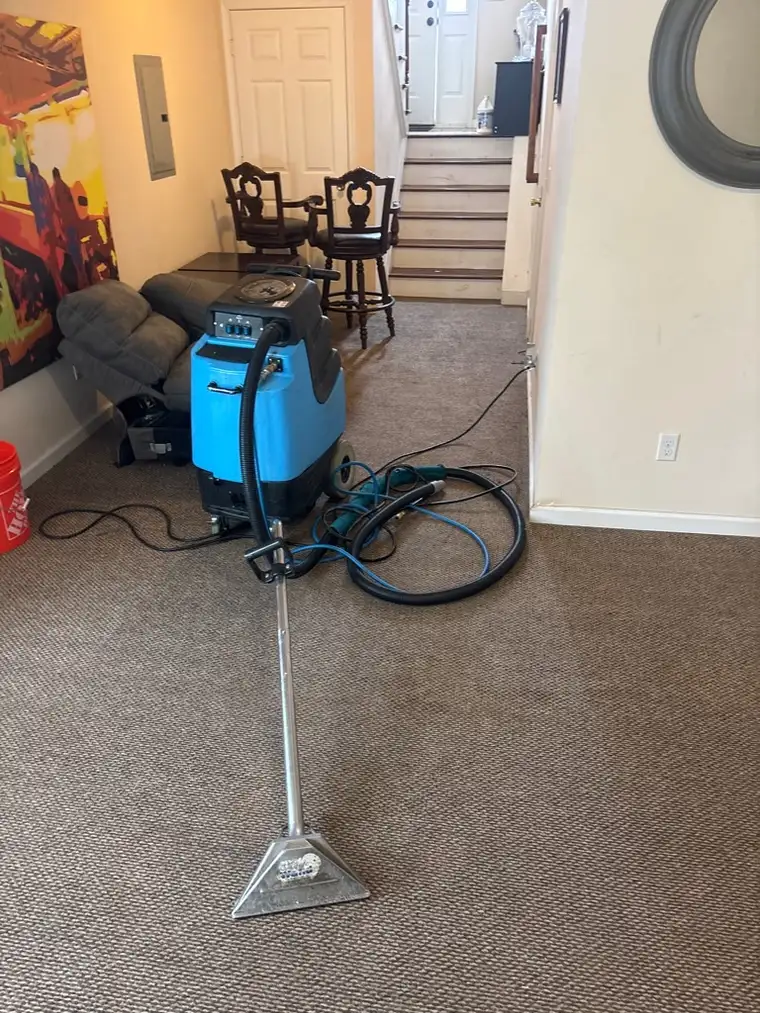
The upholstery hand tool on a rented machine puts down more water than its vacuum can take back, and that ratio decides whether a couch dries in hours or sits damp for two days. Most of the sofas we see after a home attempt are not dirty. They are wet.
How to tell whether the smell is in the fabric or in the foam
Work this out before you book, because it changes the job.
- If the cushion cover has a zipper, open it and smell the foam directly. The difference between the cover and the block inside is usually obvious.
- Press down hard on the seat and smell the air that pushes out of the seam. Foam works like a pump. A noticeable wave means the contamination is inside.
- Compare the cushion the dog uses with one nobody sits on. Same couch, same age, same fabric, so whatever is different between them is your answer.
- Look at the underside of the cushion and the deck below it. Liquid that passed through lands there and leaves a mark the top face never shows.
If the cover smells and the foam does not, the code on the tag under the cushion decides whether that cover can be washed. If the foam smells, the cleaning has to reach it.
When a cushion insert is past cleaning
Some inserts are finished, and saying so early is more useful than cleaning the same couch twice. Three signs come up repeatedly.
- The same spot has taken repeat accidents over years, so the foam is contaminated through the core rather than marked on one face.
- A clean removes the smell completely and it returns within a few days. That pattern means the source is still inside and got rewet.
- The foam has gone crumbly or discolored all the way through. Old urine breaks foam down, and nothing cleans a material that has already failed.
A foam insert is a replaceable part. An upholstery shop can cut one to size, and that is a much smaller job than replacing a couch. Where the cover survives cleaning and the insert does not, the couch is still fixable, just not by cleaning alone.
The first hour after an accident on a couch
What you do immediately matters more than what anybody does later.
- Blot with a white towel and put your weight behind it. Standing on a folded towel is not overkill. Rubbing spreads the liquid sideways and damages the fabric.
- Take the cover off if it comes off, and check the underside of the foam before you decide how far the liquid went.
- Rinse with small amounts of cold water and blot again after each one. Small and repeated beats one soaking.
- Keep heat away from it. No hot water, no steam iron, no hair dryer aimed at the spot. Heat sets a protein stain and makes it permanent.
- Skip the deodorizing powder. It settles into the seams where no vacuum reaches, and it adds a smell rather than removing one.
When to call us
Call when the smell is still there after the cover has been washed, or when pressing the cushion releases it. We clean upholstery in the home. There is no storefront and no drop off, the van comes to the house, and we book by appointment 24 hours a day, evenings and weekends included.
You get a written estimate before any work starts, the products are non toxic and safe around pets and children, and a fabric sofa is usually dry in 4 to 8 hours. Where a cushion is beyond cleaning we say so instead of charging you to find out. The visit is described at Sofa and upholstery cleaning, and we cover Union County at Union County and Essex County at Essex County along with the rest of North Jersey.
To book, or to ask what your couch needs, call (908) 545-9387. The person who answers is the person who does the work.