Two things are happening in a North Jersey house in April. Pollen is coming in on shoes, coats and the dog, and it lands on the floor first. The dust mites have been there all winter, in the mattress and the sofa cushions, feeding on shed skin. What changes in spring is that the two overlap, and the person waking up congested cannot tell them apart.
Two problems that peak in the same weeks
Pollen is seasonal and it comes from outside, riding in on clothing and pet fur and dropping onto whatever is horizontal. Carpet is the largest horizontal soft surface in most houses, so that is where most of it settles. It does not evaporate. It sits in the pile until something takes it out.
Dust mite allergen is neither seasonal nor imported. Mites live where shed skin collects and the humidity suits them, which is the bed first and the sofa second. The reaction comes from the allergen in their waste, light enough to go airborne when you sit down hard or turn over. In spring you get both at once, in a house that has been shut since November.
Why the bedroom is where symptoms concentrate
It comes down to exposure time. Seven or eight hours a night against a mattress, through a thin sheet, face inches from the surface, breathing air you have just disturbed by moving. A sofa gets a few hours in the evening.
Timing is the pattern worth noticing. Symptoms that are worst on waking and ease by mid morning point at the bedroom rather than at the season. Pollen runs the other way, worse outdoors and worse through the day. If somebody wakes up stuffy in February as well as in April, the bed is worth ruling out.
Carpet and rugs: where the pollen ends up
Every house has the strip between the front door and the kitchen that has gone a shade darker than the carpet either side of it. That lane is where tracked-in pollen concentrates too, because it arrives on the same shoes.
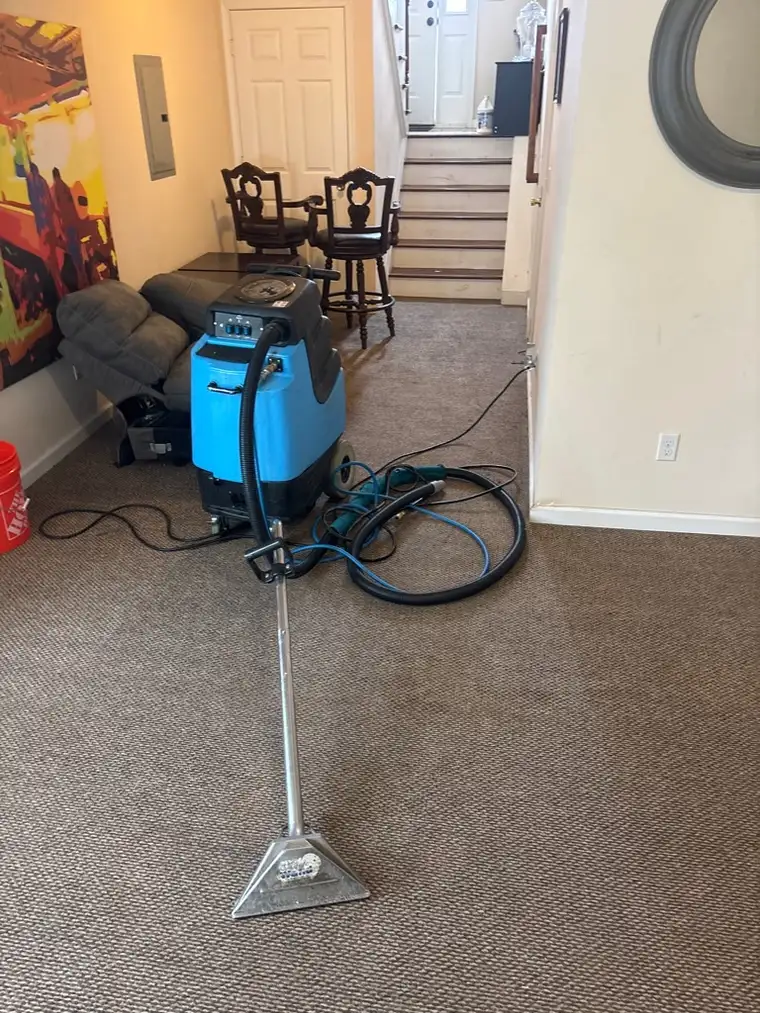
A vacuum takes the loose top layer and it is worth doing weekly. What it does not lift is what has been walked down into the base of the pile, and running the machine over the same lane every week presses the fine material further in. Hot water extraction reaches it, because the solution goes to the backing and comes back out under vacuum with the grit.
Area rugs hold more than people expect. They are thicker than most wall to wall carpet and they are rarely moved. What reads as a rug fading is usually a layer of dust muting every color at once. Wool, viscose and hand-knotted rugs get a dye test in a hidden corner before anything wet goes near them, because rug dyes are not carpet dyes and they do not all stay put.
The sofa is the second reservoir
The sofa is the piece nobody strips. Sheets go in the wash weekly, cushion covers almost never do. Under the cushions is where crumbs, hair and most of the pet hair collect, and the foam inside is where odor sits.
Fabric upholstery gets a low moisture method. Enough solution to break the bond between soil and fiber, extracted straight away, with the padding underneath never soaked. We test an unseen part of the fabric first, under a skirt or on a back panel. Fabric sofas are usually dry in 4 to 8 hours and leather is faster.
The mattress is the one that never gets washed
Every other soft surface in a bedroom is on a cycle. Sheets weekly, curtains occasionally, carpet once a year. The mattress gets turned, if that.
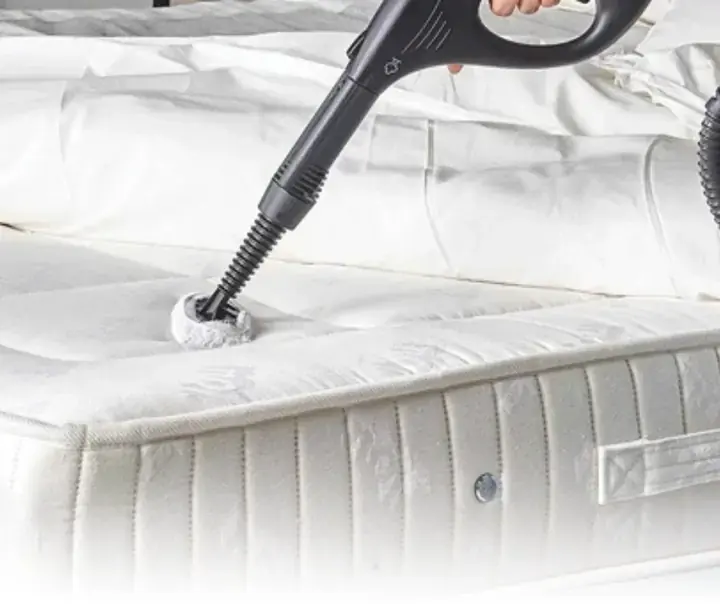
We clean it in place, on the bed, in three stages. A HEPA pass over the whole face, into every seam and along the piping, because the seams hold far more than the flat faces do. Then treatment for what is stuck: sweat yellowing, spills, body oil and accidents, with odor handled at the source rather than covered over. Then low moisture extraction, solution down and straight back out on the same pass.
The moisture stays low for a physical reason. A mattress is a sealed block of foam or springs inside a quilted cover, and there is no way to get air to the middle of it. Water that gets past the quilting stays where it landed. The bed is normally back in use the same night.
The HEPA pass first, then the room in one visit
Everything loose comes off dry, before any moisture arrives. Put solution on a surface that still has dry dust and pollen on it and you turn that layer into mud, then push part of it further in. The filter is the other half. A vacuum without a sealed path sends a share of what it lifts back into the air of the room somebody is reacting in.
Cleaning half a bedroom is half a job. The bed is already stripped and the hoses are already run, so taking the mattress and the carpet under it in the same visit costs one drying window instead of two. Strip the bed before we arrive and put the bedding on to wash.
The surfaces side by side
| Surface | What it holds | What takes it out | Back in use |
|---|---|---|---|
| Carpet and stairs | Tracked-in pollen and grit at the base of the pile | HEPA pass, then hot water extraction | Walkable in about 2 hours |
| Area and oriental rugs | Dust through the whole pile, both faces | Dye test, then the method the fiber allows | Usually dry within a day |
| Sofa and armchairs | Body oil on the faces, odor in the foam | Test patch, then low moisture extraction | 4 to 8 hours for fabric |
| Mattress | Shed skin and dust mite allergen, sweat in the quilting | HEPA into the seams, then extraction | Normally the same night |
What this does not do
We are cleaners, not a medical service. We publish no symptom reduction figures, because we have no way to measure anybody's symptoms, and neither does a company that quotes a percentage.
- It does not treat an allergy. It removes the reservoir where the exposure concentrates, which is the part you can act on.
- It does not stop pollen coming back in. Every open door brings more, so this is a job you time rather than finish.
- It does not eliminate dust mites for good. Taking out the food supply sets the population back, and once a year suits most households.
- It does not sterilize anything, and it does not replace hot bedding washes or a zipped barrier cover.
What to do between visits
- Shoes off at the door in pollen season. It stops most of what would reach the carpet.
- Wash bedding weekly at the hottest temperature the fabric allows, and the pet bed too.
- Vacuum with a sealed HEPA machine, slowly, and go over the traffic lane in both directions.
- Put a zipped barrier cover on the mattress. It costs less than a clean and it keeps shed skin off the ticking.
- Keep bedroom windows shut overnight on high pollen days, and throw the duvet back for half an hour before making the bed.
No residue, and no windows open afterward
The products are non toxic and biodegradable and safe around family and pets. Nothing we bring in needs the windows opened afterward or the dog kept elsewhere for the day, which matters most in the room you were trying to make easier to breathe in. Product left behind in the pile attracts soil, so a cheaply cleaned carpet greys up faster than before.
When to call us
If somebody in the house wakes up congested and clears by lunchtime, start with the bed. That is our mattress cleaning service, done in place with non toxic products, and we can take the bedroom carpet in the same visit. There is no storefront and nothing gets taken away, the van comes to the house. We cover eight North Jersey counties, including Bergen County and Morris County, and we book by appointment 24 hours a day on (908) 545-9387. Tell us how many rooms and how many beds, and you get a written estimate before any work starts.