The call usually comes about three weeks after somebody cleaned their own carpet. It looked great when it dried. Now the hallway is grey again in the same strip, and it got there faster than the first time. That carpet is usually not worn out, it is holding soap.
Both methods loosen soil. They differ on the last step, the removal, and that step decides how the carpet behaves for the next six months.
What shampooing actually is
Shampooing means a rotary brush machine, a tank of foaming detergent, and a lot of agitation. The foam is deliberate. It suspends soil in bubbles rather than in free liquid, which puts less water into the carpet than a rinse does.
The brush drives that foam into the pile and breaks the bond between the soil and the fiber. That part works. Shampooing genuinely loosens soil, and it uses less water than extraction does.
The problem is what comes next. In the original method the foam dries and the residue gets vacuumed out as a crystal the following day. On a rental machine in a house, almost nobody does that. The foam dries into the base of the pile and stays where the fibers meet the backing.
What extraction does with the same soil
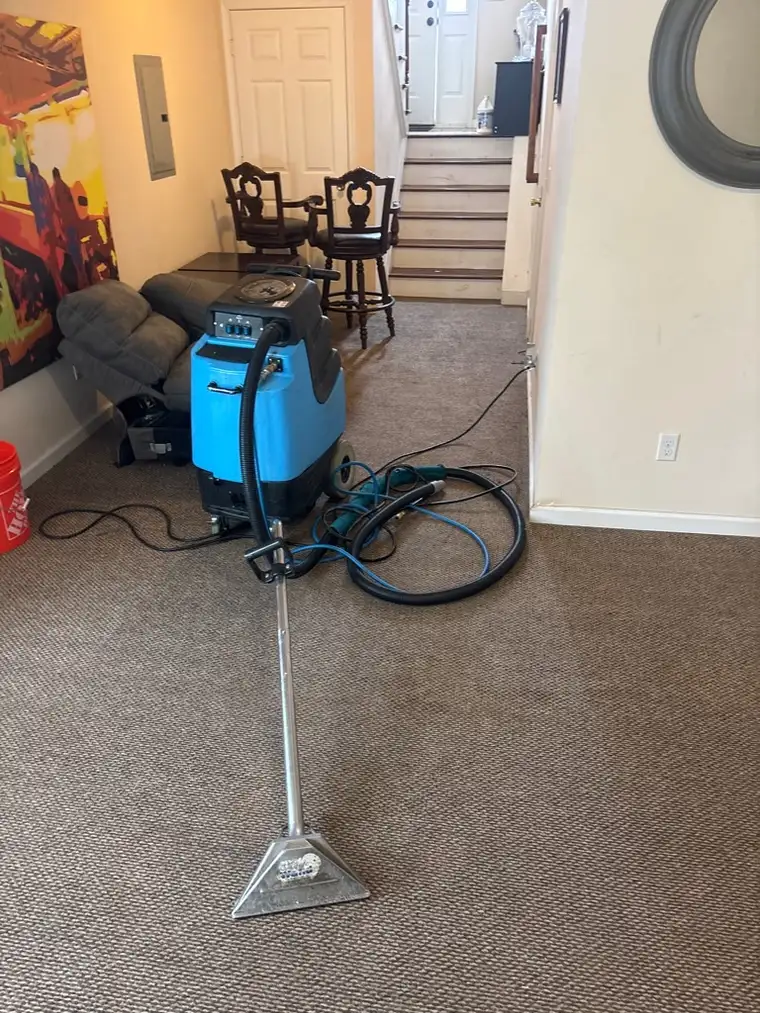
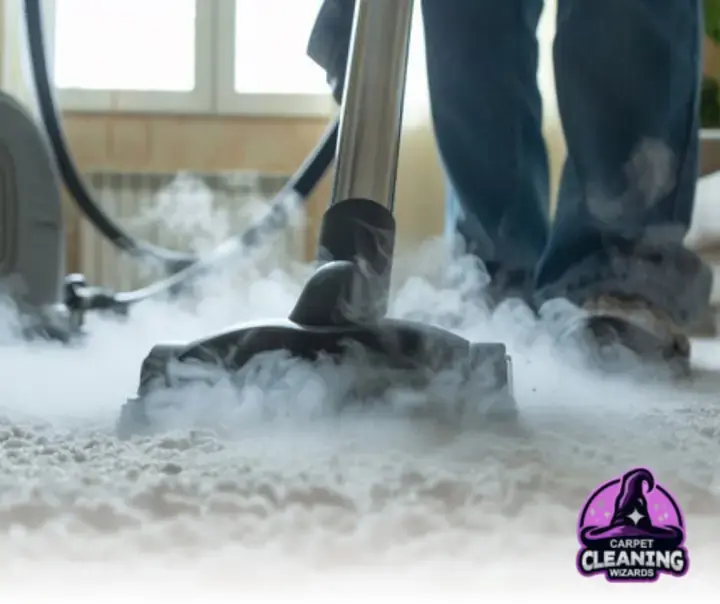
Hot water extraction heats cleaning solution, injects it into the pile under pressure, and vacuums it back out through the same head half a second later. There is visible vapor and it is hot, but the carpet is being flushed rather than steamed.
Both methods release the soil. Only one carries it out of the room. What the machine puts down comes back up into a recovery tank, soil and all.
Extraction also reaches further down. Soil migrates toward the base of the pile and gets pressed there by feet and by vacuuming, and the grey lane down a hallway lives at that depth. A brush working from above loosens it. A rinse that goes to the backing and comes back removes it.
Why residue makes a carpet dirty faster
Dried detergent is sticky. It does not stop being a cleaning agent when it dries, it just has nothing left to rinse it, so it sits in the pile with a slight tack and grabs whatever walks in on a shoe. Street grit and kitchen grease land on a surface that holds them.
So the carpet does not get uniformly dirty. It regreys along the exact footprint walked before, in weeks rather than months. Residue also stiffens the pile, which is the crunch people feel underfoot and cannot name.
- The traffic lane comes back within two to four weeks on the same path, instead of the room dulling slowly.
- The pile feels stiff or crackly under a hand, worst where the machine passed most.
- Wetting a small patch with plain water brings up foam that does not appear in a spare bedroom.
One of those proves nothing. Three together in a shampooed house is close enough that we plan for it before we arrive.
The rotary brush and cut pile
The other thing shampooing leaves behind is mechanical. Carpet fiber is twisted, and that twist is what makes a cut pile stand up and reflect light evenly. A rotary brush driven into wet cut pile untwists and frays the filament ends, and fuzzed fiber scatters light differently from the fiber around it.
You see it as a dull hazy patch that stays after the carpet is clean. Loop pile and dense commercial carpet take a brush much better, because there are no cut ends to fray. Plush and frieze in a living room do not. Distorted pile does not clean back, and we say so at the door.
Where shampooing is the right tool
Shampooing is aimed at a job that is not a house. On dense low pile glue down commercial carpet carrying heavy oily soil, a rotary machine does real work. There are no cut ends to fuzz, and the floor sits on a schedule that assumes deep extraction underneath the interim passes.
We do not do that work. We clean carpet, stairs, rugs and upholstery in homes across eight North Jersey counties, and in a house the arithmetic goes the other way. The carpet is cut pile, it gets cleaned once or twice a year, and nobody is coming back in three weeks to fix the residue.
| Shampooing | Hot water extraction | |
|---|---|---|
| How soil is released | Rotary brush and foaming detergent | Heated solution under pressure, plus hand work on spots and stairs |
| How soil is removed | Vacuumed after the foam dries, if that step happens at all | Pulled back out through the same head at once, into a recovery tank |
| Detergent left behind | Most of it, unless the next day vacuum pass is thorough | Rinsed out with the solution that carried it in |
| Effect on cut pile | The brush can fray and untwist the fiber ends | No rotary brush on residential cut pile |
What we do in a house that has residue in it
A carpet full of old detergent takes longer than one never cleaned, and it is worth knowing before you book.
- Vacuum first, including edges and stair stringers. Anything dry we take now never has to be flushed out wet.
- Identify the fiber and pile type, and test any dye we are unsure of in a hidden corner before anything gets wet.
- Pre treat the lanes and spots, then give the product dwell time to break the old residue loose instead of scrubbing at it.
- Work stairs, edges and spots by hand, because the machine head cannot sit flat there and that is where residue collects.
- Extract, then extract again with rinse only over the worst lanes. That second pass does nothing but take soap out.
- Groom the pile so it lays one way, and set air movers if a room has to be usable quickly.
One visit gets most residue loaded carpet back. A rental shampooed that way for years can need a second visit, and we say so up front.
Rental machines sit between the two
Supermarket rental machines are hybrids. They have a brush, a solution tank and a recovery tank, so they extract in principle, but the vacuum is far weaker than a professional extraction machine and the solutions sold for them foam heavily. Some soil comes back out, and a lot of soap stays.
If you use one, finish with two or three passes of plain warm water and the solution switched off. That rinse is the difference between a carpet that stays clean and one that greys again by the end of the month. These machines also put down more water than they take back, and carpet that stays damp smells before it dries.
What residue does not explain
If a single stain keeps returning rather than a whole lane, soap is probably not the cause. A pet accident that soaked into the padding wicks back up as the carpet dries. Bleach marks, sun fade and old urine that has altered the dye are different again, because no color is left in the fiber to bring back.
When to call us
Call if the hallway went grey again within a month of being cleaned, if the pile feels stiff, or if you cannot tell whether a shampooed carpet is dirty or damaged. Send a photo of the worst patch. It lets us say no before you take time off work.
Our method and drying times are on the carpet cleaning page, and the separate comparison with low moisture and dry compound cleaning is on the blog. We come to the house, there is no shop, and the estimate is written before any work starts.