A washing machine hose lets go, a supply line splits behind a wall, a water heater gives out overnight. The carpet is wet, the padding under it is wetter, and the first question is whether any of it can be saved. Usually yes, if the water is clean and the drying starts the same day. The answer starts changing the day after that.
What follows is the order we work in on a water call. The first part is yours, and none of it needs equipment you do not own.
Stop the source before anything else
Everything else waits on this. Close the shutoff valve for the fixture or appliance that failed. If there is no local valve, use the main shutoff for the house, which in most North Jersey homes is in the basement or a utility closet near where the line comes in.
Water runs along the carpet backing faster than it spreads across the surface, so the wet area keeps growing the whole time the supply is open. A two room job becomes a whole floor job while you decide what to do.
Cut the power if outlets or appliances are involved
If water has reached an outlet, a power strip or a plugged in appliance, shut that circuit off at the panel before you walk back into the room. At the panel, not at the appliance. If the panel sits in the wet area, or you would have to stand in water to reach it, stay out and call an electrician. Carpet is replaceable.
Lift what you can off the wet floor
Anything sitting on wet carpet is either soaking up water or bleeding something into it. Ten minutes here saves items that are otherwise gone.
- Furniture legs. Wood stains carpet and metal feet leave rust once they sit in water. Fold aluminum foil under each leg, or slide a scrap block of wood under it, and the piece can stay where it is.
- Cardboard boxes. Cardboard wicks water up the sides in minutes and the printing runs onto whatever is under it.
- Area rugs lying on the carpet. A rug holds water against the carpet beneath it and many release dye downward. Roll it, take it out of the room, lay it flat somewhere dry.
- Books, photographs, documents and anything electronic at floor level. These are the items people regret leaving, and the easiest to move.
Photograph everything before it moves
Take pictures before you lift the first box. Wide shots of each room, close shots of the source, the water line on the wall, and the label on anything you plan to throw out. Use your phone and do not stop to organize them.
We do drying and cleaning rather than claims, so that is all the advice on that subject you will get from us. Photos taken while the room is untouched beat a description written later.
What the crew does on arrival
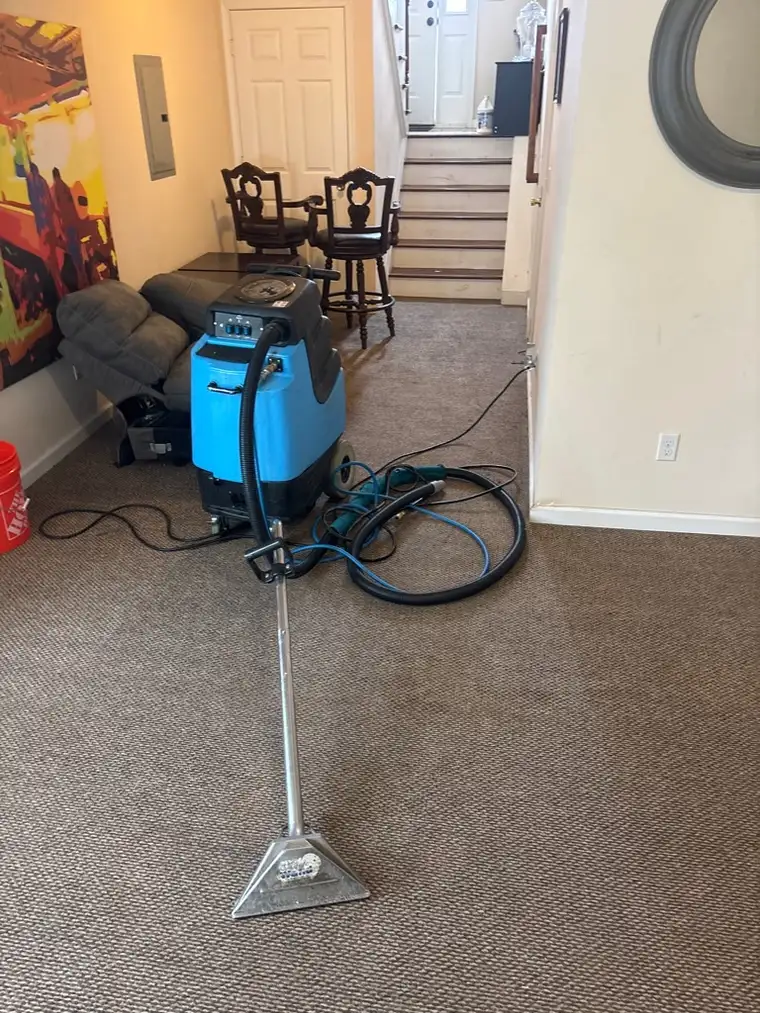
Extraction starts at the far edge of the wet area and works back toward the source. Pulling from the middle outward pushes water ahead of the wand and the wet perimeter keeps growing. Starting at the outside edge means the boundary stops moving while the rest gets pulled out.
Then we find the real edge. The dark patch you can see is smaller than the area that is actually wet, because water runs along the backing faster than it shows on the face. A room can look like it has a six foot wet spot and be wet out to the doorway, and drying only the visible part is how a job comes back.
Padding is usually the part that decides it
Padding is the sponge in the system. It holds more water than the carpet above it and gives that water up far more slowly, so we lift a corner and look rather than guessing from the top. Sometimes it dries in place, with the carpet floated and air pushed under it. Often it has to come out while the carpet itself is fine.
That call gets made on what is under your floor, not on a rule. Clean water caught the same day, on padding that drains, usually dries. Padding that has been holding water for three days usually does not.
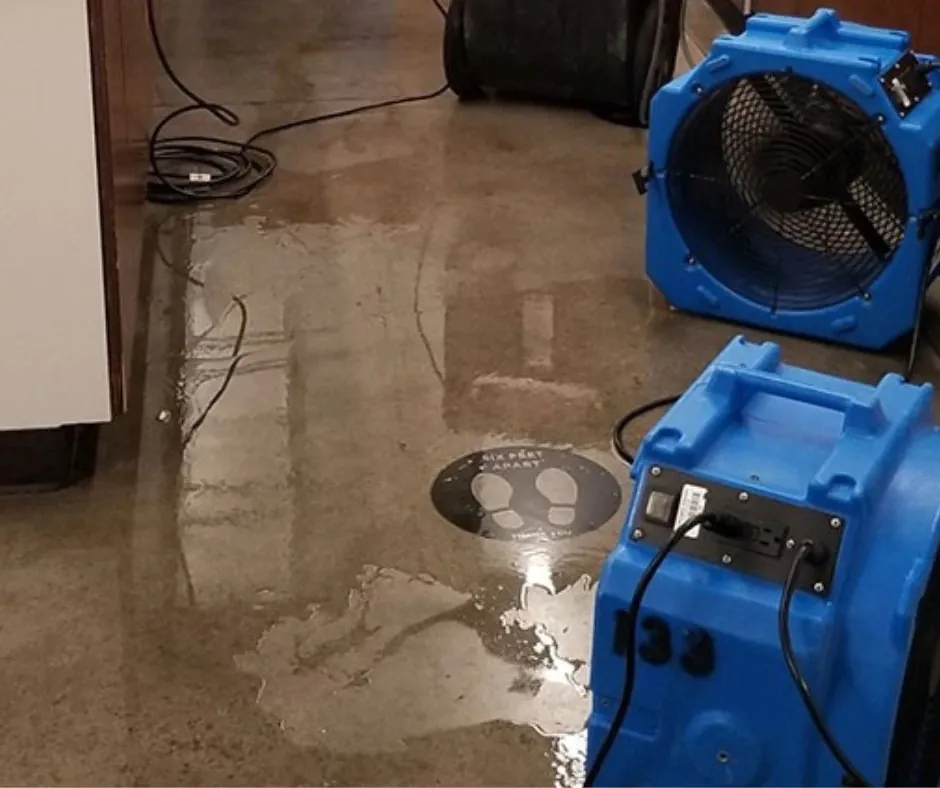
After extraction come air movers to drive moisture out of the material and into the air, then dehumidifiers to take it out of the air rather than push it into the next room. That runs for days. Fans alone, with nothing removing the moisture, relocate the problem.
What not to do while you wait
- Do not turn the heat up. Warm wet material starts to smell sooner, and heat alone moves moisture into the air with nothing there to take it out.
- Do not lay newspaper on wet carpet. The ink transfers into the fibers and stays.
- Do not pull the carpet up unless it is already coming out. Wet carpet stretches, and carpet lifted off the tack strip and dried loose rarely lies flat again.
- Do not close the room up. Moving air helps, even a box fan across the floor, with the windows open on a dry day rather than a humid one.
Why it feels dry is the trap
Put your hand on the carpet three days after a leak and it will very often feel dry. Surface fibers give up moisture first and they are the only part you can touch. The padding and the top of the subfloor underneath can still hold a great deal of water, and those are the parts that are enclosed, warm and dark.
That is where the familiar sequence comes from. A leak that seemed handled, a room that seemed fine, then a smell about three weeks later that will not leave. The smell is not the problem starting. It is the problem telling you it has been there since the day of the leak.
So drying stops when the materials read dry, not when the room looks finished. Sometimes that means another full day of equipment in a room that already looks done.
When the honest answer is removal
Not every wet floor should be saved, and paying to dry one that should not be is the worst outcome available. We will tell you at the door.
- Sewage backup. Water that came up a drain or a sewer line carries contamination that cleaning does not resolve. Carpet and padding come out, and that is a health decision rather than a cleaning one.
- Water that came up through the foundation. Ground water is not clean water, and it usually means the room takes water again. Drying the carpet addresses neither part.
- Carpet standing wet for about a week. By then the padding is finished, the backing has often separated from the face, and the subfloor needs attention the carpet is blocking.
How long it takes
Extraction runs a few hours, depending on how much water there is. Drying is usually several days with equipment in the room, and the number depends on the volume of water, what it soaked into, and how warm the space is. We would rather leave the equipment a day longer than call a floor dry early.
None of that matches a routine cleaning, where carpet is walkable in about two hours and dry the same day.
When to call us
Call as soon as the water is stopped, before you decide what to throw away. We take calls 24 hours by appointment, and on a water job that speed is the service rather than a convenience. The van comes to the house and the estimate is written before work starts. The full process is on the water damage drying and restoration page, and the county pages for Union County and Essex County list the towns we cover, including Elizabeth. Phone (908) 545-9387.