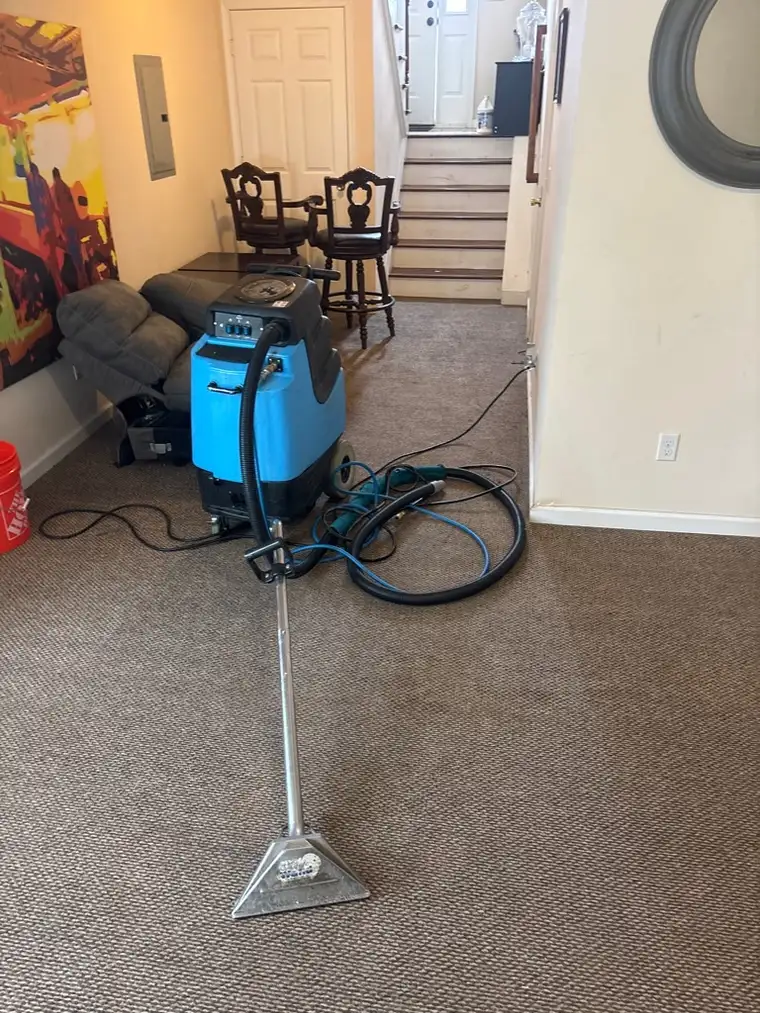
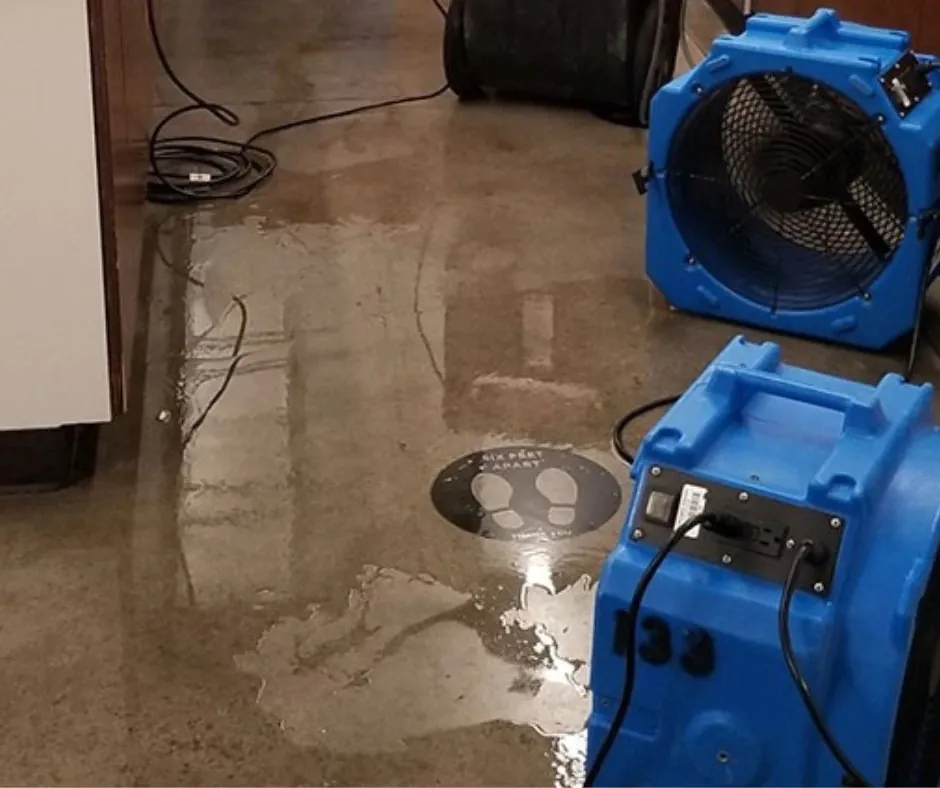
A supply line, a water heater or a radiator valve lets go where nobody was looking, and the first question on that call is always the same: does the carpet have to come out?
Most of the time it does not. What settles it is the layer nobody looks at, which is the padding underneath.
The three things that decide it
What the water was, how long it stood, and what the padding did with it. Those three settle almost every wet carpet call, and they settle it before anyone looks closely at the carpet itself. What to do in the hours before anyone arrives is set out in Wet carpet after a leak: what to do in the first 24 hours.
The water comes first. ANSI/IICRC S500, the water damage restoration standard now in its fifth edition, sorts water by where it came from and what is in it. Category 1 begins at a sanitary source, a supply line or a water heater. Category 2 carries significant contamination. Category 3 is grossly contaminated, which covers sewage, backflow from beyond a trap, seawater, and water that rose out of a river or off the ground.
Time comes second, and time moves the first. A category is set by what the water was when it arrived, and both time and temperature can carry it downward while it sits. The EPA puts the practical line at 24 to 48 hours: material dried inside that window will in most cases not grow mold. Past it the question stops being about drying.
The padding comes third. It behaves like a sponge, and it traps the water it takes against the subfloor rather than releasing it upward where moving air can reach it. The carpet above can feel almost dry while the padding is still full.
Clean water, and why it is usually saved
A burst supply line, a water heater, a dishwasher inlet, an aquarium. This is the case where the answer is usually yes, and it is the case where the hours count for most. Category 1 water in carpet and padding is generally dried in place, both layers together, when the drying starts early enough.
The sequence on that kind of call runs in a fixed order. Standing water is extracted first, starting at the furthest edge of the wet area and working back toward the source, so the wet perimeter stops growing during the work. Then the true edge is found, because water runs along the backing faster than it shows on the face and the dark patch is smaller than the wet area. Then a corner of the padding is lifted and checked.
Sometimes the padding dries in place. Often it comes out while the carpet itself is sound. That decision is made on what is under your floor rather than on a rule, and it is made in front of you.
Water that picked something up
Water from a washing machine discharge hose, a dishwasher drain or an overflowing toilet with nothing solid in it belongs to a different class. It carries significant contamination, and the padding is treated as carrying it too. Where Category 1 padding is dried, Category 2 padding is removed.
Clean water turns into this class if it sits. A supply line that let go on Friday and was found on Monday is no longer the water it was on Friday, because warmth and time have been working on it the whole weekend. The carpet may still be recoverable. The padding underneath usually is not.
Water that comes out no matter what
Three kinds of water end the argument, and on all three the answer is removal rather than drying.
- A drain or sewer backup. That is grossly contaminated water, and it is in the padding before it is anywhere else. Cleaning does not resolve it, so carpet and padding come out. The reasoning there is about health rather than about cleaning.
- Water that came up through the foundation. Ground water is not clean water either. Drying the carpet addresses neither the water nor the reason it arrived.
- Carpet that has stood wet for about a week. By then the padding is beyond recovery and the backing has often separated from the face. Carpet left wet past the 24 to 48 hour window grows mold, and porous material that has gone moldy is discarded rather than cleaned.
The padding test you can do yourself
You can get most of the way to the answer before anyone arrives, and it takes a towel.
- Fold a white towel twice, lay it on the carpet at the edge of the wet area and stand on it for ten seconds. Water coming up into the towel means the padding is still holding water, whatever the surface feels like.
- Check the floor well past the edge of the dark patch. The wet area runs wider than the stain, because water travels along the backing faster than it shows on the surface.
- Look at the base of the wall along the wet edge. Drywall draws water upward, and a dark line above the trim says the water has been there long enough to climb.
- Look at what is standing on the floor. Cardboard, wood furniture legs and metal feet all mark carpet within hours, and every one of those marks is avoidable in a few moments of lifting.
None of that tells you how wet the padding is in numbers. It tells you whether the wet area is larger than it looks, which is the thing homeowners most often get wrong before the first call.
What the meter says that the hand cannot
Moisture is read in the padding and the subfloor with a meter rather than judged by hand. A reading on wet material only means something against a second one, taken on the same material in a part of the house the water never reached. That second reading is the target, and it is different in every property.
This is why a floor that feels finished can still have equipment standing on it. Surface fibers give up their moisture first and they are the only layer you can touch. Drying stops when the materials read dry, which is sometimes a full day after the room looks done.
When drying costs more than replacing
Not every wet floor should be saved. A drying bill followed by a replacement bill is the worst outcome available on a water call, and it is the one that arrives when nobody says anything early.
The price itself is quoted per job after we see the floor. What moves it is how many rooms are wet, whether the padding has to come out, and how many days the equipment runs. A single wet bedroom is a different job from a basement where the water climbed the drywall.
What we tell you before the work starts
Where the padding is beyond saving we pull it and set structured drying on what is left. Where the carpet is beyond saving we say so before the work begins, for the same reason we say which stains will not come out. The estimate is written down first, the number is for the property described, and it does not change at the door.
The whole sequence, from the first extraction pass to the last meter reading, is on the Water damage restoration page.
When to call us
Call as soon as the water is stopped, before you decide what to throw away. We take calls 24 hours a day by appointment, and on a water job the hour the call comes in changes how much of the floor there is left to save. All work is done at your home or business, and the estimate is written before anything starts. The county pages for Union County and Essex County list the towns we cover, including Elizabeth. Phone (908) 545-9387.