Why upholstery is a different job from carpet
Carpet is one fiber on one backing, laid flat, and it tolerates a large volume of water. A sofa combines several materials at once: the face fabric, the sewing thread, the foam inside, the deck under the cushions and the frame. Each reacts differently to moisture. Carpet volumes of water leave the padding wet for days, allow the frame to mark the fabric from below, and produce a water ring where the wet area met the dry area.
Upholstery is therefore cleaned with a low-moisture method: enough solution to break the bond between the soil and the fiber, extracted immediately, with the foam underneath left dry. It takes longer per square foot than carpet, and it is what the material requires.
The test patch
Before any cushion is cleaned, an unseen part of the same fabric is tested: under a skirt, on a back panel or beneath a seat cushion. Some fabrics release their dye. Certain silks, viscose blends and older linens mark with plain water. Finding that on a back panel costs nothing. Finding it on a seat cannot be undone.
If a piece fails the test, we say so and stop. A cleaned sofa you no longer want in the room is the worse outcome.
Where the soil sits
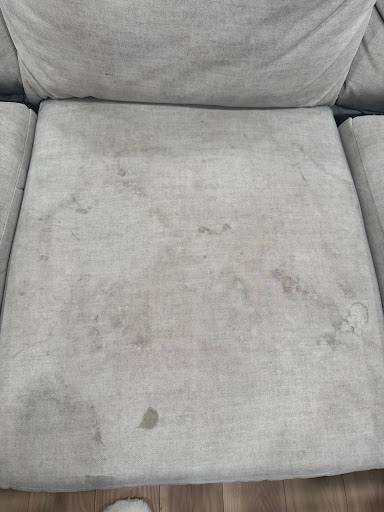
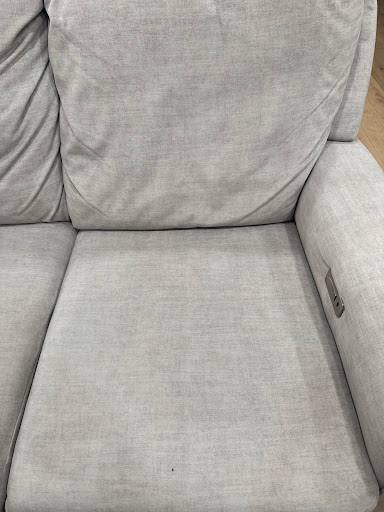
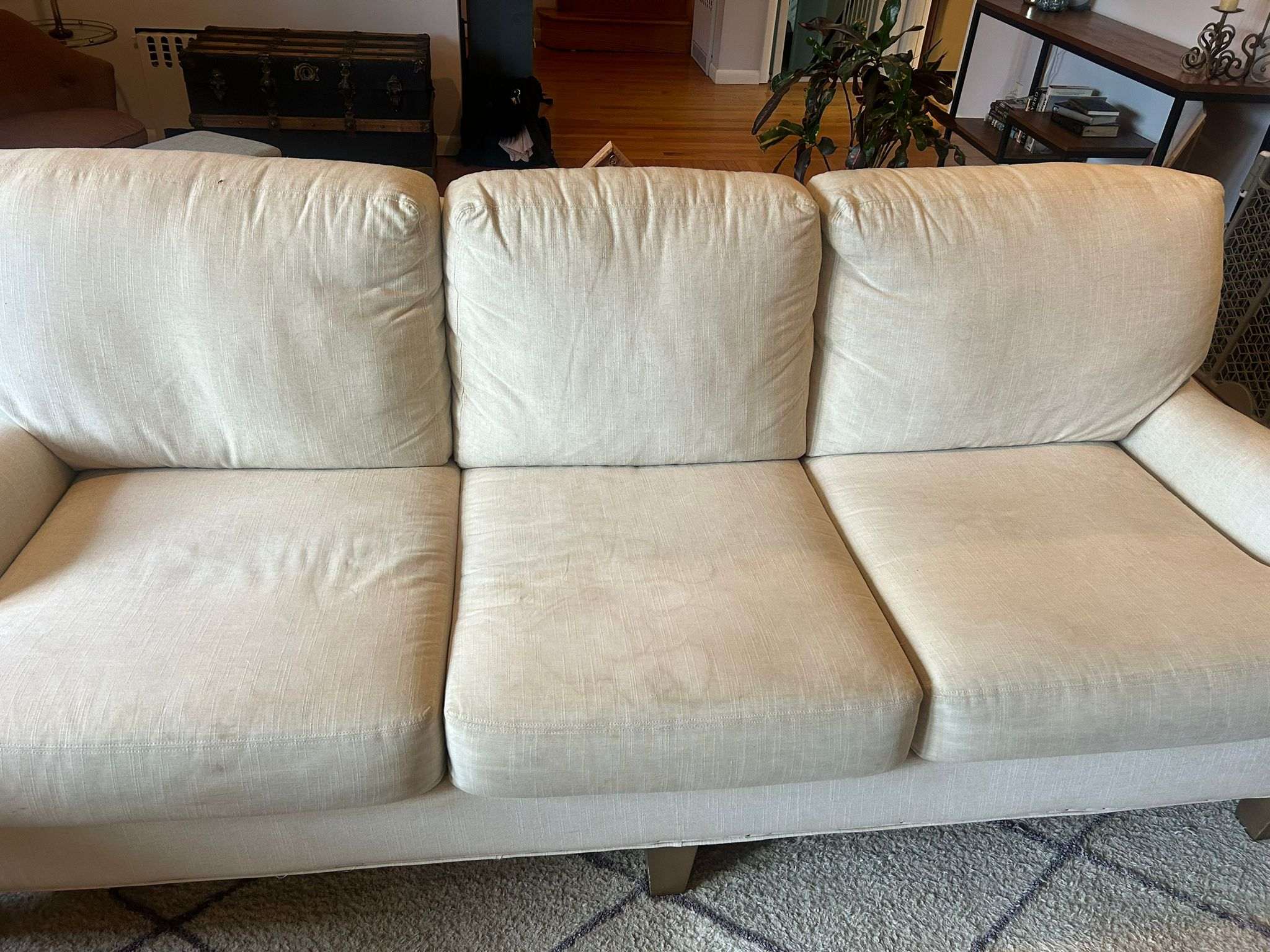
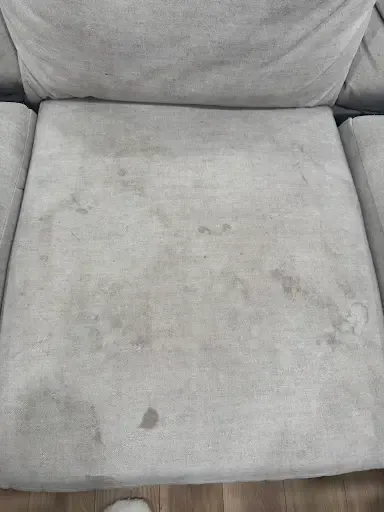
A three-seat sofa is rarely soiled evenly. The two cushions in regular use are darker than the third, one arm is worse than the other, and the fabric behind the headrest carries a shadow.
That soil is body oil, hair product and everyday skin contact, and it differs from the crumbs and dust that fall into the crevices. It is pre-treated before the general clean, so the piece does not come back clean only in the places nobody touches.
Under the cushions is a separate matter. Coins, hair, food and most of the pet hair collect there, and that area is emptied and cleaned before the cushion faces are touched.
Leather is cleaned and then conditioned
Most leather calls describe the same condition: a sofa that sat near a window or a radiator, went dull and stiff, and began to look old early. Sunlight and dry indoor heat draw the oils out of the hide. Cleaning removes surface dirt and a little more oil with it, so cleaning on its own can leave leather looking worse.
The two steps go together. The hide is cleaned, then conditioned to restore flexibility and depth of color. A customer whose leather sofa had gone lifeless beside a bright window described the result afterwards as expensive-looking, soft, and smelling of leather again.
Booking an upholstery visit
Tell us how many pieces there are, roughly what they are made of, and whether there are pets in the home. The cleaning code from the manufacturer, the letter on the tag under a cushion, is useful if you have it, and we check it ourselves before starting.
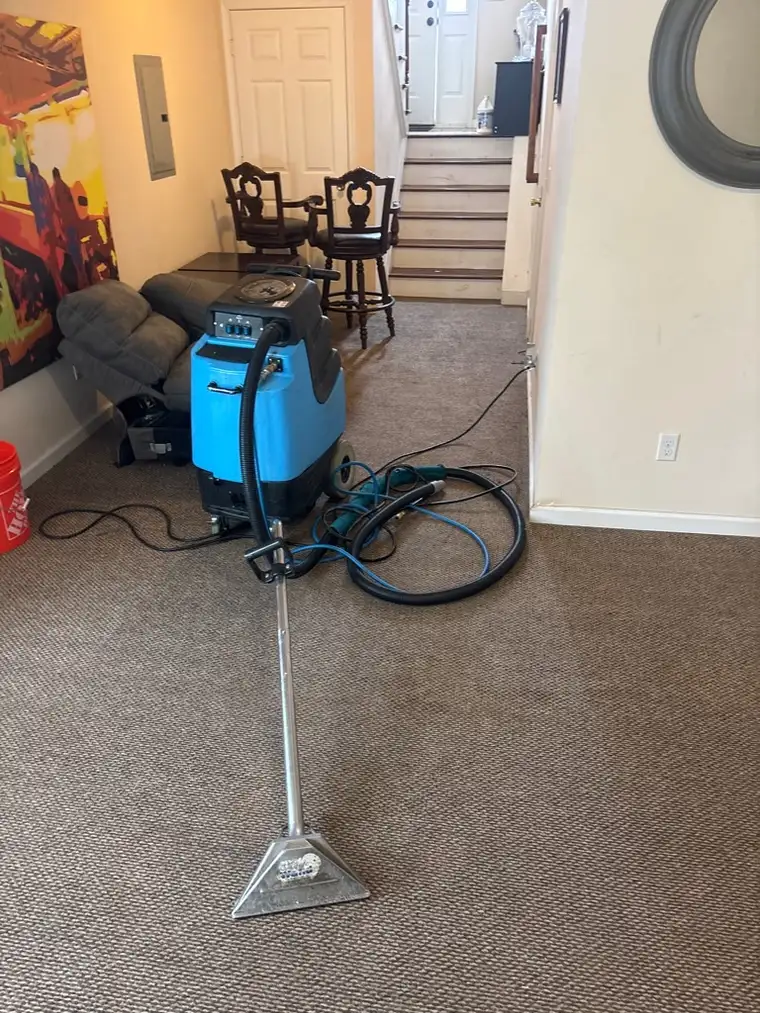
Upholstery is often booked with carpet in the same visit. The furniture is already being moved, and a clean carpet under a soiled sofa makes the sofa look worse than it did before.
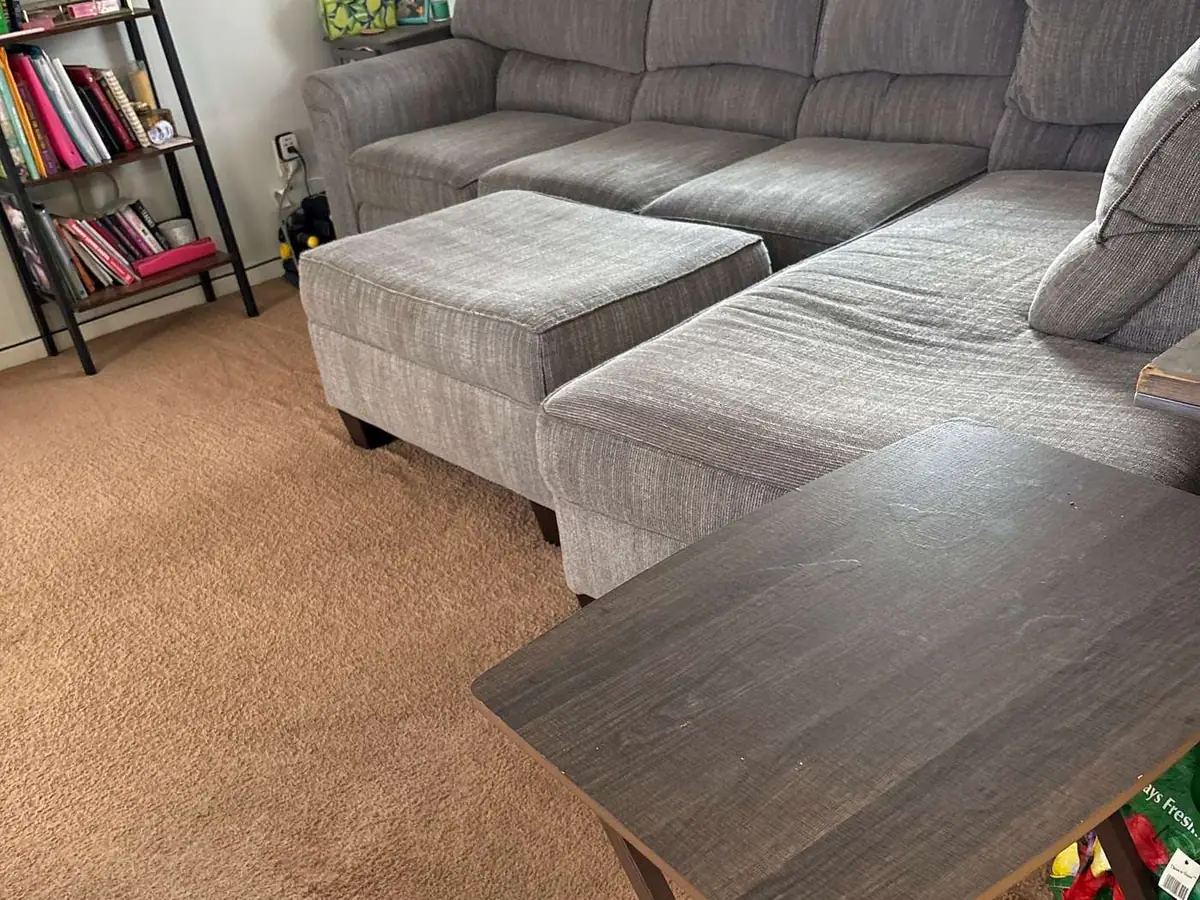
A sofa photographed by the customer
Taken by the customer, published with their review.